Venezuela’s economy hangs on by a thread, clinging to oil revenues and little else.
The recovery of the Caribbean nation will require new investments and structural adjustments.
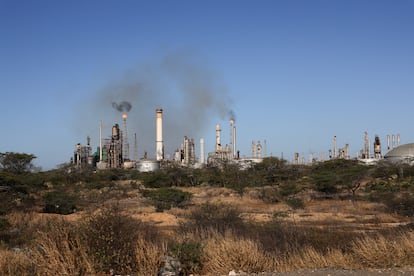

Hopes for a radical and absolute political transition in Venezuela have been replaced by the uncertainty of a cohabitation between the Chavista regime and the forces of the MAGA movement, although this has yielded some positive results in terms of consumption, supply, and prices. Last week, the United States dismantled part of the sanctions that prevented oil companies like Britain’s Shell and Spain’s Repsol from operating in the country’s vast reserves, while the U.S.-based Chevron is preparing to double its production.
This prospect of a hydrocarbons reopening offers glimmers of optimism about the normalization of the country’s battered finances, something that will come in dribs and drabs rather than in a whirlwind and will depend on the flows from oil sales controlled by the Donald Trump administration.
“The United States is going to control a significant portion of the oil flow. We estimate a maximum of 70% of the resources. And they are going to be very incisive about where those flows go, about how they enter the dynamics of the economy,” says Asdrúbal Oliveros, a business consultant with extensive connections in the Venezuelan ecosystem. “On a positive note, we are likely to see less discretion in the allocation of foreign currency,” adds the Caracas-based economist.
This new arrangement, akin to the previous mechanism, involves the same framework: a covertly managed exchange where the government, through its designated channels, facilitates foreign exchange, with the central bank overseeing the process while maintaining strict controls over monetary flows.
Amid growing signs of recovery, Venezuela’s economic rebound hinges on structural reforms, with key sectors poised to rebound despite lingering challenges and the persistent burden of regulatory constraints.
Oil and service companies
The oil sector has the potential to drive the rest of the economy. At least a third of the country’s Gross Domestic Product (GDP) comes from oil revenues, and more than 80% of foreign exchange earnings come from crude oil exports, according to analysts’ estimates. Furthermore, it is the sector with the greatest revenue-generating potential, even if Caracas — with guidance from the United States — modifies the oil contracts that currently favor the state-owned Petróleos de Venezuela (PDVSA). The National Assembly, with its Chavista majority, has relaxed the sector’s regulatory framework to allow for greater participation of private companies in the crude oil value chain.
Washington has explained that Venezuelan oil revenues will not go to the country’s public coffers. Instead, they will be managed by the Treasury Department, while the commercial aspects will be overseen by the Energy Department, all under the watchful eye of Secretary of State Marco Rubio. This arrangement has allowed Venezuela to sell its crude oil in open, non-sanctioned markets at prices up to 30% higher per barrel.
Washington’s decision to lift sanctions could pave the way for increased production, but only if companies feel confident enough to re-engage.
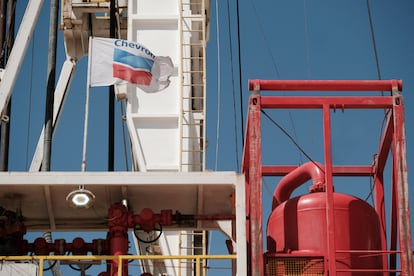
The lifting of sanctions will also facilitate the return of oilfield services companies, crucial at all stages of well operation, from maintenance to pumping. Companies such as SLB (formerly Schlumberger) and Halliburton have publicly stated their intention to return to mature fields and the Orinoco Belt.
Financial system
Though central to Venezuela’s financial landscape, the banking sector has shrunk to a point where its role is largely confined, with lending nearly paralyzed and interest rates rendered nearly inert.
In this context, the lifting of financial sanctions by the United States is also crucial, as it would allow for the reinstatement of correspondent banks in Venezuela and the reconnection between the local and global financial systems. Washington maintains that the sanctions — targeting Chavista officials accused of narcoterrorism and corruption — were not designed to isolate the country from financial flows, although in practice they have had that effect.
Other financial mechanisms, such as venture funding, have vanished, while traditional avenues like bank financing have all but vanished.
One positive sign is that holders of defaulted Venezuelan bonds are beginning to prepare to recover some of their investments, a first step toward improving their financial health. “Venezuelan bonds have reacted positively since the United States ousted President Nicolás Maduro on January 3. This nuance makes Venezuela a very different case from other countries in the midst of geopolitical conflicts (Ukraine, for example), as markets are pricing in a long-overdue debt restructuring and higher recovery values,” wrote Greg Hadjian, Latin America strategist at Loomis Sayles, a Boston-based investment manager, in a market note.
Core services and telecommunications
Years of neglect and underinvestment have weakened the country’s infrastructure, with frequent disruptions to essential services. Despite decades of potential, sustained investment has been neglected, leaving key facilities—like refineries—struggling to operate reliably.
Jorge Rodríguez, president of the National Assembly and brother of interim president Delcy Rodríguez, is leading one of the most significant legislative reforms Chavismo has seen since Hugo Chávez’s socialist era. In addition to the Hydrocarbons Law, the package includes regulations on mining, foreign trade, socioeconomic rights, digital rights, cybersecurity, the national electricity system, telecommunications, and even artificial intelligence, with the aim of attracting foreign investment.
Oliveros adds that “a characteristic of the Maduro government, and now of Delcy, especially after 2019, when we experienced the deepest moments of the hyperinflation crisis, was a more pragmatic and less ideological approach with the private sector, with which it meets very frequently. What has been more difficult is building a common reform agenda. We will have to see if that happens at this stage.”
Support for innovation and investment will be crucial, as will sustaining momentum through strategic reforms, while ensuring that longstanding institutional gaps are addressed without destabilizing the broader framework.
Sign up for our weekly newsletter to get more English-language news coverage from EL PAÍS USA Edition
Tu suscripción se está usando en otro dispositivo
¿Quieres añadir otro usuario a tu suscripción?
Si continúas leyendo en este dispositivo, no se podrá leer en el otro.
FlechaTu suscripción está en uso en otro dispositivo y solo puedes acceder a EL PAÍS desde uno simultáneamente.
Si deseas compartir tu cuenta, actualiza tu suscripción al plan Premium, así podrás incluir a otro usuario. Cada uno iniciará sesión con su propio correo electrónico, lo que les permitirá personalizar su experiencia en EL PAÍS.
¿Tienes una suscripción de empresa? Accede aquí para contratar más cuentas.
Si no estás seguro de quién está utilizando tu cuenta, te sugerimos actualizar tu contraseña aquí.
Si decides seguir compartiendo tu cuenta, este mensaje aparecerá en tu dispositivo y en el de la otra persona que utiliza tu cuenta de manera permanente, impactando tu experiencia de lectura. Puedes consultar aquí los términos y condiciones de la suscripción digital.