Cuba confirms death of 32 of its citizens in the US attack against Venezuela
The victims were military and intelligence personnel working as part of Nicolás Maduro’s inner security detail, the government in Havana said in a statement
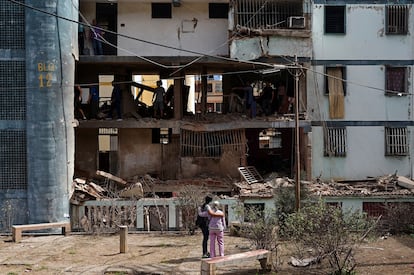

The first official information regarding the deaths resulting from the U.S. Military operation in Venezuela has come from Cuba, almost two days after the attacks. The Cuban government issued a statement of condolence for the deaths of 32 military and intelligence personnel members who were part of President Nicolás Maduro’s security detail at the time of his capture.
“As a result of the criminal attack perpetrated by the United States Government against the sister Bolivarian Republic of Venezuela, carried out in the early morning of January 3, 2026, 32 Cubans lost their lives in combat action as they were fulfilling missions representing the Revolutionary Armed Forces and the Ministry of the Interior, at the request of counterpart bodies of the South American country,” states a release from the Cuban Ministry of the Interior, published on social media.
At the beginning of Hugo Chávez’s presidency, through international cooperation in health and education, Cuban advisors began to infiltrate Venezuelan institutions. For more than a decade, Havana has controlled intelligence, counterintelligence, and presidential security in Caracas.
During his presidency, Maduro denounced dozens of assassination plots against him. This led him to establish a first ring of security, the Presidential Honor Guard, comprised of dozens of bodyguards selected by Cuba and Venezuelan security forces. This corps underwent changes in its leadership after the presidential elections of July 28, 2014, which prompted the Chavista leader to reshuffle his team to navigate the political crisis triggered by allegations of electoral fraud. General Javier José Marcano Tabata was appointed to head the guard, replacing Iván Hernández Dala, who had been in charge of Maduro’s security for nearly a decade.
The Cuban government statement did not specify the identities of the dead, whose families had already received condolences from General Raúl Castro Ruz, leader of the Cuban Revolution. “Our compatriots fulfilled their duty with dignity and heroism and fell, after fierce resistance, in direct combat against the attackers or as a result of the bombing of the facilities,” the statement read.
Cuban President Miguel Díaz-Canel also expressed his dismay at the deaths of his compatriots and decreed two days of national mourning beginning Monday. “Honor and glory to the brave Cuban combatants who fell confronting terrorists in imperial uniforms, who kidnapped and illegally removed from their country the President of Venezuela and his wife, whose lives they were helping to protect at the request of that sister nation,” he wrote on his social media accounts.
Comparto dolor e indignación con nuestro pueblo y especialmente con los seres queridos de nuestros valerosos compañeros. Al abrazar a sus familiares y amigos, en esta hora infausta, reitero mi gran afecto, admiración y orgullo por ellos y su heroico comportamiento.#HonorYGloria
— Miguel Díaz-Canel Bermúdez (@DiazCanelB) January 5, 2026
There has been silence regarding the Venezuelan officers and civilians killed in the U.S. Incursion. The government of Delcy Rodríguez has not provided any information on casualties or details about the number of wounded from the strikes on several military installations in the capital, Caracas, and in the states of La Guaira, Miranda, and Aragua.
Defense Minister Vladimir Padrino said minutes after the attack that they were gathering information to provide a tally of the dead and wounded. However, he made no further statements in that regard. Testimonies from two sergeants who were wounded during the attacks were disseminated by pro-government media outlets, and only unofficial figures have emerged, suggesting up to 80 deaths, according to The New York Times.
Sign up for our weekly newsletter to get more English-language news coverage from EL PAÍS USA Edition
Tu suscripción se está usando en otro dispositivo
¿Quieres añadir otro usuario a tu suscripción?
Si continúas leyendo en este dispositivo, no se podrá leer en el otro.
FlechaTu suscripción se está usando en otro dispositivo y solo puedes acceder a EL PAÍS desde un dispositivo a la vez.
Si quieres compartir tu cuenta, cambia tu suscripción a la modalidad Premium, así podrás añadir otro usuario. Cada uno accederá con su propia cuenta de email, lo que os permitirá personalizar vuestra experiencia en EL PAÍS.
¿Tienes una suscripción de empresa? Accede aquí para contratar más cuentas.
En el caso de no saber quién está usando tu cuenta, te recomendamos cambiar tu contraseña aquí.
Si decides continuar compartiendo tu cuenta, este mensaje se mostrará en tu dispositivo y en el de la otra persona que está usando tu cuenta de forma indefinida, afectando a tu experiencia de lectura. Puedes consultar aquí los términos y condiciones de la suscripción digital.