The paradox of early childhood memories: Why travel with a baby if they won’t remember it
Childhood amnesia prevents us from retaining experiences before age three. Yet those experiences strengthen the emotional bond between parents and children and support children’s social, emotional, and cognitive development


Scroll through the photo gallery on a phone and it’s common to find a folder marked “Son” or “Daughter” filled with baby pictures: their first birthday, pictures with relatives who have since passed away, their first time at the beach at age two, and an endless collection of memories captured in photos, videos, and audio clips. Adults and children were present in all those moments. Yet the former remember them beyond the multimedia record, while the latter do not. Why is it that people have no memories from when they were very young?
“There are different types of memory. There’s short-term memory, which lasts for a short time; and long-term memory, which includes several types: episodic memory, which consists of memories; autobiographical memory, which refers to things that happen to us; and others like semantic memory, which helps us with our general knowledge of motor skills and habits,” explains child psychologist Marta García. “Regarding memories and events, there’s a phenomenon known as childhood amnesia, which is when it’s difficult to recall autobiographical events from the first years of life.”
According to the expert, this age is usually around three and a half, although it varies from person to person. From that point until about six years old, memories do form, but “there is a significant scarcity compared to what memory is like in adulthood.” Even though episodic memory is not yet fully developed, the other types are.
The main reason for this lack of early memories lies in the hippocampus, the brain structure responsible for executing memory. “As we grow, the hippocampus matures. When we are born, it’s already formed, but still immature. Over the years, it develops and becomes capable of storing more memories,” explains Edurne González, a pediatric clinical psychologist and director of the Inspira Center in Spain. She agrees that memories begin to form around the ages of three or four: “At that age, the hippocampus is already able to generate and store those small memories. Even so, some people may have memories from age two or three, but they’re very fragile because the hippocampus isn’t functioning very well yet.”
González also highlights the importance of language in narrating what the brain records, and she points to two types of memory: explicit, which is conscious and can be described, and implicit, which is unconscious but still present.
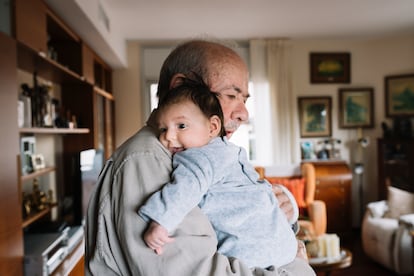
According to a 2025 study published in Science, titled Hippocampal Encoding of Memories in Human Infants, infants are indeed capable of forming memories during their first year of life, even if these memories are not accessible in adulthood. The study argues that childhood amnesia is not so much related to an inability to register experiences, but rather to subsequent difficulties in retrieving them.
So if children won’t remember the experiences or the money their parents spent on shows and activities when they were very young, is it worth doing them? Or is it better to wait until the years when those memories can be stored long‑term?
González is clear on this point: “Children aren’t going to remember all of that, but they do retain the feeling that there’s someone who cares for them, protects them, and plays with them. If they don’t have that secure foundation, they’ll become insecure adults, and that’s where emotional problems like anxiety or depression come from.” She adds that babies don’t need an overload of experiences — just the basics: affection, safety, and parents who are emotionally available.
For García, sharing experiences with young children, even if they won’t remember them in the future, fosters and strengthens the emotional bond between parents and children, as well as their social and cognitive development. She also points out that certain experiences are easier to recall if they have a significant emotional component: “It’s easier for a child to form a memory if it happens with a significant person with whom they have a secure attachment, and if it’s done emotionally. Even memories of a trip, if there’s emotional content, are easier to remember.”
Could parents feel under‑rewarded for the effort they put into experiences their children won’t remember in the future? Generally, García says, this doesn’t tend to bother them. “In reality, the kind of care parents give their babies strengthens the bond with the child, even if the child won’t remember it.” She also points out that attachment and the parent‑child relationship begin forming in the very first months of life: “It’s not so much the memory of that specific event, but rather what the child is learning.”
For González, the way parents teach and interact with very young children is crucial, as is ensuring that children feel seen, that parents are present, and that they are allowed to explore. “I think there is no better gift for parents than knowing that your child is safe and happy; that you have done the best you could with the resources you had.”
Sign up for our weekly newsletter to get more English-language news coverage from EL PAÍS USA Edition
Tu suscripción se está usando en otro dispositivo
¿Quieres añadir otro usuario a tu suscripción?
Si continúas leyendo en este dispositivo, no se podrá leer en el otro.
FlechaTu suscripción se está usando en otro dispositivo y solo puedes acceder a EL PAÍS desde un dispositivo a la vez.
Si quieres compartir tu cuenta, cambia tu suscripción a la modalidad Premium, así podrás añadir otro usuario. Cada uno accederá con su propia cuenta de email, lo que os permitirá personalizar vuestra experiencia en EL PAÍS.
¿Tienes una suscripción de empresa? Accede aquí para contratar más cuentas.
En el caso de no saber quién está usando tu cuenta, te recomendamos cambiar tu contraseña aquí.
Si decides continuar compartiendo tu cuenta, este mensaje se mostrará en tu dispositivo y en el de la otra persona que está usando tu cuenta de forma indefinida, afectando a tu experiencia de lectura. Puedes consultar aquí los términos y condiciones de la suscripción digital.