A superhero in the Holocaust: A great novel finally comes to the big screen... In the form of an opera
An adaptation of Michael Chabon’s ‘The Amazing Adventures of Kavalier & Clay’ will be shown in theaters after its successful run at the Metropolitan Opera in New York


The Amazing Adventures of Kavalier & Clay is one of the great American novels of the turn of the century, and, as its millions of readers will concur, prime material for a screen adaptation. On February 24, a quarter of a century after its author, Michael Chabon, won the Pulitzer Prize, this story of comic book superheroes and Holocaust victims finally arrives in theaters… in the form of an opera.
Theaters in the United States and Canada will screen the production with which the Metropolitan Opera in New York opened its season in September, which returned to the majestic and elegant Manhattan stage for a brief, one-week revival that closed last Saturday. That day, the opera house — a relic of another era with its 3,800 seats — was nearly full, despite a snowstorm looming over the city, the fact that the contemporary repertoire is far removed from the infallible bel canto, and that the institution, like the rest of New York’s opera houses, has been struggling with low attendance since the end of the pandemic. (These problems have recently led to, among other emergency measures, a reduced season, layoffs, and the sale of the hall’s two incredible Chagalls.)
With music by Mason Bates and a book by Gene Scheer, the production — a Met commission that has enjoyed an unusual encore — condenses the complex plot of the 600-page novel into about three hours. It does so at the expense of the story of the Jewish cousins Joe Kavalier and Sam Clay’s success in the burgeoning superhero comic book industry. Their rise to fame begins after Joe arrives in Brooklyn, having fled Nazi-occupied Prague thanks to his talent for escapism. This skill inspires them to create the character with whom they, and Empire Comics, the company they built, compete on newsstands against the newly launched Superman and Captain America.

The Escapist is a kind of Houdini against fascism, born from the imagination and rage of a man who feels fortunate for his successful life in the New World and guilty for having fled, leaving his brother (sister, in the opera) behind. The story that Bates and Scheer save from the chopping block also gives prominence to the romance between Kavalier (played convincingly by Andrzej Filończyk) and Rosa Saks (Sun-Ly Pierce), an artist, and to Clay’s (Miles Mykkanen) gay awakening with Tracy Bacon (Edward Nelson), the actor who portrays The Escapist when the character transitions to radio. It also features an ending that alternates between the comfortable life of the burgeoning American suburbia and the gritty realities of the Western theater during World War II.
The best aspects of the production are Yannick Nézet-Séguin’s conducting of the orchestra and the staging, with the use of vignettes that enlarge and focus, the projections that serve for the jumps between continents, from war-torn Europe to the view of New York from the Empire State Building on a stormy night, and the line work of the drawings that move the story forward.
The seed of the opera was planted in a 2017 performance in Santa Fe, New Mexico, of an earlier work by Bates, The (R)evolution of Steve Jobs, based on the life of the Apple founder. Peter Gelb, then executive director of the Metropolitan Opera, was in the audience. He asked the composer for ideas, and Bates suggested The Amazing Adventures of Kavalier & Clay. By then, Bates had already asked Chabon for permission to adapt the book. The author did not collaborate on the production (opera, apparently, is not his forte), although he has referred to the result on his Substack as “adorable.”
Missteps in Hollywood
The adaptation took eight years. Bates composed a cinematic score, and Scheer packs the inevitably simplified story into a frenetic pace. At least they managed to successfully translate a novel to another medium, the rights to which were acquired by Paramount producer Scott Rudin before its publication. Like so many Hollywood projects, this one is told from the perspective of its missteps.
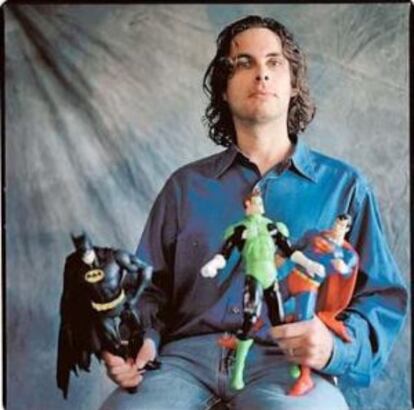
Initially, Sidney Pollack was slated to direct, with Jude Law set to play Kavalier. Stephen Daldry then took over as director, and in 2004, the project nearly moved forward with a cast that included Tobey Maguire, Jamie Bell, and Natalie Portman — a line-up that changed two years later (with Ryan Gosling, Andrew Garfield, and Jason Schwartzman joining the cast). In 2011, Daldry announced he had changed his mind and was preparing to turn The Amazing Adventures of Kavalier & Clay into an eight-episode miniseries for HBO.
Before the pandemic, the idea of adapting it into chapters resurfaced as a project for CBS Television Studios’ Showtime platform. This time, Chabon and his wife, fellow writer Ayelet Waldman, were tasked with adapting a story that, seven years later, still eludes them. Readers know it contains top-notch audiovisual material, but that doesn’t seem to be enough. In the meantime, they have, at least, the refuge of opera.
Sign up for our weekly newsletter to get more English-language news coverage from EL PAÍS USA Edition
Tu suscripción se está usando en otro dispositivo
¿Quieres añadir otro usuario a tu suscripción?
Si continúas leyendo en este dispositivo, no se podrá leer en el otro.
FlechaTu suscripción se está usando en otro dispositivo y solo puedes acceder a EL PAÍS desde un dispositivo a la vez.
Si quieres compartir tu cuenta, cambia tu suscripción a la modalidad Premium, así podrás añadir otro usuario. Cada uno accederá con su propia cuenta de email, lo que os permitirá personalizar vuestra experiencia en EL PAÍS.
¿Tienes una suscripción de empresa? Accede aquí para contratar más cuentas.
En el caso de no saber quién está usando tu cuenta, te recomendamos cambiar tu contraseña aquí.
Si decides continuar compartiendo tu cuenta, este mensaje se mostrará en tu dispositivo y en el de la otra persona que está usando tu cuenta de forma indefinida, afectando a tu experiencia de lectura. Puedes consultar aquí los términos y condiciones de la suscripción digital.