Mexico on alert after the fall of El Mencho
A dozen states suspended classes for Monday, and several others have convened their security cabinets to monitor the wave of violence unleashed by the Jalisco New Generation Cartel following the death of its leader
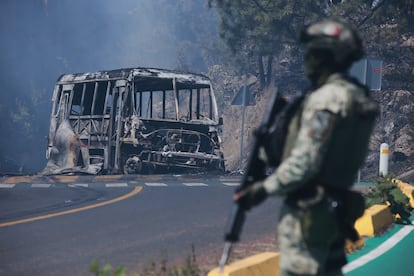

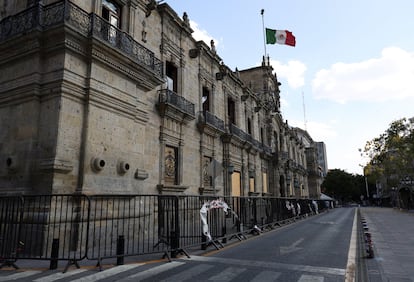
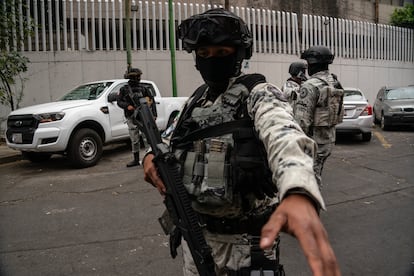
A man was gunned down, and an entire country went on alert. Nemesio “El Mencho” Oseguera Cervantes, the leader of the Jalisco New Generation Cartel (CJNG) and the world’s most‑wanted criminal, died on Sunday after a Mexican Army operation in the mountains of Jalisco. The consequences of his fall spread quickly throughout Mexico. A dozen states suspended school classes for Monday; several governors urgently convened their security cabinets to monitor the wave of violence unleashed by organized crime; the national trucking association urged drivers to seek shelter; and the United States warned its citizens in nearly a third of the country not to leave their homes. Meanwhile, in the state of Jalisco — the cradle of the CJNG — people are still holding their breath: what will the most powerful criminal group in the country do in response to the unexpected death of its leader?
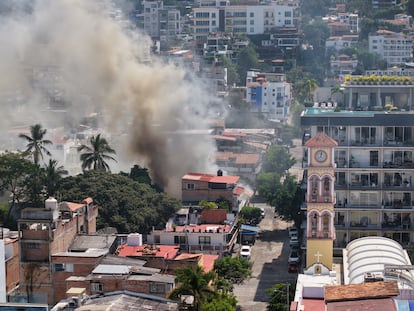
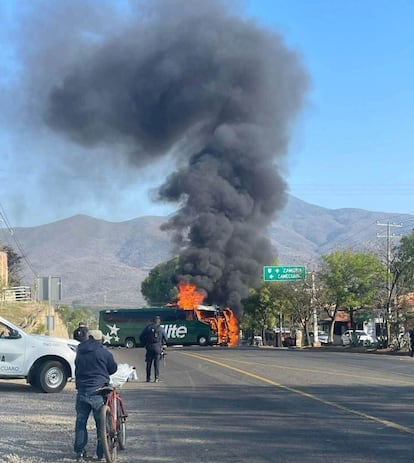
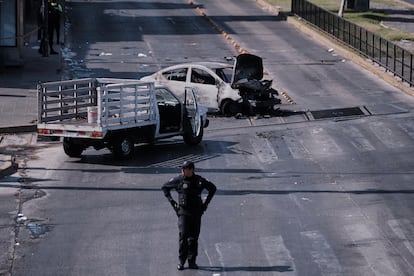
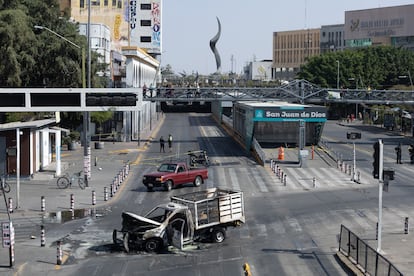
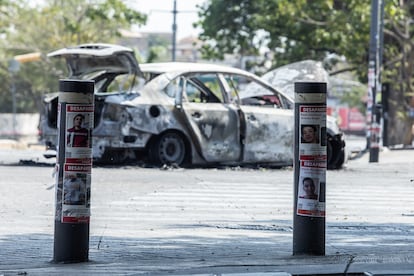
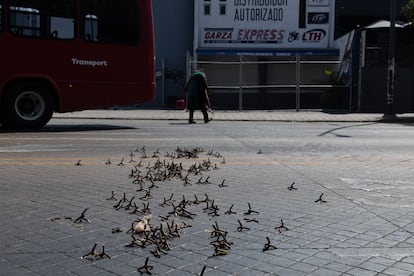
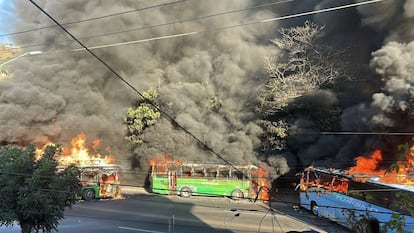
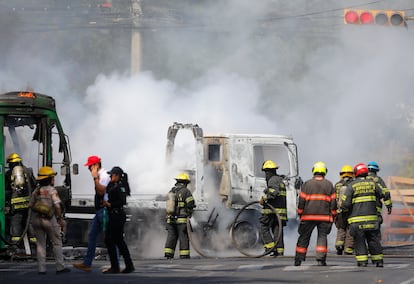
The first warnings came in the form of roadblocks and fire. Recent Mexican history has taught people how to read these signs: the cartel responds with ferocity when its leadership is hit. The city of Culiacán lived through it twice — first during the failed attempt to arrest El Chapo’s son, Ovidio Guzmán, known as “El Ratón,” and again when the Army finally managed to take him away in handcuffs. The result was the siege of Sinaloa’s capital. The same scene began to unfold on Sunday morning, when thick columns of smoke started cutting across the sky over Puerto Vallarta. In Jalisco’s tourist jewel — a regular destination for Americans and Canadians — the news spread like wildfire. The Lord of the Roosters had been neutralized, and his people were not going to stand idly by.
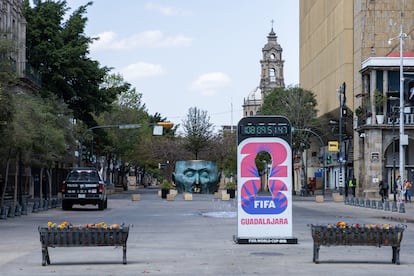
Throughout Sunday, groups of international tourists chose to miss their flights home because they couldn’t risk trying to reach the airports. There were no taxis or ride‑share services operating to the Puerto Vallarta terminal, while the Guadalajara airport was heavily guarded after scenes of panic earlier in the morning. Several airlines, including Aeroméxico, canceled flights to and from Jalisco, Colima, and Nayarit. Jalisco’s governor, Pablo Lemus, activated what he called a “red code” early in the day: “We recommend that the population remain in their homes until the situation is under control.”
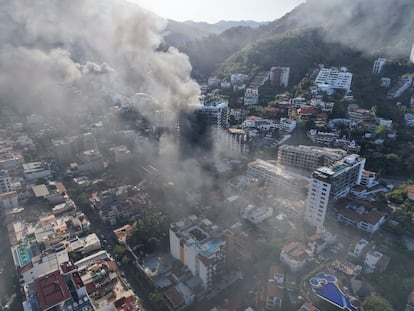
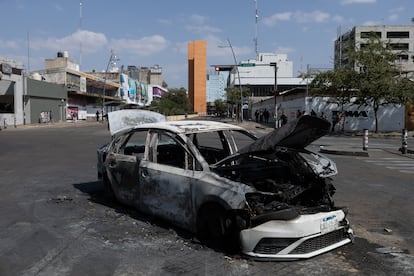
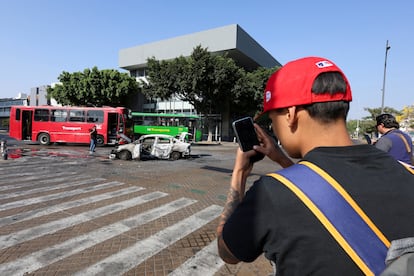
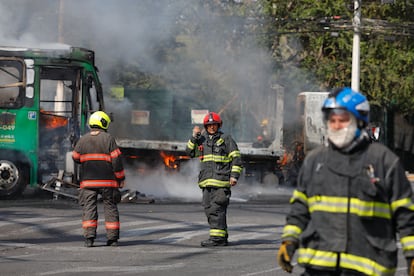
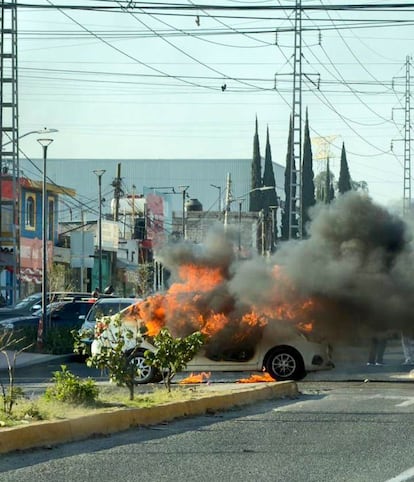
The governor announced that public transportation and measles vaccination campaigns had been suspended, that all mass events had been canceled, that around 20 banks had been set on fire, that criminal groups had burned and abandoned vehicles to “hinder the authorities’ response,” and that the violence had spread to “at least” five Mexican states.
Like a domino effect revealing the firepower of the Jalisco New Generation Cartel, violent incidents erupted across the country. Authorities identified 250 blockades in 20 states — from Sinaloa, Colima, and Nayarit, through Guanajuato, Zacatecas, Hidalgo, Querétaro, Michoacán, and the State of Mexico, all the way to Tamaulipas, Veracruz, Puebla, Chiapas, and Tabasco, more than 800 miles away. The wave of violence also forced the governors of Oaxaca, Guerrero, and Mexico City to urgently convene their security cabinets to monitor the risk. Of all the blockades, only 23 remain active, according to the latest information from the Security Ministry.
“I’m watching the scenes of violence from Mexico with great sadness and concern. It’s not surprising that the bad guys are responding with terror. But we must never lose our nerve,” Christopher Landau, the U.S. Deputy Secretary of State and former ambassador to Mexico, posted on X. The Donald Trump administration issued an alert advising U.S. Citizens to seek shelter if they are in Puerto Vallarta, Chapala, and Guadalajara (Jalisco); Tijuana, Tecate, and Ensenada (Baja California); Cancún, Cozumel, Playa del Carmen, and Tulum (Quintana Roo); and parts of Guanajuato, Guerrero, Michoacán, Oaxaca, Nuevo León, and Tamaulipas.
The United States is not alone. Other countries — including France, Germany, Russia, India, Ukraine, Spain, the Netherlands, and Argentina — also urged their citizens in Mexico to take extreme precautions and stay indoors. In response to the national crisis, Mexico’s president, Claudia Sheinbaum, issued a statement on social media in an attempt to calm the public: “In most of the national territory activities are happening with absolute normalcy. There is complete coordination with the governments of all states; we must stay informed and remain calm.”
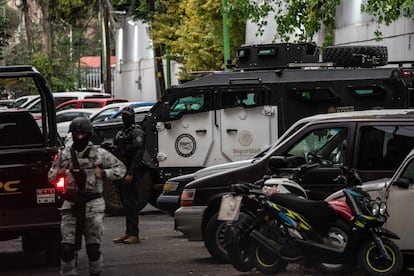

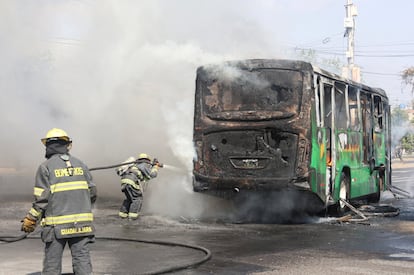
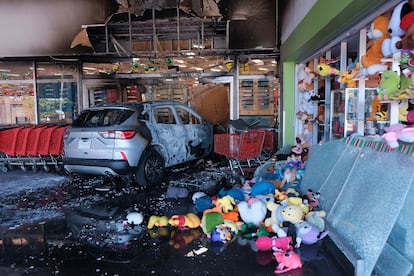
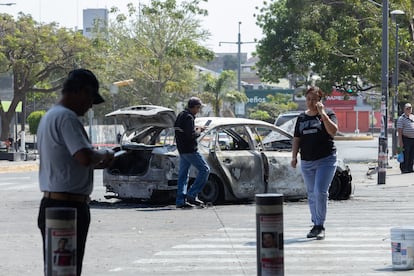
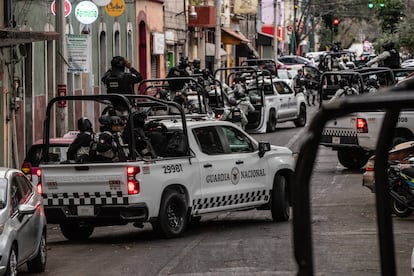
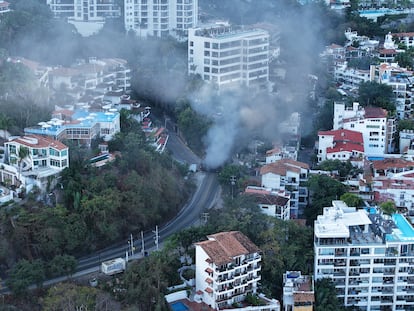
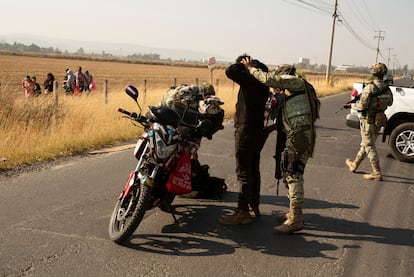

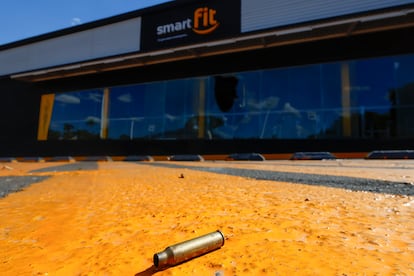
The Jalisco New Generation Cartel’s tentacles reach all 32 states of the country, according to a senior security official who spoke to EL PAÍS. From its origins in 2010 until now, El Mencho’s organization managed to infiltrate every corner of Mexico, leaving behind a trail of bodies and disappearances that, in states like Guanajuato (where the CJNG is locked in an endless war with the Santa Rosa de Lima Cartel) or Chiapas (where it is fighting for territory against splinter groups of the Sinaloa Cartel), reveal the cartel’s most brutal side.
According to the U.S. Drug Enforcement Administration (DEA), “CJNG operates globally, with tens of thousands of members, associates, and facilitators in at least 40 countries.” In just four days last September, security forces arrested 670 suspected cartel members in the United States in an operation aimed at tightening the net around El Mencho, for whom the DEA had offered up to $15 million for information leading to his capture.
The United States enthusiastically welcomed the news of El Mencho’s death in an operation to which, according to both governments, it contributed “complementary intelligence.” “The good guys are stronger than the bad guys. Congratulations to the law enforcement agencies of the great Mexican nation,” posted Landau.
Of all the extraditions of kingpins to the United States and all the key arrests of operators wanted north of the border, Claudia Sheinbaum’s government has now delivered Donald Trump the most coveted prize.
Sign up for our weekly newsletter to get more English-language news coverage from EL PAÍS USA Edition
Tu suscripción se está usando en otro dispositivo
¿Quieres añadir otro usuario a tu suscripción?
Si continúas leyendo en este dispositivo, no se podrá leer en el otro.
FlechaTu suscripción se está usando en otro dispositivo y solo puedes acceder a EL PAÍS desde un dispositivo a la vez.
Si quieres compartir tu cuenta, cambia tu suscripción a la modalidad Premium, así podrás añadir otro usuario. Cada uno accederá con su propia cuenta de email, lo que os permitirá personalizar vuestra experiencia en EL PAÍS.
¿Tienes una suscripción de empresa? Accede aquí para contratar más cuentas.
En el caso de no saber quién está usando tu cuenta, te recomendamos cambiar tu contraseña aquí.
Si decides continuar compartiendo tu cuenta, este mensaje se mostrará en tu dispositivo y en el de la otra persona que está usando tu cuenta de forma indefinida, afectando a tu experiencia de lectura. Puedes consultar aquí los términos y condiciones de la suscripción digital.