The nine lives of Keir Starmer: The British prime minister buys time until the May elections
Labour MPs are expecting a landslide defeat that will trigger an internal war
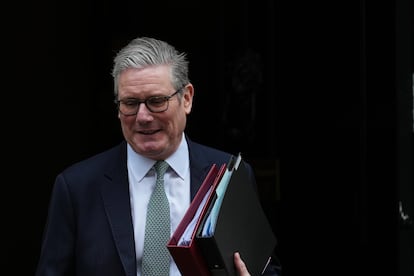

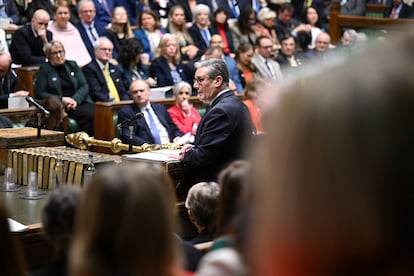
Keir Starmer arrived at Wednesday’s Prime Minister’s Questions with his claws sharpened. He reminded the Conservatives of Boris Johnson’s misdeeds; the Liberal Democrats of their complicity in the austerity imposed by David Cameron’s government; and Scottish National Party (SNP) of the corruption cases involving its previous leadership. Well‑drilled Labour MPs cheered and applauded their leader. The immediate goal was to contain the fallout from the Mandelson–Epstein scandal, which had come close to ending the British prime minister’s brief tenure.
The Fabian Society originally adopted as its coat of arms a wolf disguised in sheep’s clothing. Late‑19th‑century British left‑wing intellectuals helped launch a movement that championed the intelligent and peaceful use of trade unionism and municipal power to achieve social progress, as opposed to revolution or chaos. The Roman general Quintus Fabius Maximus, from whom the society took its name, patiently waited for a mistake by Hannibal before striking successfully — the so‑called “Fabian tactics.” “When the time comes you must strike hard, as Fabius did, or your waiting will be in vain,” declared the society’s first pamphlet. The Fabians went on to help found the U.K. Labour Party in 1900.
In 2019, for the first time in its history, a member of the society’s Executive Committee became the leader of the U.K.’s main left‑wing party. His name is Starmer. On Monday, the prime minister deftly quelled, in just a few hours, an internal rebellion determined to bring him down.
“I will never walk away from the mandate I was given to change this country. I will never walk away from the people that I’m charged with fighting for and I will never walk away from the country that I love,” Starmer declared defiantly the following day, once it became clear that, for now, he had managed to cool Labour’s anger over the Epstein scandal and the appointment of Mandelson as U.S. Ambassador despite being aware of his ties to the sex offender.
But the prime minister’s survival instinct is by no means a guarantee that he can breathe easy in the months ahead. Starmer, who entered politics late and has always been something of a lone wolf, has even boasted that there is no such thing as “Starmerism,” unlike “Blairism” (after Tony Blair) or “Corbynism” (after Jeremy Corbyn). His approach is rooted in pragmatism, which benefited at the polls from the collective exhaustion after 14 years of Conservative governments.
The prime minister has not stayed afloat thanks to his own momentum, but rather by capitalizing on the weakness of the opposing currents. Most Labour MPs are well aware that Starmer’s popularity is at rock bottom. According to the latest YouGov poll, 63% of Britons consider it fairly or very likely that he will no longer be leading the government by the end of 2026.
Starmer managed to stop this week’s internal coup attempt because his main rivals are not yet in a position to mount a full‑blown challenge, and the parliamentary party is in no mood to leap into the void. The applause he received on Monday, when he offered a mea culpa before his MPs, was more of a truce than the cauterization of an open wound.
Former minister Angela Rayner, adored by the trade unions and Labour’s left wing, has yet to resolve the tax‑payment troubles with the public treasury that forced her out of government. Health Secretary Wes Streeting, charismatic and an excellent communicator, has his own explanations to give regarding his close relationship with Peter Mandelson, the disgraced politician and former minister whose ties to Jeffrey Epstein triggered the U.K.’s current institutional crisis. And Andy Burnham, the popular mayor of Manchester, has his hands tied ever since Starmer maneuvered to block his return to Parliament — a prerequisite for competing for the party leadership.
Historically, the strongest position from which to replace a prime minister has been that of chancellor of the Exchequer or foreign secretary. That was the case, respectively, for Labour’s Gordon Brown, who forced Tony Blair out, and for the Conservative Boris Johnson, who ousted Theresa May.
Truce until May
“I think the round of applause in the committee room just now was staged, just as all those endorsements for the prime minister — which appeared within five minutes of each other — were staged,” Diane Abbott, a veteran Labour MP and fierce rival of Starmer, told the BBC. “I can’t see him lasting beyond May’s election. They’re going to be catastrophic elections, and I think the idea is let him stay in there and take responsibility.”
On 7 May, local elections will be held across much of England, and devolved elections in Wales and Scotland. Polls predict a Labour collapse and the unstoppable rise of the far‑right Reform UK, Nigel Farage’s party. That was the main reason Anas Sarwar, the leader of Scottish Labour, rushed on Monday to call for Starmer’s resignation — a move no one else backed. He was trying to salvage what he could ahead of an expected defeat to the SNP.
If Starmer hopes to survive a crushing defeat in May, he will almost certainly have to make concessions to his rivals and open the door to a possible succession. “It wouldn’t surprise me if it was at the price of Rayner becoming foreign secretary and Streeting becoming chancellor. This might be the only way for Starmer to survive in the short term, and it would put either or both in prime position to challenge him thereafter according to the traditional model,” wrote Andrew Adonis, Labour politician, writer, former minister under Tony Blair and now a member of the House of Commons, in an article in Prospect.
Starmer’s decision to dismiss Morgan McSweeney, his chief of staff, and Tim Allan, his director of communications, in response to MPs’ outrage over the Mandelson–Epstein scandal, may at first glance look like a display of his ruthless determination to cut the problem off at the root. But McSweeney was the loyal ally who played a key role in the 2024 election victory and who had shaped Starmer’s political strategy ever since. Allan, a veteran of the Tony Blair government, had been brought in to revive the communications success of that era. Both were central figures in Downing Street.
Their removal can also be read as a sign of Starmer’s extreme weakness. Four chiefs of staff and five communications directors in less than two years. The fragility of “Starmerism” — and the beginning of the end for the wolf in sheep’s clothing.
Sign up for our weekly newsletter to get more English-language news coverage from EL PAÍS USA Edition
Tu suscripción se está usando en otro dispositivo
¿Quieres añadir otro usuario a tu suscripción?
Si continúas leyendo en este dispositivo, no se podrá leer en el otro.
FlechaTu suscripción está en uso en otro dispositivo y solo puedes acceder a EL PAÍS desde uno simultáneamente.
Si deseas compartir tu cuenta, actualiza tu suscripción al plan Premium, así podrás incluir a otro usuario. Cada uno iniciará sesión con su propio correo electrónico, lo que les permitirá personalizar su experiencia en EL PAÍS.
¿Tienes una suscripción de empresa? Accede aquí para contratar más cuentas.
Si no estás seguro de quién está utilizando tu cuenta, te sugerimos actualizar tu contraseña aquí.
Si decides seguir compartiendo tu cuenta, este mensaje aparecerá en tu dispositivo y en el de la otra persona que utiliza tu cuenta de manera permanente, impactando tu experiencia de lectura. Puedes consultar aquí los términos y condiciones de la suscripción digital.