Juan Gabriel Tokatlian: ‘If Peru, Colombia, and Brazil shift to the right, the US will have the bulk of Latin America under its influence’
The Argentine academic, a specialist in international relations, warns about the region’s growing alignment with Trump and the ‘dramatic breakdown of international law’ that could throw the world into uncharted territory
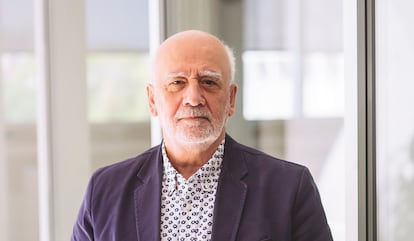
In 1950, the renowned U.S. Diplomat and strategist George F. Kennan — remembered as the architect of the so‑called containment doctrine against the Soviet Union — sent a memorandum to the secretary of state with a stark warning: the United States needed to adopt a much tougher stance toward regions where communist sympathies were growing. In particular, he argued that Washington had to strongly assert its status as a great power, making clear that the countries of Latin America needed the U.S. Far more than the U.S. Needed them. And that, if they did not cooperate, they would be disciplined. With Donald Trump back in the White House for a second time, that logic of domination and discipline appears to have found new life. And, as Argentine sociologist Juan Gabriel Tokatlian, 72, a specialist in international relations, warns, it is beginning to translate into concrete actions.
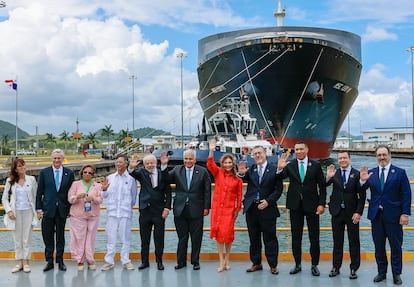
Last Saturday, 12 Latin American leaders traveled to Miami to take part in Shield of the Americas, a summit of allies convened by Trump at one of his golf clubs. “The United States has understood that it is possible to unify them, to coordinate them. It is possible that its project will now find an opportunity,” says Tokatlian, a professor at the Torcuato Di Tella University and author of Consejos no solicitados sobre política internacional (Unsolicited Advice on International Politics).
Question. Do you think this new war started by the United States and Israel against Iran will be confined to the Middle East, or could it become a global conflict?
Answer. It is highly doubtful that this conflict will spread to other regions. While there are other unresolved conflicts in the immediate vicinity, there is no interconnection between them, largely because there is another set of extra-regional actors who are not intervening and do not intend to intervene militarily, namely Russia and China.
What the United States is doing, beyond supporting [Israeli Prime Minister Benjamin] Netanyahu’s request to commit again to attacking Iran, does not appear to be part of a strategic plan. It seems to shift its objectives tactically from day to day and is willing to continue escalating. In that sense, in the immediate vicinity, the conflict undoubtedly already has a much larger regional dimension than it did in June of last year.
Now, if I look at it with an even broader lens, this is a conflict that reveals — perhaps more than any other since Russia’s invasion of Ukraine, Hamas’s attack in southern Israel and the fierce retaliation by Netanyahu’s government, up to Iran 2025 — a dramatic breakdown of international law.
Q. What do you mean by that?
A. First, neither of the actors who initiated this military action sought any level of international legitimacy. They could not invoke self-defense, claiming there was evidence they would be attacked. And therefore, this was an important global test of how countries would behave with respect to international law.
And here the outcome was dramatic, because on the very day of the events, the United Kingdom, France, and Germany issued a statement in which they didn’t even name the attack or the aggressor; it was a four-paragraph statement directed against Iran. A few hours later, NATO Secretary General Mark Rutte congratulated the United States and Israel on the military action, without even mentioning that any principle of legality was at stake.
When the debate took place in the Security Council, there were indeed critical statements, but what is most striking is that there was no possibility of drafting a resolution at least deploring the event. Neither Russia nor China sought to acknowledge that anything had occurred with respect to international law. If I read India’s statement, I also see that it’s a very weak one. And [Argentine President Javier] Milei, among others, appears to be directly endorsing the action. I mean, this event could be the beginning of the end for international law as we know it, in terms of the use of force, its legality, and its legitimacy.
Q. What consequences could this breakdown of rules have — what does it open the door to?
A. To the arbitrariness of the powerful becoming the norm. And to objectives, whether regional or global, being imposed through submission. In other words, it’s no longer a question of multilateralism failing — which it has again — but that an architecture that has guided us since 1945 has collapsed. And when the role of international law as a framework for coexistence is erased, we enter terra incógnita.
The reactionary international
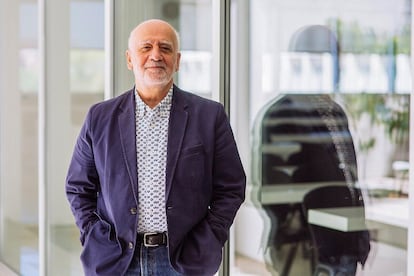
Tokatlian describes the rise of a “reactionary international,” a transnational network fueled by think tanks and magnates who mobilize resources for a political project promising to restore a supposedly glorious past. Although leaders like Chile’s José Antonio Kast, Milei, and Trump have different styles and operate in different contexts, they share a similar political language and belong to the same ideological family that is expanding globally.
Q. Last Saturday, many Latin American presidents traveled to Miami to meet with the “totem” of the reactionary international, as you describe Trump.
A. That meeting is an expression of the United States’ understanding that it’s possible to unify and coordinate them. It’s possible that its project — expressed in the national security strategy and the national defense strategy of aligning and disciplining Latin America — will now find an opportunity. And if Peru moves to the right in April; if the right returns to power in Colombia in May; and if the right wins again in Brazil in October, it will have practically the bulk of the region completely under its influence. If this process were to succeed, it would be like going back to the 1960s and 1970s, when most of the region’s governments were aligned with the United States because of the fight against communism and because many were military regimes. Now they are democratic, they are not fighting anyone, but they will be much more ideologically aligned.
Q. Trump now has a volunteer army in Latin America.
A. That’s a good way to put it. This reactionary international movement should be seen as a project with resources and connections. There are some guys here who have a lot of money, who are magnates, who also have an organizational structure through think tanks, who are very good at indoctrinating people, and who are playing a medium- and long-term game.
Q. What do they want?
A. Power. Reorganizing societies. When Milei and others, including Trump, talk about a culture war, they are revealing something deeper than a political struggle, because changing a culture takes many decades, possibly centuries.
Milei and an irrelevant foreign ministry
Q. Argentina suffered two terrorist attacks in the past, both linked to Iran. Does being so close to the United States and Israel at this time expose Argentina to an unnecessary risk?
A. If you think about what happened in the past, it appears that Argentina built up a list of things that put us in the crosshairs of countries in conflict: for example, the Argentine missile program of the 1980s, the fact that we were the only Latin American country to join the war in Iraq in 1991.
When the actors in the region looked for a weak point, that weak point was Argentina. That exaggerated view of Argentina, the idea that it could become a significant player because of what it did or didn’t do, showed us that we were getting into dangerous territory. Am I saying that these terrorist attacks are going to be repeated now? No. What I am saying is that this is an even weaker and more vulnerable Argentina than before, and it makes commitments as if it were an actor that controls key players in the Middle East.
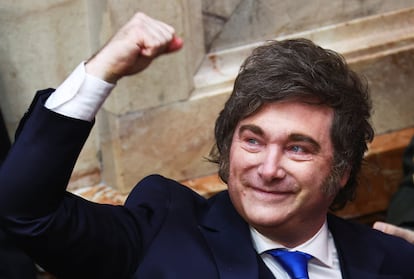
Q. Do you see a clear strategy, aligned with national interests, in Milei’s foreign policy?
A. I believe that Milei’s government has an anachronistic worldview, lacking nuance and enough flexibility. It fails to recognize that there are issues in which Argentina has a reputation it should continue to uphold, and that there are historical partners, such as Brazil, whom we cannot continue to mistreat. A symbolic example of this is the release of an Argentine gendarme in Venezuela, secured through a sports organization, because the government refused to negotiate with Venezuelan authorities for dogmatic reasons.
Q. Does this anachronistic vision that Milei holds amount to simply hiding behind the shield of the most powerful?
A. I think the idea is: I support the United States, which is vital to my existence as a political project.
Q. This, in fact, has proven to be true. Milei was saved before last October’s elections thanks to Trump’s $20 billion bailout.
A. Yes, he has a point there. In his view, for the sustainability of his political project, he only needs the United States. Some time ago, I asked an ambassador how relations with Argentina were going, and he told me he didn’t know because it was part of “the 191 countries.” He was referring to the group of countries outside the United States and Israel with which the Milei government directly has no relations. “We don’t know if we are friends of Argentina or enemies, if they repudiate us, or if they even know about us,” he said. If this serves to preserve a government and a ruling coalition, one can say two years later that it has achieved that. Does that mean defending national interests? No, it’s not the same thing.
Sign up for our weekly newsletter to get more English-language news coverage from EL PAÍS USA Edition
Tu suscripción se está usando en otro dispositivo
¿Quieres añadir otro usuario a tu suscripción?
Si continúas leyendo en este dispositivo, no se podrá leer en el otro.
FlechaTu suscripción se está usando en otro dispositivo y solo puedes acceder a EL PAÍS desde un dispositivo a la vez.
Si quieres compartir tu cuenta, cambia tu suscripción a la modalidad Premium, así podrás añadir otro usuario. Cada uno accederá con su propia cuenta de email, lo que os permitirá personalizar vuestra experiencia en EL PAÍS.
¿Tienes una suscripción de empresa? Accede aquí para contratar más cuentas.
En el caso de no saber quién está usando tu cuenta, te recomendamos cambiar tu contraseña aquí.
Si decides continuar compartiendo tu cuenta, este mensaje se mostrará en tu dispositivo y en el de la otra persona que está usando tu cuenta de forma indefinida, afectando a tu experiencia de lectura. Puedes consultar aquí los términos y condiciones de la suscripción digital.