We are how we breathe: Doing so consciously is a form of mental well-being
Scientific literature provides evidence that the way we breathe influences neural areas related to attention, memory, smell, and emotions
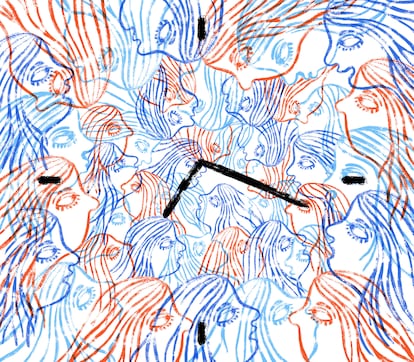
Breathing is a purification process. Or so we thought until now. Inhalation involves the entry of oxygen-rich air into our bodies. This air travels down the pharynx, larynx, and trachea to the lungs, where the alveoli exchange the oxygen present in the blood for carbon dioxide, which is then expelled during exhalation. Breathing cleanses the blood, which is then pumped by the heart. That is the function we have attributed to the respiratory process until now. But fortunately, we are realizing that the body is much more complex, and that breathing reflects and influences our cognitive and emotional state. We had almost forgotten this, and now we are remembering it.
References to the role of breathing in the mind, soul, or spirit — depending on the era — are found in the papyri of Ancient Egypt, in the foundations of Hippocratic and Galenic medicine in Classical Greece, in Hebrew mysticism and the Sephardic medicine of Maimonides, and in the Sufi worldview of ancient Persia. And of course, in the Indian culture of yoga, which for centuries has developed and disseminated a wide range of breathing techniques aimed at shaping the mind, known as pranayama, a Sanskrit term that refers to the impact of breath on human beings. Its historical imprint has recently been recognized in neuroanatomy.
In 2017, Stanford University published a scientific study detailing the nerve pathways that transmit the impact of breathing to the brain, which they called “pranayama pathways.” Today, scientific literature gathers evidence showing that the way we breathe influences the functioning of neural areas involved in attention, memory, smell, and emotions. Learning to breathe is a form of mental well-being. However, studies encourage us to first understand our natural breathing pattern, observe it, and become familiar with it. We breathe around 1,000 times an hour without realizing that each breath is a reflection of our mental health. Few of us could say how many breaths we normally take per minute, whether we inhale through our nose or mouth, or if we tend to pause briefly after each exhalation. Illiteracy about our own bodies makes us barbarians, and deprives us of the ability to influence them to heal or improve our experience.
The natural breathing pattern — called eupnea, which is the one our bodies naturally maintain when we are still, motionless, and silent — reflects an astonishing amount of information about our brain function and, therefore, our mental health. Breathing consists of three phases. The first is the inspiratory phase, where air is drawn in, activating brain areas responsible for memory, attention, and self-awareness. The second phase is exhalation, where stale air is expelled, regulating emotional neural networks. And the third phase, frequently forgotten or underestimated, is the pause or suspension of breathing. It is a phase of apnea where we often say we are not breathing. However, breathing also involves stopping.
This third phase has recently been revealed as one of the periods that provides us with the most information about mental health. Recent studies have shown that anxiety modifies the breathing pause. One of the brain structures most involved in anxious states is the amygdala, whose activity becomes excessive in response to unpleasant emotions. This excessive amygdala activity causes a prolongation of the pause that follows exhalation, known as amygdala-induced apnea. We have all experienced this in those typical sighs, where one seems to get stuck in the void that follows exhalation, as if it were difficult to take another breath. Literally, the amygdala delays the activation of the neuronal nuclei responsible for initiating inhalation. The duration and regularity of this third phase are related to the brain’s alerting network, which is very active in situations of anxiety and includes the insula and cingulate cortex.
The longer and more disordered this apnea is, the greater the anxiety it reflects. Scientific studies recommend understanding and working on exhalation and its pauses to treat moderate mental health disorders, such as anxiety. The University of Tokyo suggested slowly prolonging the exhalation, making it longer than the inhalation, in order to reduce anxiety in the face of a stressful event. We are also encouraged to correct disruptions in the breathing cycle by striving for rhythmic breathing. The brain is uncomfortable when it cannot predict the arrival of the next breath, and is therefore calmed by observing orderly breathing, like the ticking of a clock. A drifting breath is a drifting mind, said the yoga master Iyengar, and neuroscience could confirm this today. We have been told this in so many cultures for centuries, and now scientific knowledge reiterates it: breathing speaks of us and is a way of communicating with ourselves. Breathing is a kind of mirror in which to see ourselves and, from there, an opportunity to enhance our beauty.
Sign up for our weekly newsletter to get more English-language news coverage from EL PAÍS USA Edition
Tu suscripción se está usando en otro dispositivo
¿Quieres añadir otro usuario a tu suscripción?
Si continúas leyendo en este dispositivo, no se podrá leer en el otro.
FlechaTu suscripción se está usando en otro dispositivo y solo puedes acceder a EL PAÍS desde un dispositivo a la vez.
Si quieres compartir tu cuenta, cambia tu suscripción a la modalidad Premium, así podrás añadir otro usuario. Cada uno accederá con su propia cuenta de email, lo que os permitirá personalizar vuestra experiencia en EL PAÍS.
¿Tienes una suscripción de empresa? Accede aquí para contratar más cuentas.
En el caso de no saber quién está usando tu cuenta, te recomendamos cambiar tu contraseña aquí.
Si decides continuar compartiendo tu cuenta, este mensaje se mostrará en tu dispositivo y en el de la otra persona que está usando tu cuenta de forma indefinida, afectando a tu experiencia de lectura. Puedes consultar aquí los términos y condiciones de la suscripción digital.