Will ICE be present at the Super Bowl?
Contradictory messages from the federal government, local warnings in California, and a community on alert mark the run-up to the biggest domestic sporting event of the year in the United States
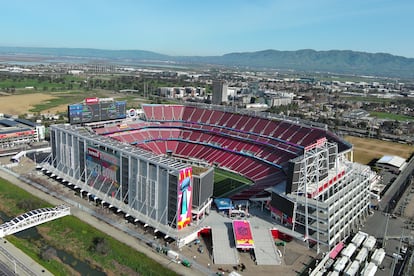

With Super Bowl LX just a few days away, set to take place on February 8 at Levi’s Stadium in Santa Clara, California, attention is not only focused on the game and the halftime show. At the center of the debate is also the possible presence of Immigration and Customs Enforcement (ICE) agents during the event and surrounding activities, a possibility that has generated fear in immigrant communities and tension between federal and local authorities in California.
For months, Donald Trump administration officials assured that ICE would not pause its operations for the Super Bowl. In recent days, however, the message from Washington has been less clear. Unidentified sources cited by TMZ Sports have claimed that the Department of Homeland Security (DHS) has decided not to conduct immigration operations inside the stadium or at official NFL events during Super Bowl week. According to these reports, there will be no immigration arrests inside Levi’s Stadium on game day.
However, the DHS itself has not confirmed or denied this information. In public statements, its spokesperson, Tricia McLaughlin, merely pointed out that the agency works with federal and local agencies to ensure security at “major events” and that it will not disclose operational details or information about deployed personnel. “Those who are here legally and are not breaking other laws have nothing to fear,” she said.
State and municipal authorities have reacted with a mixture of preventive preparation and political defiance. California Governor Gavin Newsom and State Attorney General Rob Bonta urged local law enforcement to investigate any possible illegal conduct by federal agents acting within their jurisdiction. Similarly, mayors and council members in the South Bay area have reiterated that their police will not cooperate with immigration operations.
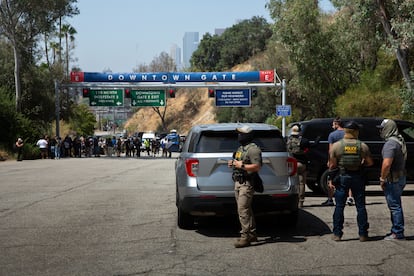
Santa Clara County Sheriff Bob Jonsen assured that his department will not support ICE in immigration control tasks during the Super Bowl and warned that any federal agent who violates the law in the county will be treated like a regular citizen. “There is no such thing as absolute immunity and there is no license to kill,” he said at a press conference, referring directly to the events in Minneapolis.
In San Jose, Mayor Matt Mahan said the city has not received confirmation of a specific immigration operation, but acknowledged the public’s concern. “Our San Jose police officers are here to keep you safe. They cannot and will not interrupt or assist with legal immigration enforcement” he wrote. The message has been repeated in Santa Clara and other nearby cities, where communication and incident response protocols have been strengthened.
For their part, community organizations have announced that they will increase their capacity during Super Bowl weekend to document possible ICE operations and assist detained individuals. For these networks, uncertainty is central to the problem: fear exists even if no operation takes place.
The nervousness contrasts with the NFL’s official version, which has emphasized that the Super Bowl is classified as a maximum national security event (SEAR 1) and that, as in previous editions, it will be attended by multiple federal agencies focused on protection, counterterrorism, and threat control, not immigration. In 2016, when the Super Bowl was also held in Santa Clara, federal agents participated in operations against the sale of counterfeit merchandise and in general security tasks.
But the current context is different. Recent deaths in Minneapolis have eroded public confidence in ICE, and national polls show that a majority of Americans believe the agency acts too aggressively. In California, that rejection has translated into local policies that seek to limit federal action, although without being able to prevent it entirely.
Adding to this tension is a political and cultural component. President Trump openly criticized the Super Bowl halftime show, headlined by Puerto Rican singer Bad Bunny, calling it a “terrible choice.” His statements further fueled the perception that the event has become a symbolic stage for confrontation between the federal government and broad sectors of society.
Sign up for our weekly newsletter to get more English-language news coverage from EL PAÍS USA Edition
Tu suscripción se está usando en otro dispositivo
¿Quieres añadir otro usuario a tu suscripción?
Si continúas leyendo en este dispositivo, no se podrá leer en el otro.
FlechaTu suscripción se está usando en otro dispositivo y solo puedes acceder a EL PAÍS desde un dispositivo a la vez.
Si quieres compartir tu cuenta, cambia tu suscripción a la modalidad Premium, así podrás añadir otro usuario. Cada uno accederá con su propia cuenta de email, lo que os permitirá personalizar vuestra experiencia en EL PAÍS.
¿Tienes una suscripción de empresa? Accede aquí para contratar más cuentas.
En el caso de no saber quién está usando tu cuenta, te recomendamos cambiar tu contraseña aquí.
Si decides continuar compartiendo tu cuenta, este mensaje se mostrará en tu dispositivo y en el de la otra persona que está usando tu cuenta de forma indefinida, afectando a tu experiencia de lectura. Puedes consultar aquí los términos y condiciones de la suscripción digital.