Berlinale 2026: When cinema (good, bad, mediocre) is not discussed because of a political storm
The German festival curated a competition with strong moments and many films about families on the verge of collapse. Yet what played on the screens was overshadowed by the media uproar
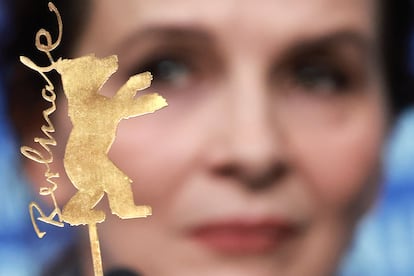

While the Berlinale’s director, Tricia Tuttle, keeps piling up sandbags to stop the wave of outrage over how the festival is handling the invasion of Gaza from flooding its cinemas, screenings at the 76th edition continue. The German festival has always been the most politicized of the major film events, but the controversy has sent shockwaves into 2026, creating the sense that there are first‑class victims (Ukrainians and Iranians) and second‑class ones (Gazans). Tuttle has spoken far more about politics than about film programming.
Following a letter signed by 81 world-renowned film figures expressing their dismay at the festival’s refusal to condemn the genocide in Gaza — and at the clear signals artists in Germany receive not to speak about the issue — Tuttle gave an interview to Screen International in which she defended herself, arguing the festival “recognizes the depth of anger and frustration about the suffering of people in Gaza.”
She then gets to the heart of the matter, regarding an event paid for with public funds: “People are realizing that maybe staatsräson [the commitment in German law to Israel’s security, rooted in historical responsibility for the Holocaust] is holding us back from having important conversations about the government that is currently in power in Israel.”

Maybe so, but no effort has been made in the programming of Berlinale either. In 2025, the festival screened two Israeli films recalling the attacks in which 251 hostages were abducted by Hamas, and a Palestinian film, Yalla Parkour — a documentary about Palestinian parkour athletes in Gaza — could have shown the other side of the conflict… but it was shot just before the Israeli invasion. This year’s festival lineup includes one Israeli film, Where To?, about a Palestinian Uber driver and a gay tourist from Tel Aviv who connect in the German capital. Nothing more in a festival that, it must be stressed, is focused on political and social themes.
What stands out most in the Berlinale Competition lineup is a sense of disjointedness. With no films poised for a long run through awards season (those now go to Cannes or Venice) and no Hollywood movies either (the Berlinale used to be their European launchpad), the best and the worst this year have come from dramas built around the emotional crises of families on the verge of falling apart.
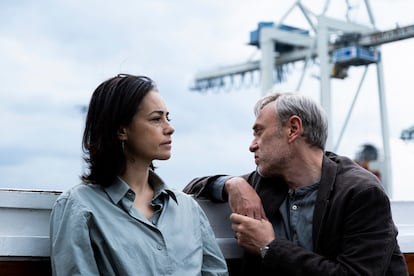
There haven’t been any truly awful films, that’s true, although some are fascinating precisely because they manage to fail so spectacularly. It’s worth noting how they go off the rails, which will surely amuse viewers who enjoy watching films fall apart.
There is Rosebush Pruning, by the Brazil‑born, Germany‑based Karim Aïnouz, who in trying to be Yorgos Lanthimos instead of Lanthimos himself has ended up directing a grotesque script by Efthimis Filippou, the Greek filmmaker’s usual screenwriter.
Another notable mention goes to At The Sea, another European movie in English. In the movie, Hungarian director Kornél Mundruczó achieves the nearly impossible feat of making Amy Adams — one of the finest actors working today — get lost inside a family drama.
And the German film Etwas Ganz Besonderes ( or Home Stories) and its look at generational breakdown, doesn’t work either. In the movie, the teenage daughter is about to take part in a talent show thanks to her beautiful voice; the mother is expecting a child with her new partner; the father is struggling to save the family’s imposing castle‑hotel from ruin; the grandmother revels in being a dictator; the aunt is trying to keep the local museum alive… And all this whirlwind unfolds in a region of the former East Germany now dominated by the far right — a crucial detail that is hinted at, though only German audiences fully grasp it.
More families appear in films that, while not exactly breathtaking, have raised the overall quality of the official selection: Juliette Binoche’s in Queen At Sea, shattered by her mother’s dementia. The mother lives with her stepfather (Tom Courtenay, in excellent form) in a gentrified London. The film, which deals with elder care and sexual consent, moves forward with steady control — without sloganeering or simplistic shortcuts — and strong performances, right up until its debatable ending. Even so, watching Courtenay and Binoche face off on screen is well worth it.
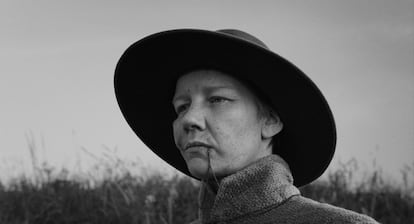
Then there is Rose, which is built around Sandra Hüller (Toni Erdmann, Anatomy of a Fall, The Zone of Interest), now firmly established as a star of European auteur cinema. In the movie, Hüller plays a woman in the 17th century who disguises herself as a male soldier with a face disfigured by a gunshot in order to claim a farm that isn’t hers. She manages to fool everyone, even her own wife, until a series of events begins to turn against her. Hüller leads the story with immense talent.
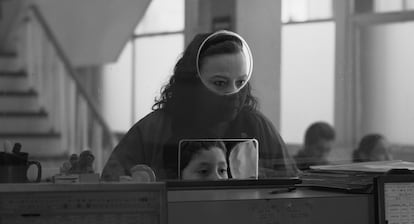
Rose is shot in black and white, just like Moscas ( or, Flies), by the Mexican filmmaker Fernando Eimbcke, who squeezes meaning out of an apparently minor story (a lonely woman rents a room in her home to a man whose wife is undergoing cancer treatment at the hospital directly across the street; what the landlady doesn’t know is that the man is sneaking in his nine‑year‑old son) to explore uprootedness, the pain of loss, makeshift families, and communication beyond words — here, through a vintage arcade machine.

The movie Nina Roza, another story of uprootedness and strange family bonds , could justifiably make it into the awards list. This Canadian film follows an art curator who acquires works for a millionaire and returns to Bulgaria — which he left 28 years earlier with his daughter after his wife died — to see whether an eight‑year‑old girl is truly a painting prodigy.
Another film built around deeply intimate relationships, this time between its two lead friends, is A New Dawn, an anime of striking formal beauty whose use of textures, colors, and mixed image formats nearly manages to conceal a very weak narrative structure.
Better still is the Turkish‑German movie Gelbe Briefe (or, Yellow Letters), which explores the destruction of a family after the father — a university professor and playwright — receives a dismissal letter from the government (the title refers to those yellow letters) for being “unpatriotic,” a blow that drags down his successful actress wife and everyone around them. It’s solid, grown‑up filmmaking.
The headliners
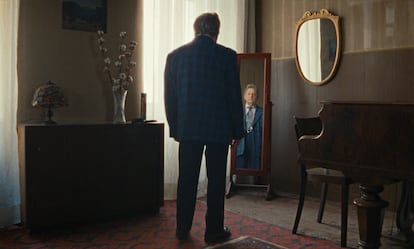
The festival’s strongest entries remain, which the Berlinale has scheduled for its final two days: the Austrian film The Loneliest Man in Town, which portrays the solitary life of a blues musician barricaded in his apartment until the demolition of his building is announced. The image of the protagonist (playing himself) sitting on his sofa with a sandwich in hand says more about ruined lives than many well‑intentioned social‑issue films.
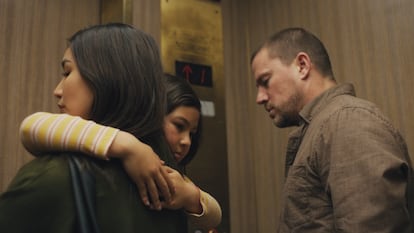
And on Friday the Competition closes with Josephine, by Beth de Araújo, a drama that won two Sundance awards and follows a young girl who accidentally witnesses a rape and explores the emotional impact the assault has on her, especially in relation to her father (played by Channing Tatum). It’s not perfect, but its depth ensures it will be one of the films remembered from this Berlinale.
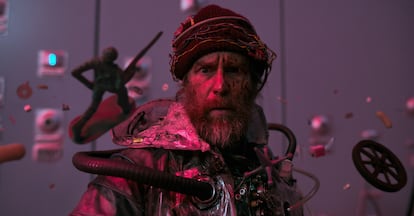
In Berlinale Special — where the former “out of competition” titles and special screenings have now been grouped — there was room for Gore Verbinski’s anti–artificial‑intelligence romp Good Luck, Have Fun, Don’t Die.
And for another documentary by Chilean filmmaker Maite Alberdi, Un hijo propio (or, A Child of My Own), which explores the social mandates tied to motherhood through a hall‑of‑mirrors interplay between real events and the performers reenacting the experiences of those who lived them.
There was also space to settle accounts in Heysel 85 with those responsible for the deaths of 39 football fans at the 1985 European Cup final between Juventus and Liverpool in Brussels (answer: everyone bore responsibility for the tragic incident).
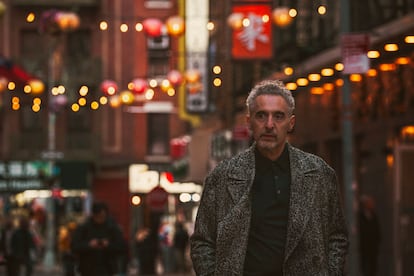
And to enjoy a fascinating, weathered John Turturro as a veteran New York pickpocket who steals from the wrong person in The Only Living Pickpocket in New York.
Incidentally, several faces from New York’s indie scene of three decades ago have appeared across different Berlinale sections and films: Turturro, Sam Rockwell, Giancarlo Esposito, Steve Buscemi, and Tim Blake Nelson. It’s been a lovely reunion. But hardly anyone was talking about that. Once again, cinema has been swallowed by the political storm.
Sign up for our weekly newsletter to get more English-language news coverage from EL PAÍS USA Edition
Tu suscripción se está usando en otro dispositivo
¿Quieres añadir otro usuario a tu suscripción?
Si continúas leyendo en este dispositivo, no se podrá leer en el otro.
FlechaTu suscripción se está usando en otro dispositivo y solo puedes acceder a EL PAÍS desde un dispositivo a la vez.
Si quieres compartir tu cuenta, cambia tu suscripción a la modalidad Premium, así podrás añadir otro usuario. Cada uno accederá con su propia cuenta de email, lo que os permitirá personalizar vuestra experiencia en EL PAÍS.
¿Tienes una suscripción de empresa? Accede aquí para contratar más cuentas.
En el caso de no saber quién está usando tu cuenta, te recomendamos cambiar tu contraseña aquí.
Si decides continuar compartiendo tu cuenta, este mensaje se mostrará en tu dispositivo y en el de la otra persona que está usando tu cuenta de forma indefinida, afectando a tu experiencia de lectura. Puedes consultar aquí los términos y condiciones de la suscripción digital.