The Cuban institution has not shared the discovery with the academic community, and the drawings remain unverified despite their potential connection to the established research.
A recent survey by Spain reveals that the outstanding debt amounts to millions, with Cuban authorities holding onto funds, while a recent survey reveals that the island’s debt remains unresolved.
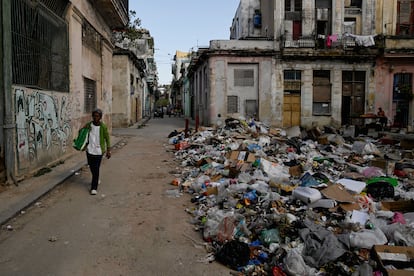

The collapse of the Cuban economy has dealt a major blow to the airlines and hotels that have been operating in the archipelago for decades. The tightening of the U.S. Embargo — which has prohibited the supply of crude oil from Venezuela or Mexico — has triggered an unprecedented economic crisis, forcing companies to improvise contingency plans to cope with fuel shortages and the absence of tourists. The impact of this shock has been far broader, extending to the rest of the Spanish business sector with interests in Cuba. Spanish companies say the Cuban government owes them at least around €300 million (about $324 million) in unpaid debts and other funds that cannot be taken out of the island, although the real figure is likely higher because the estimate comes from a document in which most companies operating in Cuba did not provide their numbers.
The figures appear in the latest private‑debt report prepared by Spain’s Economic and Commercial Office in Havana, which shows that the volume of debt accumulated by Spanish companies with interests in Cuba — whether through investments or exports — rose slightly by 0.1% last year, reaching €255.9 million (about $276 million). The document, accessed by EL PAÍS, notes that the amount of unpaid obligations owed to Spanish companies is actually much higher, reaching €330 million (about $356 million), because the report does not count as liabilities €39.5 million (about $43 million) in retained dividends, €23.6 million (about $25.5 million) in funds from commercial operations, and €11.3 million (about $12.2 million) in payments held in Specific Goods Accounts (Finesp) — accounts funded by debt payments from Cuban state companies, whose balances also cannot be transferred abroad.
The survey was sent to 930 Spanish companies with interests in Cuba, and only 182 responded — just 19.5% of the total. Business sources operating on the island explain this low participation rate by noting that around 20% of the firms — roughly 180 — are currently in insolvency proceedings as a result of the unpaid debts. In other words, as many companies responded to the survey as have entered bankruptcy.
Of the 182 companies that did take part, 85% (154) confirmed they were carrying debts worth €255.9 million (about $276 million), most of which were generated during the three fiscal years between 2017 and 2019. Two‑thirds of those companies are based in three Spanish regions: Catalonia, with 32% of the firms; Madrid, with 26%; and the Basque Country, with 15%.
By size, the companies most affected are medium‑sized firms, with an average debt of €2 million (about $2.16 million), while the smallest amounts correspond to micro‑enterprises, which carry an average of €850,000 (about $918,000). Despite these relatively modest figures, 19% of the companies surveyed acknowledge that the amount owed to them by the Cuban government exceeds their total revenue from the past year.
A spokesperson for the Platform of Companies Affected by the Cuban Government’s Non‑Payments — a group within the Catalan employers’ association Foment del Treball that brings together Spanish firms harmed by the outstanding debts — believes the best way to eliminate those arrears would be through Spain’s state‑run debt‑conversion programs. The most recent one, signed in Seville last July, aimed to mobilize up to €375 million (about $405 million) for projects related to energy, water and food security. “Under current economic conditions, no company is going to invest money in Cuba. But it would be extremely important for those funds to be used to offset the debt owed to these creditor companies, most of which supply food, medicine and vaccines to ten million people at risk of facing an unprecedented humanitarian crisis in the archipelago,” the spokesperson said.
As for the difficulties in recovering the debts accumulated by successive governments linked to the Castro regime, tourism companies are facing the greatest obstacles in their day‑to‑day operations. Meliá and Iberostar — the two hotel chains managing the most properties on the island, with 34 and 20 respectively — have had to close hotels and redistribute guests due to low occupancy levels. (Canadian tourists, who accounted for 50% of arrivals at the start of 2026, have been repatriated over the past two weeks following the shutdown of operations by Air Canada, the country’s largest airline.) Meanwhile, the three Spanish carriers that operated flights between Madrid and Havana — Iberia, Air Europa and W2Fly — have had to reorganize their routes back to Madrid and refuel in Santo Domingo to ensure the flights can operate amid Cuba’s fuel shortages.
Sign up for our weekly newsletter to get more English-language news coverage from EL PAÍS USA Edition
Tu suscripción se está usando en otro dispositivo
¿Quieres añadir otro usuario a tu suscripción?
Si continúas leyendo en este dispositivo, no se podrá leer en el otro.
FlechaTu suscripción está en uso en otro dispositivo y solo puedes acceder a EL PAÍS desde uno simultáneamente.
Si deseas compartir tu cuenta, actualiza tu suscripción al plan Premium, así podrás incluir a otro usuario. Cada uno iniciará sesión con su propio correo electrónico, lo que les permitirá personalizar su experiencia en EL PAÍS.
¿Tienes una suscripción de empresa? Accede aquí para contratar más cuentas.
Si no estás seguro de quién está utilizando tu cuenta, te sugerimos actualizar tu contraseña aquí.
Si decides seguir compartiendo tu cuenta, este mensaje aparecerá en tu dispositivo y en el de la otra persona que utiliza tu cuenta de manera permanente, impactando tu experiencia de lectura. Puedes consultar aquí los términos y condiciones de la suscripción digital.