Out of oil and in pain
While the focus shifts to mounting concerns, the reality of life in Cuba demands urgent attention as the nation grapples with its rising challenges.
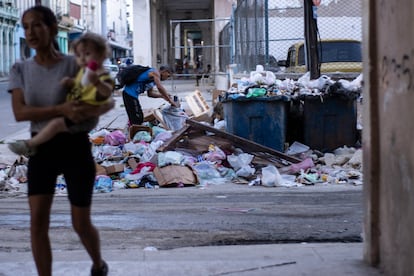
Cuba is in crisis, and the people are suffering. While the world is focused on whether the Cuban government will survive, and analysts are assessing the policy failures that led to this moment and what could come next, it is critically important to understand what is happening to ordinary people on the island.
Schools are closing, the left in Congress stands by the former Móstoles councilor’s outcry, and the PP remains silent.
The cascading effects of oil shortages and their growing impact on communities
For the last few years, Cuba has had access to a fraction of the oil it needs for daily consumption. Oil shortages — if acute — produce a cascade effect that imperils the people and grinds daily life to a halt. As oil supplies shrink, electricity generation and transportation falter in tandem. Although Cuba has suffered daily blackouts for several years, the crisis has intensified. Satellite imagery underscores the severity of the decline, showing that light levels across parts of the island fell by roughly 50% in January compared to typical levels, particularly in eastern cities such as Santiago de Cuba and Holguin.
The gravest conditions are evident in the essentials, hitting households first and foremost, especially in poorer provinces and in communities without access to remittances or generators. Some estimates show that 89% of the population already lives in extreme poverty. Every day brings extended power cuts, intermittent water, spoiled food, suspended classes, canceled surgeries, and transportation that stops without warning. Families spend entire days searching for fuel, cooking gas, or basic goods rather than working. The average Cuban expends enormous energy getting by day-to-day, and any effort to plan for tomorrow is premised on rumors.
For several years now, there has been an erosion of public order. Independent media has increasingly reported theft, nighttime insecurity, and murders, even as official statistics remain limited and difficult to verify. As economic stress deepens and blackouts lengthen, localized protests over food shortages and electricity cuts have reemerged. Conditions that strain daily survival also heighten the risk of further social unrest. At the same time, roughly 1,000 political prisoners remain behind bars following the July 11 protests, and new detentions continue. The state’s response to instability remains rooted in control.
Those who can — either with financial means or physical ability — have left. Migration is not simply a side effect; it is the clearest measure of how little resilience remains. In 2025, Cubans were the third-largest asylum-seeking nationality worldwide.
Cuba’s oil situation today
Against this already fragile baseline, recent events and policies have all but stopped oil imports to Cuba, increasing uncertainty. First, through sanctions and high-seas seizures, the United States government has, for months, attempted to block Venezuelan oil shipments to Cuba. Now, following the January 3rd U.S. Military operation in Venezuela, those shipments have stopped. Then, on January 29, 2026, the White House announced a new executive action that threatens tariffs against any country that provides oil to Cuba.
When compliance risks rise, suppliers often pull back, and as demand falters, deliveries tend to shrink accordingly.
Reporting in late January revealed that Cuba’s reserves were dwindling, with oil supplies nearing exhaustion.
To extend its fuel resources, the government scaled back operations, restricting flights and restricting refueling options, while travelers faced stricter limits and reduced services across the island.
The longstanding trajectory of this issue
It’s tempting to view Cuba’s current plight as merely the result of long-standing pressures, but the reality stems from a combination of prolonged internal strains and mounting external pressures.
The Special Period of the 1990s demonstrated how quickly Cuba’s economic system collapses into survival mode when external subsidies disappear. Following the dissolution of the Soviet Union, Cuba lost preferential trade, financing, and energy supplies, which were equivalent to an estimated one-third of GDP. Between 1990 and 1993, output contracted by roughly one-third, imports fell by more than 70%, caloric intake dropped sharply, and public services deteriorated rapidly.
A partial recovery followed in the late 1990s and 2000s, supported by tourism, remittances, limited self-employment, and, later, Venezuela’s subsidized oil and service-for-energy exchange. But this recovery never yielded a resilient or diversified economy. The state retained control over most productive activity, investment levels were chronically insufficient, and productivity stagnated. By the 2010s, Cuba remained heavily dependent on a narrow set of external income sources — tourism, remittances, and professional services exports — leaving it acutely vulnerable to external shocks.
The Obama-era thaw, which lifted some restrictions, brought temporary relief but no lasting transformation, as Cuban families continued to grapple with economic constraints despite modest gains—while the underlying structure remained unchanged, leaving resilience fragile and systemic vulnerabilities intact.
That fragility became evident when the Trump administration reversed course, undermining the progress made as restrictions tightened and economic flows were disrupted.
Then, the pandemic pushed the economy further, with tourism collapsing and exports plunging, while strict lockdowns crippled recovery efforts.
What had once been “inconveniences” became normalized humanitarian stressors, including prolonged blackouts, fuel shortages, food scarcity, water disruptions, and degraded health services. This deterioration reflects decades of underinvestment and accumulated fragility. Energy infrastructure is obsolete, logistics systems lack redundancy, and the labor force is shrinking rapidly through migration. With GDP still estimated to be 15% below its 2018 peak, and more than two million Cubans having emigrated since 2021, the economy’s capacity to absorb further shocks is minimal.
What comes next?
Amid mounting economic strain and dwindling resources, Cuba faces deepening crisis as ongoing sanctions and dwindling supplies worsen conditions, while many foreigners and locals alike brace for worsening conditions.
Increasing concerns are rising over the plight of elderly individuals, as flights continue to be disrupted and vital supplies grow scarce.
Several nations have announced they will send aid, with Mexico delivering supplies as part of its effort, while the island continues to receive assistance.
For its part, the United States has pledged additional aid, while the hurricane-affected region continues to respond, with The Catholic Church assisting in the relief effort.
Caritas y otras organizaciones han respaldado a Cuba por mucho tiempo, y su apoyo ha sido constante a pesar de las dificultades.
Even so, the deliveries alone won’t suffice.
The U.S. Government reportedly believes that 2026 will be the year the Cuban government falls. President Trump tells of talks with senior Cuban government officials. There is speculation that U.S. Engagement with Cuba could go the way of Venezuela, identifying a figure like Venezuela’s Delcy Rodríguez who will usher in an economic opening and — eventually — a political opening as well. But, thus far, there are few signs of Cuban officials eager to negotiate their own exit.
Cuba’s future remains uncertain as its people endure escalating hardship, while the regime clings to power amid dwindling support and mounting international scrutiny.
Sign up for our weekly newsletter to get more English-language news coverage from EL PAÍS USA Edition
Tu suscripción se está usando en otro dispositivo
¿Quieres añadir otro usuario a tu suscripción?
Si continúas leyendo en este dispositivo, no se podrá leer en el otro.
FlechaTu suscripción está en uso en otro dispositivo y solo puedes acceder a EL PAÍS desde uno simultáneamente.
Si deseas compartir tu cuenta, actualiza tu suscripción al plan Premium, así podrás incluir a otro usuario. Cada uno iniciará sesión con su propio correo electrónico, lo que les permitirá personalizar su experiencia en EL PAÍS.
¿Tienes una suscripción de empresa? Accede aquí para contratar más cuentas.
Si no estás seguro de quién está utilizando tu cuenta, te sugerimos actualizar tu contraseña aquí.
Si decides seguir compartiendo tu cuenta, este mensaje aparecerá en tu dispositivo y en el de la otra persona que utiliza tu cuenta de manera permanente, impactando tu experiencia de lectura. Puedes consultar aquí los términos y condiciones de la suscripción digital.