Venezuela’s amnesty law excludes hundreds of military personnel and their families
Foro Penal reports that nearly 400 people are involved in cases that fall outside the situations covered by the new legislation
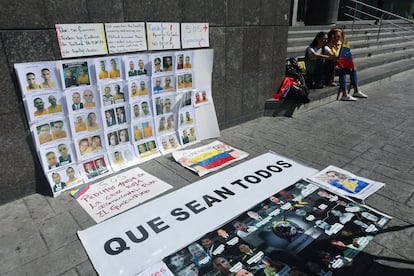

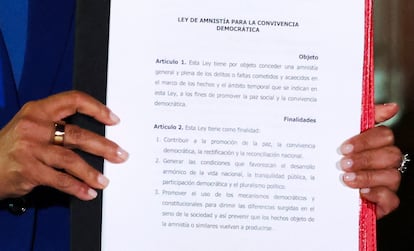
Venezuela’s amnesty law has come into force, and the government has said that more than 300 prisoners will be released this weekend. Courts have already begun receiving petitions, according to lawmaker Jorge Arreaza, who heads the commission that will review the cases.
The law, however, is selective and exclusionary. On its own, it cannot settle the enormous debt of human‑rights violations reported over the 27 years of Chavismo, the political movement former president Hugo Chávez founded in Venezuela.
“There are inclusions so specific that they end up excluding [prisoners],” says Alfredo Romero, head of Foro Penal, the NGO that has defended most of Venezuela’s political prisoners.
The law lists 13 situations that occurred over 14 years within the more than two‑decade period it aims to review, which begins on January 1, 1999, and ends on February 22, when the law was enacted. Of those 14 years identified for amnesty, only a few months — mostly related to protests — have been included. Union leaders and workers prosecuted for defending labor rights, people accused of incitement to hatred for comments on social media, and those involved in military cases are the biggest groups excluded from the law.
Among those left out are the individuals sentenced to 30 years in prison for Operation Gideon in 2020. This was a maritime incursion carried out in small boats by retired soldiers and civilians with support from former U.S. Green Berets, who have since been freed in prisoner exchanges between Washington and Caracas. The group intended to overthrow the government, but never even managed to land. Among those implicated is Josnar Baduel, the son of Hugo Chávez’s former defense minister Raúl Isaías Baduel (a political prisoner who died in custody), and brother of Raúl Emilio Baduel (who was also imprisoned for participating in protests and later released through a pardon issued by Nicolás Maduro in 2020).
“There are irreparable losses in my life from these 18 years of persecution my family has endured,” says Andreina Baduel, a journalist and member of the Committee for the Freedom of Political Prisoners. “Nothing will bring my father back, and now my brother remains imprisoned in Rodeo 1, which is an exemplary torture center. He’s in a two-by-two-meter cell, on a cement bed with a latrine.”
In 2023, Josnar Baduel was sentenced to 30 years in prison for Operation Gideon, on charges including rebellion. He was convicted without evidence and without the arrest report ever being included in the case file, his sister says. “Josnar was tortured while he was in El Helicoide [prison]. He needs four surgeries to treat the aftereffects. He has torn ligaments in his shoulder and knees, various types of hernias, a lung condition, and an injury to his testicles where they applied electric shocks.”
Along with Josnar, 32 other military personnel and civilians — men and women — were sentenced. Their families said they had gone more than six months without hearing from them because the prisoners were moved to other facilities without any notice. However, in this case, at the end of January, Carla Da Silva — who had been held in Rodeo 1 — was released and remains under precautionary measures.
“The military and their families are the main ones excluded, and that is a major unconstitutional discrimination, especially when the government speaks of national reconciliation,” says Romero.
There are 185 military personnel imprisoned, but in many of these cases, relatives and close associates have also been arbitrarily detained as a form of pressure, bringing the total to nearly 400 people who are automatically excluded from the law. One of them is Maikelys Borges, partner of exiled former lieutenant Cristian Hernández. Her two sisters and an uncle were also arrested. Borges was detained in 2025 when she was two months pregnant to force Hernández to surrender. She gave birth in prison, and this week she received a house‑arrest order along with her six‑month‑old baby.
There are also Venezuelans who have already served their sentences but remain imprisoned, such as the son of Bianca Lozano, a retired Air Force captain and Sukhoi specialist. Ronald Marrero Lozano was arrested in 2021 when he returned from Colombia, where he had gone to visit his wife’s family. “They accused him of passing sensitive information to a foreign government. He had left the Armed Forces because his salary wasn’t enough to live on and support his family and me.”
Another case is that of Lieutenant Colonel Igbert Marín Chaparro, arrested without a warrant in 2018 at his workplace and sentenced to seven years and six months for instigating rebellion. During his detention, a new case was opened against him, and although the Inter‑American Commission on Human Rights ordered protective measures, the authorities have ignored them.
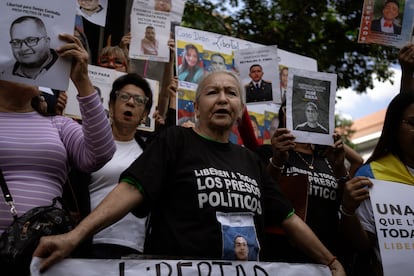
As of Friday, Foro Penal counted more than 600 people still in prison. But another significant number of cases — now coming to light and under review — could increase not only the list of those detained for political reasons, but also the list of people excluded from the amnesty law. Since January 8, when releases began, 448 people have been freed.
For Romero, the process also leaves the door open to further exclusions. “Amnesties depend on the discretion of the perpetrator, which in this case is the judge — the one who will decide whether the law applies to you or not,” the lawyer says. “Until the repressive system, of which the courts and prisons are a part, is dismantled, there will be no real amnesty.”
Some detainees have had no access to legal defense or to their case files, making it impossible to know whether they could benefit from the law. “In the case of the Argentine Nahuel Gallo, we don’t know whether the law applies to him because no one has been able to see him or provide him with legal representation,” says Romero. There are also people who have gone into exile without knowing for sure whether they are under investigation.
Article 9, which lists exclusions based on crimes, will also leave a large number of political detainees outside the amnesty. The law states that prisoners accused of serious human‑rights violations, crimes against humanity, intentional homicide and severe bodily harm, drug trafficking, or corruption — charges that have been used without evidence against several political prisoners — will not be eligible for amnesty.
And there is also a clause that further reinforces the law’s discretionary nature. It states that amnesty will not apply to those “who are or may be prosecuted or convicted for promoting, instigating, requesting, invoking, favoring, facilitating, financing, or participating in armed or forceful actions against the people, the sovereignty, or the territorial integrity of the Bolivarian Republic of Venezuela, on behalf of foreign states, corporations, or individuals.” This article incorporates provisions from the repressive Simón Bolívar Law, which the Chavista government approved in 2024 to accuse opposition leader María Corina Machado of “conspiring” with the United States. It is also unclear what investigations are open against Machado and her team.
Sign up for our weekly newsletter to get more English-language news coverage from EL PAÍS USA Edition
Tu suscripción se está usando en otro dispositivo
¿Quieres añadir otro usuario a tu suscripción?
Si continúas leyendo en este dispositivo, no se podrá leer en el otro.
FlechaTu suscripción se está usando en otro dispositivo y solo puedes acceder a EL PAÍS desde un dispositivo a la vez.
Si quieres compartir tu cuenta, cambia tu suscripción a la modalidad Premium, así podrás añadir otro usuario. Cada uno accederá con su propia cuenta de email, lo que os permitirá personalizar vuestra experiencia en EL PAÍS.
¿Tienes una suscripción de empresa? Accede aquí para contratar más cuentas.
En el caso de no saber quién está usando tu cuenta, te recomendamos cambiar tu contraseña aquí.
Si decides continuar compartiendo tu cuenta, este mensaje se mostrará en tu dispositivo y en el de la otra persona que está usando tu cuenta de forma indefinida, afectando a tu experiencia de lectura. Puedes consultar aquí los términos y condiciones de la suscripción digital.