The expulsion of José Barco, the stateless war veteran deported to Mexico by Trump
After fighting in Iraq, he served 16 years in prison before being placed in immigration detention and eventually deported: ‘I have the right to be buried in a national cemetery, but not to live in America’
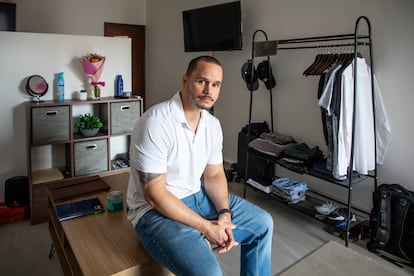

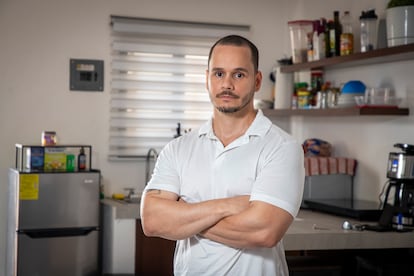
The humid heat of Villahermosa is the only thing that feels familiar to José Barco in the unlikely destination of his story. At first glance, it’s clear this 40-year-old Iraq War veteran, short in stature, broad-shouldered, with a shaved head and a calmness that masks the absurd twists and turns of his life, isn’t from around here.
Officially, the son of Cuban refugees, born in Venezuela and raised in the United States, is from nowhere. But he ended up in the state of Tabasco, in southern Mexico, after serving nearly 16 years of a prison sentence and another 10 months in immigration detention, during which they tried to deport him to Venezuela, despite his military honors. He risked his life for the United States, and then the military healthcare system failed him; even so, he paid for his crime committed during the instability that marked the months following his return from the war, and, despite everything, became, as far as is known, the first American veteran deported to a third country.
The freedom he longed for isn’t turning out to be what he imagined. With his basic needs met thanks to his veteran’s pension, from the meager 25 square meters of the tourist studio he keeps meticulously tidy — his sterile home for a few weeks before he has to move to the next one — Barco struggles not to succumb to the cruel paradox of losing hope now. “The loneliness, the loneliness, it’s debilitating to be alone. And the uncertainty of everything… It feels like I’m still in prison even though I’m not.”
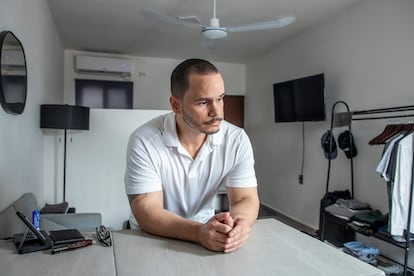
He tasted his bittersweet freedom for the first time in nearly two decades on November 16 in the city of Palenque, deep in the Chiapas jungle. He had arrived there alongside other deported migrants, transported by Mexican authorities from the Nogales border crossing. He had only a backpack containing his meager belongings: a few clothes, a birth certificate and other documents, and a smartphone sent to him by his wife, Tia, which he, imprisoned since before their rise, didn’t know how to use. He managed to unlock the device to call her, and she booked him a couple of nights at a hotel that allowed him to check in with a photocopy of his old driver’s license.
The following Tuesday — Monday was a holiday — he went to the Mexican Commission for Refugee Assistance (COMAR) office to submit his asylum application. The best he could get was an appointment for April. He began seeking help through veterans’ groups in Mexico, who put him in touch with three legal aid organizations for refugees. They recommended he move to Villahermosa and begin his process there, where there was no waiting list. Since December, his file has been open at the Tabasco offices, and until COMAR makes a decision, he cannot leave the state. Although the law sets a timeframe of 45 to 90 business days to resolve these applications, the backlog and complexity of the cases can extend the wait to a year or more.

Given this situation, his days are spent in an isolation that has become part of his nature after so many years in prison. He exercises, his only therapy and escape; sometimes he walks silently through the streets or a park in Villahermosa. He hasn’t made any friends beyond exchanging a few pleasantries with some neighbors. “When I went to prison I was much more social, much happier. [Now] I’m a bit of a hermit. I don’t know if maybe deep down I’ve always been like this, a little shy. But I feel that the depression, the loneliness…” he begins to reflect, but stops suddenly as if he doesn’t want to delve into those corners of his mind.
Since arriving in Mexico, he has been without his medication, a cocktail of drugs to treat his post-traumatic stress and severe migraines caused by several serious brain injuries sustained in combat. This is the main reason he would like to transfer his case to Guadalajara, where there is a veterans’ network that can help him obtain medical care.
Although it’s unlikely he’ll be allowed to. There are still several bureaucratic steps he must complete before new opportunities begin to open up. Legal residency, and with it, eventual employment, are still a long way off. What he needs right now is a CURP (Clave Única de Registro de Población), the most basic identification number in Mexico, so he can at least open a bank account, get a prescription, or sign a rental agreement as to not have to rely on expensive tourist apartments.
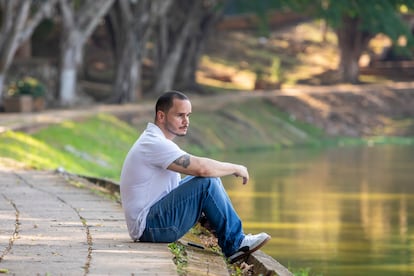
“I’m grateful to Mexico for welcoming me with open arms. I have nothing against Mexico or Mexicans. But I’m not Mexican. I don’t know anyone here. I’m completely alone in this country. I feel like I’ve already been punished. I went to prison. I served my sentence. I should be back in Miami, with my family. Instead, they ripped me away from that,” Barco says, more with frustration than anger.
War and prison
The Barco family settled in Miami in 1990, after a period in Venezuela, where José and his older siblings were born. They arrived in Caracas as refugees from Castro’s regime, which had imprisoned his father for nearly two decades after the Revolution. But their ultimate goal had always been the United States. There, he grew up with limited resources but without want, surrounded by Cubans and with parents who never learned English. Despite this, he, a legal resident who swore allegiance to the Star-Spangled Banner in school, felt American.
So before turning 18, he enlisted in the army. It was a way to leave home, and his older brother had already done it a few years earlier. He also wanted to serve his country, but on the other hand, he was simply drawn to adventure, like in the movies. “We wanted to be Navy SEALs, special forces, commandos. That’s what we had in mind. And back then, in 2003 when I joined, they had just invaded Iraq. So my brother and I wanted to be a part of it, we wanted to go to war,” he recalls, as convinced as ever.
He went to Iraq, and there the action started immediately. After four months, a car bomb attack left him with serious injuries and third-degree burns. He had to return to the United States to recover for a couple of years, during which time, while still in the army, he got married and also began the naturalization process.
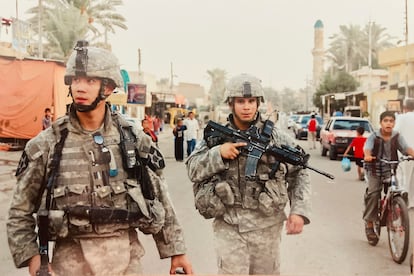
He was supposed to obtain his citizenship while deployed for the second time in Iraq, but due to some error in the paperwork, that never happened. At the time, amid heavy fighting in which he suffered several concussions, it didn’t concern him too much, but it would prove to be a crucial element in his destiny.
He returned to Fort Carson, Colorado, in late 2007 in a fragile mental state, with clear and profound symptoms of post-traumatic stress, but received no psychological treatment, only medication. “I wasn’t myself. I was drinking heavily, I was very aggressive; it ruined my marriage. I was 22 years old and I didn’t know what was happening, I just knew I didn’t want to be married.”
It was in this context, in April 2008, that Barco went to a house party, and an incident lasting less than 10 minutes changed his life. When he entered, the atmosphere became tense; he later learned that the attendees were gang members who didn’t appreciate the arrival of strangers who looked like soldiers. A confrontation ensued and, surrounded and threatened, Barco drew his weapon and fired once into the ceiling before leaving and getting into his car. As he was driving away, he recalls almost 20 years later, something came over him and he turned around and approached the house again. Outside, the gang members were still standing around and began throwing rocks at him. He felt like he was back in Iraq and that they were shooting at him. He rolled down the passenger window and emptied the remaining six rounds in the magazine.
“That night everything was blurry. Luckily, no one was seriously hurt. I could have killed someone. But I wasn’t thinking about those consequences; I was back in Iraq,” Barco recalls. A few days later, he learned that one of his bullets had indeed hit the leg of a 19-year-old pregnant woman. Time passed, and no one filed charges, until one day, 10 months later, he was arrested and charged with attempted murder.

He tried to fight for his freedom, but his fate was sealed. At that time, Fort Carson was the epicenter of a crime and mental health crisis — some 18 murders or attempted murders and as many as 36 suicides were reported — which, according to reports at the time, the Colorado attorney general wanted to eradicate by setting a ruthless example. Barco was sentenced to 55 years in prison for attempted murder and entered prison in the fall of 2009.
His new girlfriend, Tia, was four months pregnant, so shortly after he entered prison, they married so that she and their unborn child could receive Barco’s veteran’s pension. Then, as if frozen in time, the next 15 years passed. He remained married to Tia, but they weren’t always in contact. And his daughter grew into the teenager she is now with an understandably distant relationship with her father. In that futureless present, he devoted himself almost entirely to working at the prison. He was a cook and a teaching assistant for inmates who hadn’t finished high school, among other things.
His exemplary behavior earned him parole starting January 21, 2025, some 15 and a half years after starting his sentence, and, crucially, the day after Donald Trump returned to the White House. He had plans to go to Miami and be with his family. But he was automatically taken into custody by Immigration and Customs Enforcement (ICE), who informed him that he was subject to a deportation order as a convicted felon.
The migratory limbo
Two months later, when news of Venezuelans being deported to a maximum-security prison in El Salvador was instilling panic among migrants detained in the centers Barco describes as “medieval” because of their appalling conditions, he was on a plane bound for Honduras, where he was to be handed over to Venezuelan authorities. But on the tarmac of a Honduran airfield, Venezuelan officials rejected him alone from that group of more than 200. They said that Barco, who speaks with a Cuban accent and doesn’t have a national identity card number, only a birth certificate in a state they considered suspiciously pristine, couldn’t possibly be Venezuelan.
“It was quite surreal,” Barco recounts of the return trip on a plane accompanied only by ICE agents and the crew. “I was thinking: Is this a good thing? I thought, hopefully, they’ll have to release me now because my country doesn’t want me.” It was naive: by November, it was confirmed that he would be deported to Mexico.
Barco doesn’t shy away from his responsibility. “I am where I am because of myself. I bear the blame; I don’t put it on anyone else. My brother went to Iraq too, and he became a citizen. I could have had a good life in the United States. My life could have been completely different, and that’s because of the decisions I made. But along the way, some shitty things have happened that were beyond my control.”
Looking ahead, which is the only thing that makes sense to him, he hopes to become a legal resident in Mexico and build a future there. He is also in the process of obtaining Venezuelan citizenship and has requested a pardon from the governor of Colorado, with the remote hope that this will allow him to legally return to what he truly considers his homeland.
It is then that he is struck by how absurd it all is, and the rage he has learned to bury deep inside bubbles to the surface. “I am more American than most people who are citizens only because they were lucky enough to be born there. There are guys who get out of prison every day for heinous crimes, and they get released, they’re put on parole, but they’re not deported because they’re Americans.”
“I bled for this stupid country. I went to war for this country, twice. But I can’t live in America. The only way I can go back right now is in a body bag. As a veteran, I have the right to be buried in a national cemetery, but I don’t have the right to live in America. What kind of fucked-up bullshit is that?”
Sign up for our weekly newsletter to get more English-language news coverage from EL PAÍS USA Edition
Tu suscripción se está usando en otro dispositivo
¿Quieres añadir otro usuario a tu suscripción?
Si continúas leyendo en este dispositivo, no se podrá leer en el otro.
FlechaTu suscripción se está usando en otro dispositivo y solo puedes acceder a EL PAÍS desde un dispositivo a la vez.
Si quieres compartir tu cuenta, cambia tu suscripción a la modalidad Premium, así podrás añadir otro usuario. Cada uno accederá con su propia cuenta de email, lo que os permitirá personalizar vuestra experiencia en EL PAÍS.
¿Tienes una suscripción de empresa? Accede aquí para contratar más cuentas.
En el caso de no saber quién está usando tu cuenta, te recomendamos cambiar tu contraseña aquí.
Si decides continuar compartiendo tu cuenta, este mensaje se mostrará en tu dispositivo y en el de la otra persona que está usando tu cuenta de forma indefinida, afectando a tu experiencia de lectura. Puedes consultar aquí los términos y condiciones de la suscripción digital.