Japan drags its feet on nuclear energy recovery, 15 years after Fukushima accident
Just 15 of the country’s 54 reactors have been reactivated due to expert skepticism and citizen mistrust
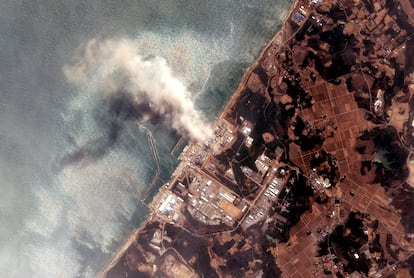

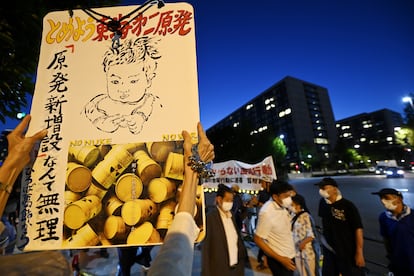
Nuclear energy, long stigmatized in Japan following the accident that took place on March 11, 2011 at the Fukushima Daiichi power plant — which forced thousands to leave their homes and the shutdown of 54 reactors providing 30% of the country’s energy — has come back to the country’s energy portfolio. But its return is taking place amid civilian distrust and expert skepticism, 15 years after the world held its breath during one of history’s worst nuclear accidents, second only to that of Chernobyl, Ukraine in 1986.
After the nuclear shutoff, which was caused by a brutal earthquake and subsequent tsunami, Japan founded the Nuclear Regulation Authority, and tightened regulations. As a result, 24 of the country’s 54 reactors were deactivated and are now in the process of being dismantled. Of the 30 that remain, only 15 have been authorized to resume operations, and currently supply nearly 9% of the nation’s electricity.

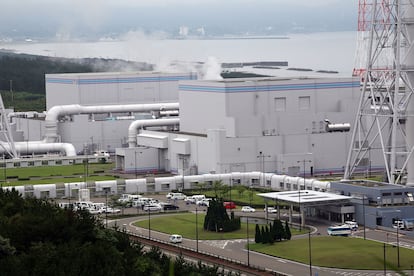
The most recent restart took place last month in the Kashiwazaki-Kariwa plant in the Niigata prefecture, having received authorization from the NRA in 2022. It had to wait three years to obtain the local population’s approval, which was required before beginning operations. The company that manages the plant is Tokyo Electric Power Company, which also owned the ill-fated Fukushima Daiichi, and polling carried out by media and the local government found that many area residents opposed restarting the Kashiwazaki-Kariwa plant, due to TEPCO’s bad reputation and its history of irregularities in the management of Fukushima Daiichi.
“It was questioned whether TEPCO was really trustworthy,” Satoru Yasuraoka, director of international affairs, nuclear energy division for Japan’s Ministry of Economy, Trade and Industry, told this newspaper. Ultimately, in December 2025, the Niigata prefecture assembly voted in favor of the plant, which has another six deactivated reactors and is considered one of the world’s largest nuclear facilities.
For Yasuraoka, the three years of delay are proof that “Japan is extremely rigorous when it comes to citizen approval and nuclear security.” The country is also the only one to have suffered a nuclear bombing, which was carried out by the United States in the towns of Hiroshima and Nagasaki in 1945, causing tens of thousands of deaths, and that trauma continues to be very present.
The METI official remembers that even speaking about building new plants in Japan was a “taboo” up until 2023. That year, the government committed to reaching carbon neutrality (the goal of reducing greenhouse gases indicated in international climate change agreements) by 2050, and included nuclear energy among the sectors key to achieving that objective.
Among the Japanese government’s reasons for turning back to nuclear energy was the proliferation of artificial intelligence and the growing number of data centers and semiconductor factories, both of which are heavy consumers of electricity. Given that context, Japan has set a goal of having 40% to 50% its energy come from renewable sources, 20% from nuclear plants and 30% to 40% from thermal power stations, by 2040.
In her first address delivered after being re-elected in February, Prime Minister Sanae Takaichi underlined the importance of energy autonomy and spoke of supporting modernization in the nuclear sector with new reactors.
As part of this return to nuclear energy, the government and TEPCO — which was nationalized after the Fukushima accident, and is now the biggest energy company in Japan — look to turn the 2011 tragedy into a tale of a lesson learned, and progress in nuclear security.
The man in charge of decommissioning the Fukushima plant, Yoshihiro Khaga, says that research carried out as part of the closure of impacted reactors has led to technological findings like miniature drones that explore their interiors, which are still inaccessible to humans due to their extreme reactivity. He adds that in the town of Namie, 12 miles northeast of Fukushima Daiichi, a large installation called the Robot Test Field has been built in order to experiment with new technologies.
The timeline for the definitive closure of Fukushima Daiichi has been planned in two phases, in 2041 and 2051, the official says, clarifying that future use of the land will depend on consultation with local residents.
Fear of radiation stigma
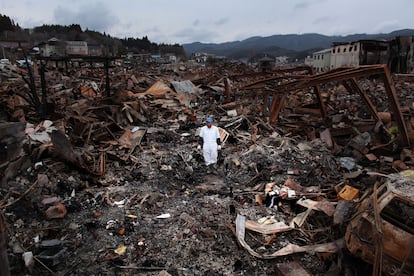
The 2011 Fukushima nuclear accident was caused by an earthquake with a magnitude of 9.0 on the Richter scale and a subsequent tsunami. The waves cut electricity to the plant, located some 137 miles northeast of Tokyo, deactivating reserve generators and causing an accumulation of hydrogen that produced three explosions, generating highly concentrated radioactive clouds.
There were no direct human casualties, but the government’s erratic response contributed to widespread panic among local residents. Fear of radiation stigma and the trauma of evacuation led to many more acute cases of post-traumatic stress than in other neighboring regions that were also hit by what came to be known as the Great East Japan earthquake.
In the Fukushima prefecture, radioactivity forced the evacuation of entire towns and the cordoning off of an area covering 444 square miles (nearly double the area of Chicago) around the plant. While the total death count of the earthquake and the tsunami is estimated at nearly 20,000 people, local newspaper Fukushima Minpo kept a database in which a total of 2,339 deaths are documented through 2023 that were supposedly related in some way to the nuclear disaster, including 119 suicides and several cases connected to the interruption of medical treatment during evacuations, hypothermia, or elder stress.
Compensation for those who were displaced and the cost of soil decontamination in towns and fields that accumulated radioactivity grew to the point that they were impossible for a private company to cover. In 2012, the government gave TEPCO $12 billion, becoming the majority owner of the company, ensuring its de facto nationalization.
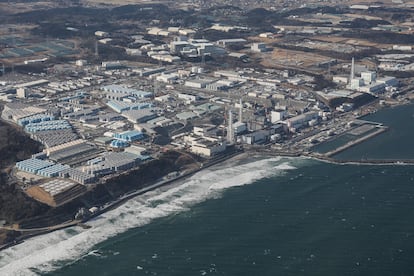
According to numbers provided by TEPCO for this article, the total cost of the accident reached $119 billion, including the dismantlement of the plant and compensation that has been paid, and remains to be paid, to those who were displaced. “The very reason for the existence of TEPCO is to fulfill [the obligation of reparations for] Fukushima. We are allowed to continue to operate due to that responsibility,” says Masakatsu Takata, the company’s spokesperson, whose business card reads “risk communicator”.
Critical voices
Experts who criticize the nuclear energy development policy often agree on two things: concern over the absence of regulation regarding the storage of atomic waste and doubts as to the actual necessity of relying on the energy source.
Tatsujiro Suzuki, professor of nuclear engineering at the University of Nagasaki and vice-present of the Japanese Atomic Energy Commission, thinks that existing reactors are wasting a large part of the energy they generate. “Japan has to learn from the lessons of Fukushima and gradually reduce its dependency on this energy,” he said in a telephone interview.
The analyst casts doubt on the idea that technological advances require greater need of nuclear energy. “Even if the projections of demand are correct, that’s an increase of just 10% to 15%, which brings us up to the consumption levels in 2016,” he calculates.
From Minamisoma, a town located on the edge of the cordoned area, 16 miles from the Fukushima plant, 62-year-old Yuri Ide explains by telephone that despite evacuation warnings, he never considered leaving his bar, which is located in the center of town. Many of his clients left town after the accident, or have since died. When a local TEPCO employee comes to his establishment, “no one bothers them and it doesn’t occur to anyone to talk about the disaster,” he says.
“What happened, happened. And the residents of Fukushima have proven that we can reconstruct our lives and carry on after something so enormous,” says Ide. The bar still carries the name of his favorite anime: Candy, Candy.
Sign up for our weekly newsletter to get more English-language news coverage from EL PAÍS USA Edition
Tu suscripción se está usando en otro dispositivo
¿Quieres añadir otro usuario a tu suscripción?
Si continúas leyendo en este dispositivo, no se podrá leer en el otro.
FlechaTu suscripción se está usando en otro dispositivo y solo puedes acceder a EL PAÍS desde un dispositivo a la vez.
Si quieres compartir tu cuenta, cambia tu suscripción a la modalidad Premium, así podrás añadir otro usuario. Cada uno accederá con su propia cuenta de email, lo que os permitirá personalizar vuestra experiencia en EL PAÍS.
¿Tienes una suscripción de empresa? Accede aquí para contratar más cuentas.
En el caso de no saber quién está usando tu cuenta, te recomendamos cambiar tu contraseña aquí.
Si decides continuar compartiendo tu cuenta, este mensaje se mostrará en tu dispositivo y en el de la otra persona que está usando tu cuenta de forma indefinida, afectando a tu experiencia de lectura. Puedes consultar aquí los términos y condiciones de la suscripción digital.