It is easier to overthrow a tyrant than to govern a leaderless country
After the 2003 invasion of Iraq, the world had one less dictator, but it was more insecure. In Venezuela, the regime hasn’t even changed
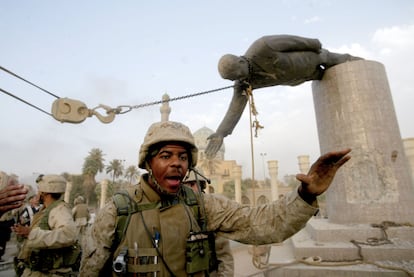

Any lingering doubts about the true motives behind the 2003 invasion of Iraq were dispelled when looters were ransacking Baghdad, carrying off millennia-old artifacts from the Iraqi capital’s archaeological museum, while U.S. Troops fortified the Ministry of Oil—the only government building left untouched and from which not a single document emerged. The disastrous and illegal invasion, spearheaded by the United States with military support from the United Kingdom and moral backing from Spain, demonstrated that it is far easier to overthrow a dictator than to govern a leaderless country.
The differences between the U.S. Attack on Venezuela, with the capture of Nicolás Maduro by Delta Force after a strike in Caracas, and the invasion of Iraq are enormous. But it seems the White House has learned some lessons from the cataclysm in the Middle East. The first measure taken in 2003 by the viceroy of Iraq, Paul Bremer — a man who strolled around Baghdad in military gear while playing at building a country he didn’t understand — was to dissolve the army and Saddam Hussein’s Ba’ath Party. A country deeply divided between a ruling Sunni minority and a subjugated Shia majority descended into total anarchy and ended in a civil war that left hundreds of thousands dead.
Most of the tyrant’s former soldiers joined the resistance, and the invasion became a living hell for the troops from the United States, the United Kingdom and Spain. In the first weeks without Saddam, the feeling that no one was in charge anywhere crystallized in the immense traffic jams that permanently paralyzed Baghdad: even the traffic lights weren’t working. From that anarchy emerged the Islamic State and a destabilization that continues to this day. Iraq is an extremely complex state, at least as complex as Venezuela, a country with 28 million inhabitants and an area twice the size of Spain.
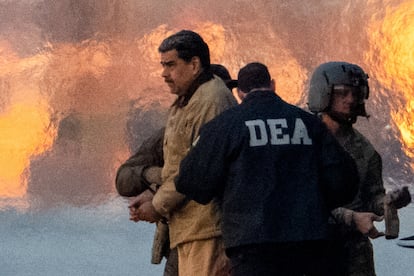
The decision to keep Chavismo in power through the figure of Delcy Rodríguez, who controls the levers of power, especially the armed forces, is surely a lesson learned in Baghdad from the mistakes of the hawks in the Bush Administration who, compared to the current ones, now look like convinced democrats.
The betrayal of Edmundo González and María Corina Machado, the legitimate winners of the elections stolen by Nicolás Maduro, follows the same logic that led to the protection of the Ministry of Oil while one of the world’s most important archaeological museums was being looted—one of the great classics of archaeology is Samuel-Noah Kramer’s History Begins at Sumer, and a part of that history was lost during those fateful days. The sense of freedom after the fall of Saddam Hussein, a genocidal tyrant who did not hesitate to gas his own people, quickly vanished, just as it did in Libya with Muammar Gaddafi.
Forcing regime change through bombs is not only a violation of international law, it’s always a terrible idea. Dominique de Villepin, the former French foreign minister who symbolized level-headedness during the process leading to the invasion of Iraq, tweeted on Sunday: “However detestable the overthrown governments may be, precedents show that regime change leads neither to democracy nor to peace, but to chaos, civil war, and dictatorship. Just look at the situations in Iraq or Libya.”
Donald Trump is dragging the world back to the 19th century, when there was no international order and powerful countries believed they had the right to take whatever they wanted. The only lesson the United States seems to have learned from that disastrous invasion has been pragmatic. Iraq in 2003 left the world with one less tyrant, but a much more dangerous place. Something similar is happening in Venezuela: this time the tyrant is gone, but his regime continues.
Sign up for our weekly newsletter to get more English-language news coverage from EL PAÍS USA Edition
Tu suscripción se está usando en otro dispositivo
¿Quieres añadir otro usuario a tu suscripción?
Si continúas leyendo en este dispositivo, no se podrá leer en el otro.
FlechaTu suscripción se está usando en otro dispositivo y solo puedes acceder a EL PAÍS desde un dispositivo a la vez.
Si quieres compartir tu cuenta, cambia tu suscripción a la modalidad Premium, así podrás añadir otro usuario. Cada uno accederá con su propia cuenta de email, lo que os permitirá personalizar vuestra experiencia en EL PAÍS.
¿Tienes una suscripción de empresa? Accede aquí para contratar más cuentas.
En el caso de no saber quién está usando tu cuenta, te recomendamos cambiar tu contraseña aquí.
Si decides continuar compartiendo tu cuenta, este mensaje se mostrará en tu dispositivo y en el de la otra persona que está usando tu cuenta de forma indefinida, afectando a tu experiencia de lectura. Puedes consultar aquí los términos y condiciones de la suscripción digital.