The border withstands the first year of Trump: ‘The shock is over’
Ciudad Juárez — with few migrants left, its industrial base being restructured, and its efforts focused on curbing kidnappings — shows its resilience in the face of the US president’s instability
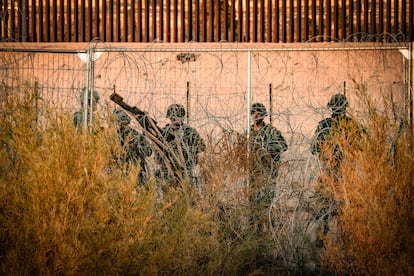

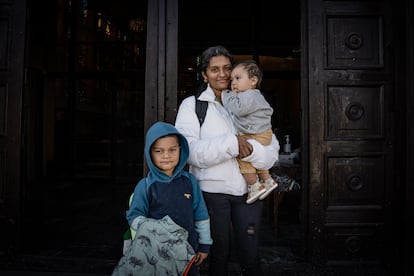
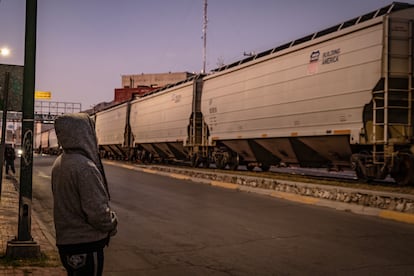
Yoselin López arrived in Ciudad Juárez on a “bad day.” On January 20, 2025, this young Honduran woman, holding her two-year-old son Mateo’s hand and seven months pregnant, set foot on this border. Three days later, she had her appointment to request asylum in the United States. They had left Tegucigalpa and arrived frozen to the bone on the train that crosses Mexico, known to all as La Bestia (The Beast). They were greeted by a city with sub-zero temperatures, holding its breath. At midday, the shock hit. In the first minutes of his return to the White House, Donald Trump canceled the asylum application platform and initiated what everyone already knew he wanted: a United States without migrants. A year later, Mateo runs around in a dinosaur-themed jacket at the entrance of the cathedral, Santiago stares wide-eyed from his mother’s arms, and Yoselin, now only 23, waits for a humanitarian flight to repatriate them to Tegucigalpa. That may be saying a lot, but the worst is over.
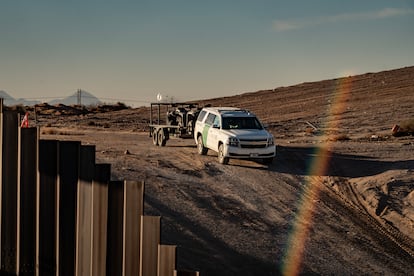
The border is not a strip of land. It looks like a shared brain, a moldable matter torn by a metal wall. One single territory split in two; both sides coil and squeeze each other. The initial blow landed here. Donald Trump was signing his first set of presidential measures in Washington, and Colombian migrant Margelis Tinoco collapsed at the entrance to the border bridge that connects Juárez with El Paso, watching her future shatter into pieces. The Republican president made threats from his new throne — tariffs, the elimination of birthrights, military interventions and mass deportations — and in Juárez, migrants, business owners, and government officials trembled. It was understood quickly on the border: the world had changed.
A year later, now that fear has subsided, the feeling is different: a lot has happened, but it could have been worse. “You realize that the border adapts, that the effects will be seen more in the long term. The political battle is now between Washington and Mexico City; Juárez is left adrift, wondering what might happen between them,” notes Rodolfo Rubio, a researcher in population and migration at the Colegio de Chihuahua. In this way, the expert believes, this city of almost a million inhabitants, which has weathered every economic and security crisis, demonstrates its resilience. The industrial fabric has been reconfigured, deportees have not arrived, migrants have moved on, and efforts are focused on containing kidnappings and murders. In short, the border has held its ground against Trump in his return to the White House.
Neither deportees nor migrants
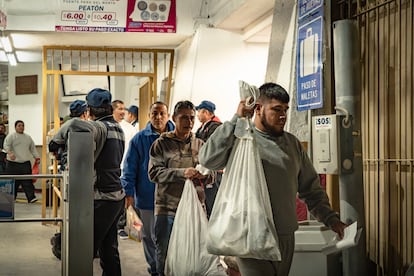
It is night on the El Paso Norte border bridge. Amid the lights, a man walks slowly, wearing a gray sweatshirt and jeans. He stops in front of a camera and raises a document. He is Alfonso, a 46-year-old Mexican from Zacatecas, although he has no family there or anywhere else in Mexico, the country where he was born and which he left three decades ago. He must show his deportation papers. He was detained in El Paso, where he has lived and worked all this time. He was feeling unwell and called U.S. Emergency services, but instead of sending an ambulance, they sent the police. This type of operation, explains Enrique Serrano, head of the State Population Council of Chihuahua, has begun to appear in recent weeks in El Paso. “Raids are happening where they didn’t before,” he notes. Alfonso will stay in Juárez, with a goal he makes no secret of: he wants to return as soon as he can to the place where he built his life over the past 30 years.
The figures from the Migration Policy Unit, which depends on the federal Ministry of the Interior, do not lie: in 2025, the lowest number of Mexicans in the past decade has been deported. The total is 144,000 — 62,000 fewer than the previous year and almost half the number in 2022. Trump’s announced mass deportations, so far, have not yet happened. As a result, the emergency tents that the government set up on the border exactly a year ago were left standing empty. They had the capacity to house 5,000 deportees — Mexicans — at the same time. “Over the entire year they must have sheltered around 3,000,” sums up Serrano, who also served as mayor of Ciudad Juárez. “They were taken down in December because there was no longer any need.”
That was, fortunately, one of the president’s unfulfilled threats. But Trump did eliminate the CBP One app used to apply for asylum, as well as the humanitarian parole program, effectively making it impossible to seek refuge in the United States. Fear and the Republican’s militarized approach have taken care of illegal crossings. Border Patrol figures show a drop of more than 90% in migrant apprehensions, mirrored by the numbers on the Mexican side. In all of 2025, Mexico’s Interior Ministry recorded 145,000 undocumented migrants, compared with more than 1.2 million just a year earlier.
“People no longer approach the border,” says Rodolfo Rubio. “Every route into the United States has been shut down.” “All flows from the south are frozen,” sums up José Fierro, pastor of the El Buen Samaritano shelter. In his facility, which has capacity for 260 people, there are now exactly five. Even during Trump’s first presidency, he says, the numbers were never this low. Back then, he acknowledges, the dynamics were different — and so were hopes for the future.
The Maduro effect
Cristina Coronado, who coordinates the cathedral’s humanitarian space, estimates that around 1,500 migrants remain in Ciudad Juárez, most of them in the process of regularizing their status in Mexico. Some are hoping to cross in three years, when Trump leaves office; others have settled with the aim of returning to their home countries with more than empty hands.
That is the case of Almary Ruiz, 45, from San Antonio, Venezuela, who is saving up for a motorcycle she can use for work when she goes back. “I was already thinking about returning, but then what happened with [Venezuelan President Nicolás] Maduro…” says the woman, who now lives in Juárez with her seven-year-old daughter. “Trump closed the door on a lot of us trying to enter the United States, but look — he opened Venezuela.” Like Antonio and Nerleschka, also from Venezuela, she is aware that the situation is changing, but that it is still “a process.”
They are among the last ones left. Ninety percent of those who were once in the border city have moved on — either returning to their countries of origin or retracing their steps and waiting somewhere in southern Mexico. Those who remain in Juárez survive on small jobs in factories, shops, or construction. Nerleschka Silva, 17, from Yaracuy, Venezuela, thinks about the lives other teenage girls lead while she packs chilies when called in — earning 600 pesos a day (about $30).
Most migrants have managed to leave the shelters and now live in rented apartments, where they can pay as much as 2,400 pesos (around $120) just to sleep in a kitchen. That was Sol Petit’s situation until she regularized her status and moved into a small apartment of her own. From there, she sews, takes care of an emotional-support dog, and waits for the chance to reunite with her children, who crossed to the other side of the border just before Trump returned. “Staying wasn’t what I wanted — it wasn’t my goal — but that’s what happened. Not all of us achieve the American dream, but you have to keep fighting,” she says.
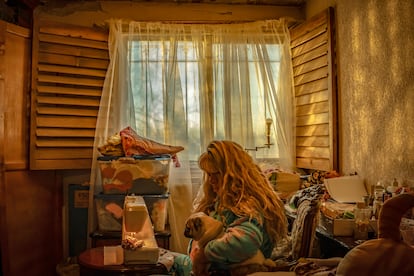
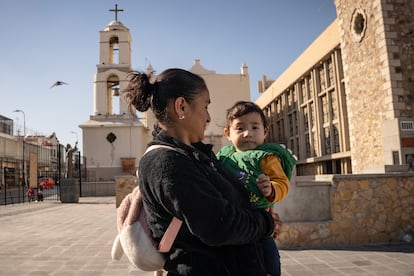
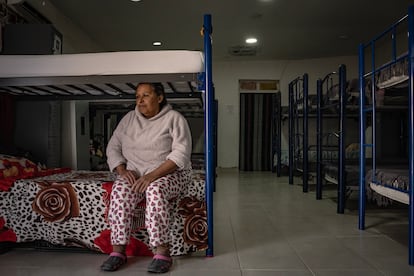
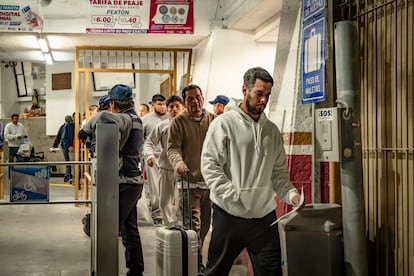
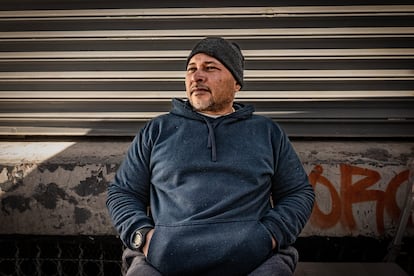
That has been the greatest challenge for humanitarian organizations. “The initial shock has passed,” says Cristina Coronado, “but this year we first had to process, together with the migrants, a reality we weren’t fully prepared for.” The standstill exposed shortcomings that went unnoticed when people were only passing through — from untreated tumors to cases of child sexual abuse. “They’ve suffered beyond what anyone should, because the government lacked the capacity to control the situation and left migrants in the hands of drug traffickers,” says the coordinator of this faith-based aid space.
Over the past year, they have organized to provide weekly food baskets, legal counseling to regularize immigration status, job-training workshops, help finding dignified housing, and medical care, as well as enrolling all children in school. An achievement acknowledged by both aid organizations and the government. “Even if they don’t have papers, state public schools have instructions to accept them,” notes Enrique Serrano, who criticizes, for example, the federal policy of leaving them in a “limbo”: “They don’t remove them from the country, but they don’t grant them permission either — they leave them in complete legal uncertainty.”
“If they don’t get them across, they kidnap them”
Both humanitarian groups and the government acknowledge that migrants are no longer being targted by the National Migration Institute, but one crime continues to pursue them: kidnapping. Since 2021, according to data from Mexico’s Security Ministry, 1,700 migrants have been rescued. Many others — like the Guatemalan women Francisca and Mercedes — escaped on their own after spending months in the grip of organized crime and do not appear in any official statistics. Now, with the border closed, these kidnappings have become the current modus operandi of human traffickers, according to both humanitarian organizations and government officials.
“They’re the same gangs that used to smuggle migrants, but as their business has slowed, they now deceive people by telling them there’s still a chance to get across — and then they kidnap them. It’s the only thing left for them to do, because they can’t charge for crossings anymore,” Serrano explains.
“Right now, crossing is almost unthinkable, but they [the coyotes] keep operating. They bring migrants almost in secret all the way to the U.S., and if they fail to get them across, they kidnap them,” adds José Fierro.
The Security Ministry has identified the same new tactic. “Migrant smuggling is still happening. People arrive having already paid between $10,000 and $15,000, and once they get here they’re taken to safe houses. That’s where the extortion of their families begins,” says Jorge Muro, director of the C7 Command Centers.
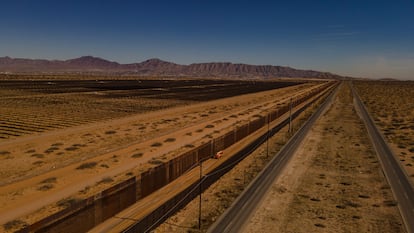
The police officer says they now have three hours to produce results in cases of kidnapping and other priority crimes. “Before, a kidnapping was the same as saying someone was dead,” he admits. Now, he says, the numbers are more encouraging thanks to a platform called Centinela and the 10,000 cameras associated with it, a third of them trained on Ciudad Juárez. This mass surveillance has led sources in the area to rename the massive Centinela Tower the next Eye of Sauron.
A sentry on the border
On a plot of land abutting the train tracks, in the midst of Ciudad Juárez’s decaying downtown, stands the border’s new security gamble. The Centinela Tower rises 25 stories above ground — counting the helipad — and as many below. “This is desert land, so the engineers dug down and found nothing but sand and more sand,” explains Jorge Muro, director of the C7 Command Centers. They had to change plans and, much like the pilings supporting a stretch of the Maya Train in the Caribbean, opt for concrete-filled pillars instead. These anchor the building that will concentrate all of the state’s security intelligence.
Its location is no coincidence. All the Chihuahua state government offices are headquartered in Chihuahua, about four hours from the border, except for the Public Security Secretariat. “That’s because 60% of the crime is concentrated in Ciudad Juárez,” says Muro. And within the city, the downtown area remains a red zone. This is where the network of disappearances and sexual trafficking that scarred the city in 2008 operated, in full view — and with the neglect — of the military forces of Operation Joint Chihuahua, which effectively placed the city under siege. At that time, Juárez was the most violent city in the world, a label it has since shed — though not its history of femicide. Murders, and particularly the killing of women, remain priority crimes for the government. Over the past four years, more than 4,700 intentional homicides have been recorded in the city, according to state figures — still more than three a day.

Representatives from U.S. Agencies will also work in the Centinela Tower. Personnel from the DEA, Border Patrol, ATF, the Texas and New Mexico District Attorneys’ offices, and the El Paso Police Department will set up on the 18th floor of the tower. “We won’t be sharing databases. They’ll work with their own tools, but from here,” explains Muro. “Right now we coordinate, but we have to call them, and then while they consult, time is lost. Having them here, side by side, means it will be in real time.”
This collaboration comes amid Trump’s push for a potential military intervention in Mexico — a warning that has also affected criminal groups on the border, according to researcher Salvador Salazar of the Autonomous University of Ciudad Juárez. “Organized crime is still present, but the groups are also acting as if in a sort of containment and caution, given the rhetoric of a possible direct U.S. Intervention,” he notes.
Regarding the thousands of uniformed officers that Sheinbaum sent to the border last year, Salazar considers their presence largely “symbolic”: “They’re deployed in certain areas outside the city, intended to act as a containment for drug trafficking or the flow of people toward the U.S. But it’s more about sending a message — the Mexican government wants to show the U.S. Government that action is being taken — than it is about a forceful intervention.”
And what about tariffs?
Right after Trump’s so-called “Liberation Day,” economist Felipe Galán started preparing reports for his clients: what had really happened with tariffs amid the spectacle the Republican president had staged? Galán, director of Information and Statistics for Labor Competitiveness, now says that knowing exactly what’s happening with tariffs is “a charade.” The professor does know, however, how this trade battle has impacted Ciudad Juárez: “The tariff structure, above all, has reconfigured our industrial fabric.” For example, “the automotive industry is undergoing a deep technological reform,” and 85% of the city’s total exports are electronics, because in the global battle over computing capacity, Trump still refuses to give up his cheapest manufacturers.
“All of their policy is oriented that way. So anything having to do with chips, computing, servers for data centers — they’ll find a way to produce it at the lowest possible cost, and Mexico continues to be that location,” Galán explains. As a result, Juárez hasn’t seen the closure of large factories, but there has been a reduction in operations, the economist acknowledges. Maquiladoras account for 60% of the city’s formal employment, so any contraction there is a contraction of the entire economy. “Since we reached the peak in April 2023, employment in Juárez has been almost in free fall,” the professor says. “Export-manufacturing jobs have lost more than 64,000 positions since then — that’s almost 20% of the jobs that existed at the time.”
“But was this stagnation caused by tariff policy, or was it the natural dynamics of an industry that was already readjusting?” Asks researcher Rodolfo Rubio, who advocates opening new discussions about the city’s economic direction. “Is this condition Juárez has experienced over the last 40 years — relying heavily on the maquiladora — the city’s future? The city should be considering alternative paths for its economic structure, so it isn’t dependent on global crises or the policies that Trump uses.”
Sign up for our weekly newsletter to get more English-language news coverage from EL PAÍS USA Edition
Tu suscripción se está usando en otro dispositivo
¿Quieres añadir otro usuario a tu suscripción?
Si continúas leyendo en este dispositivo, no se podrá leer en el otro.
FlechaTu suscripción se está usando en otro dispositivo y solo puedes acceder a EL PAÍS desde un dispositivo a la vez.
Si quieres compartir tu cuenta, cambia tu suscripción a la modalidad Premium, así podrás añadir otro usuario. Cada uno accederá con su propia cuenta de email, lo que os permitirá personalizar vuestra experiencia en EL PAÍS.
¿Tienes una suscripción de empresa? Accede aquí para contratar más cuentas.
En el caso de no saber quién está usando tu cuenta, te recomendamos cambiar tu contraseña aquí.
Si decides continuar compartiendo tu cuenta, este mensaje se mostrará en tu dispositivo y en el de la otra persona que está usando tu cuenta de forma indefinida, afectando a tu experiencia de lectura. Puedes consultar aquí los términos y condiciones de la suscripción digital.