The United States takes to the streets to stand up to Trump’s immigration terror
Minneapolis is leading a call for a national strike this Friday, while the White House works to mitigate the damage from the crisis caused by the deaths of Alex Pretti and Renee Good
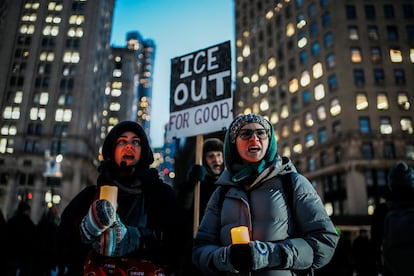
Donald Trump’s attempt to contain the backlash — including from his own supporters — from the immigration operation in Minneapolis took shape early Thursday morning in Minnesota in the unremarkable figure of Tom Homan. The White House’s so‑called border czar struck a noticeably softer tone than his predecessor, Gregory Bovino, and told reporters in a flat, measured voice that federal authorities — who have deployed 3,000 agents across the Midwestern state — are working on a “drawdown.” The announcement is unlikely to stop Minneapolis and other cities nationwide from taking to the streets on Friday to protest Trump’s campaign of terror against migrants.
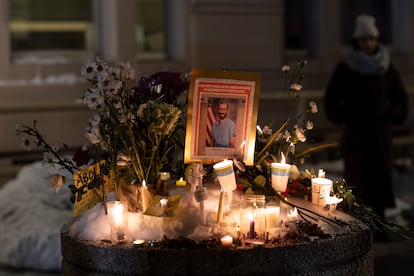
The U.S. President sent his border czar to Minnesota to calm tensions and, as Homan put it on Thursday, “fix” the problem, which Trump himself created. That problem escalated dramatically after the fatal shooting last Saturday of a Minneapolis nurse, Alex Pretti, by Border Patrol agents. He was the second U.S. Citizen killed during the Minneapolis uprising, following the death of poet Renée Good on January 7 at the hands of an Immigration and Customs Enforcement (ICE) agent.
Footage of both incidents has fueled resistance in Minneapolis and in neighboring St. Paul, a metro area of 3.7 million people. The videos are also hurting Trump among voters who backed him because they supported tougher immigration enforcement — especially against undocumented offenders — but who are now recoiling at the methods being used and at the sight of fellow Americans dying on camera.
The crisis has also spilled into the Republican administration, exposing a rift between those who recognize the political cost of such heavy‑handed tactics and the officials most committed to Trump’s hard‑line, anti‑immigration agenda — Homeland Security Secretary Kristi Noem and Deputy Chief of Staff Stephen Miller. Both are under scrutiny, though they still enjoy the president’s backing.
Homan’s talk of “drawdown,” along with his admission that “certain improvements could and should be made” in Minnesota, has angered the most hard‑line voices in the MAGA movement, who insist that Trump must deliver on his promise to “launch the largest deportation program in history,” no matter the consequences. The White House’s new messaging isn’t persuading the thousands of activists in Minneapolis, either, who have called a massive demonstration and a strike that this time aims to go national.
The protest is being organized in response to the deaths of Good and Pretti. Flyers that began appearing across Minneapolis on Monday urge residents to stay home from work and school. They also call on people to halt their shopping as a show of opposition to the violence carried out by ICE and Border Patrol across the country — and especially in Minnesota, where a strong sense of community and shared struggle has, in recent days, spilled beyond state lines.
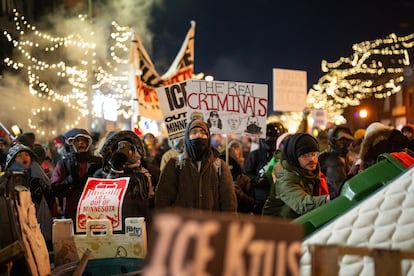
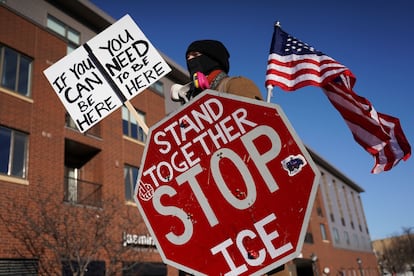
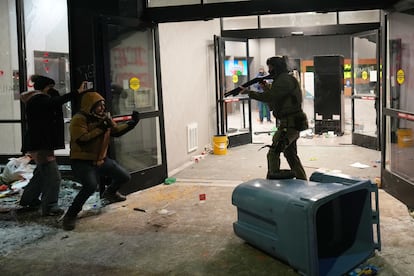
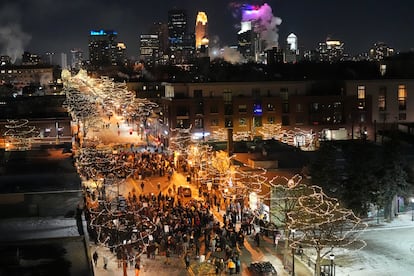
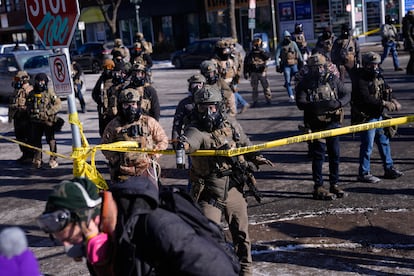
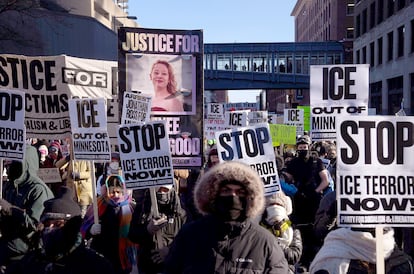
“We are not doing this for ourselves, or even just for the immigrants terrorized by the feds; we are rising up for the rest of the country, our goal is that this does not happen again anywhere,” Minneapolis councilwoman Aisha Chughtai explained to EL PAÍS on Wednesday.
“Every day, ICE, Border Patrol and other enforcers of Trump’s racist agenda are going into our communities to kidnap our neighbors and sow fear,” said the National Shutdown platform, which is organizing Friday’s actions, on its website. “It is time for us to all stand up together in a nationwide shutdown and say enough is enough!”
Hundreds of groups have joined the initiative, according to organizers. Celebrities have also echoed the call on social media, where the event is spreading rapidly. Actress Hannah Einbinder wrote on Instagram: “Withholding our labor and capital is our most effective leverage. National shutdown spread the word!” And actor Pedro Pascal shared a picture of Good and Pretti on the same social network with the message: “Pretti Good reason for a national strike.”
Unexpected success
It’s hard to predict whether a call to action like this will take hold in a country where few demonstrations manage to bring city life to a halt. Last Friday’s protest in Minneapolis did. Between 50,000 and 100,000 people — depending on the estimate — poured into the streets, and hundreds of businesses shut their doors on the eve of Pretti’s death, which further inflamed public anger. The turnout surprised even the organizers, who had feared that temperatures plunging to -22ºF would keep people at home.
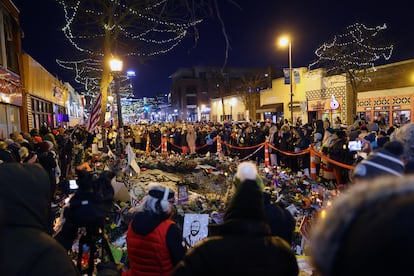
This Friday, the weather will be more favorable. At 2:00 p.m., the time the march is scheduled to begin, sunshine and a temperature of 6.8ºF are expected. In the morning, under even more adverse conditions, another protest is planned. It will take place at 8:00 a.m. In front of the Whipple Building, the federal facility that holds immigrants arrested before deportation, as well as protesters detained by ICE agents. The demonstration is intended to raise awareness against Attorney General Pam Bondi, who on Wednesday released the names and photos of 16 people arrested for protesting against ICE.
Last Friday’s demonstration was supported by numerous labor unions, whose demands included the withdrawal of federal agents from the state and to stop any additional federal funding for the agency. Many of the signs also called to “abolish ICE,” an agency created after the 9/11 attacks that has expanded dramatically over the past year, becoming the White House’s enforcement arm and secret police.
This Friday’s protest coincides with the Senate’s deadline to approve a budget bill that would increase funding for the Department of Homeland Security (DHS), which oversees both ICE and Border Patrol. Senate Democrats, in the minority, threatened to block the broader spending package — which also includes money for other departments — unless the DHS portion was removed.
On Thursday afternoon, lawmakers reached a deal with Trump that will bring changes to ICE and Border Patrol’s anti‑democratic protocols. Unless something derails the agreement, it will avert a partial government shutdown — a scenario that would have halted programs and frozen pay for hundreds of thousands of federal workers. It would also have marked the second shutdown in just a few months, following last fall’s, the longest in U.S. History.
Sign up for our weekly newsletter to get more English-language news coverage from EL PAÍS USA Edition
Tu suscripción se está usando en otro dispositivo
¿Quieres añadir otro usuario a tu suscripción?
Si continúas leyendo en este dispositivo, no se podrá leer en el otro.
FlechaTu suscripción se está usando en otro dispositivo y solo puedes acceder a EL PAÍS desde un dispositivo a la vez.
Si quieres compartir tu cuenta, cambia tu suscripción a la modalidad Premium, así podrás añadir otro usuario. Cada uno accederá con su propia cuenta de email, lo que os permitirá personalizar vuestra experiencia en EL PAÍS.
¿Tienes una suscripción de empresa? Accede aquí para contratar más cuentas.
En el caso de no saber quién está usando tu cuenta, te recomendamos cambiar tu contraseña aquí.
Si decides continuar compartiendo tu cuenta, este mensaje se mostrará en tu dispositivo y en el de la otra persona que está usando tu cuenta de forma indefinida, afectando a tu experiencia de lectura. Puedes consultar aquí los términos y condiciones de la suscripción digital.