The girls of San Benito, the center where Trump sends pregnant migrant minors
The Department of Health is transferring them to Texas, where abortion is virtually banned, despite objections from officials at the federal agency responsible for them
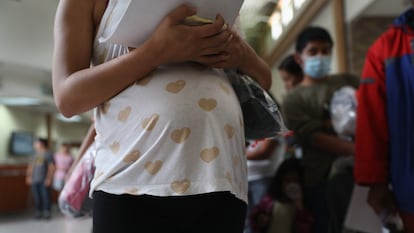
Since last July, the Trump administration has been sending all unaccompanied migrant girls who show up pregnant at the U.S. Border to a single center located in San Benito, a small border town in South Texas, the state with one of the strictest abortion bans in the country. In recent months, more than a dozen girls have been transferred to this facility. At least half of them became pregnant as a result of rape. Some are 13 years old.
In theory, everyone who arrives at the San Benito center has the right to be informed of their options, including abortion, through a notification called a Garza notice. In practice, however, that right is in jeopardy, according to Sarah Corning, an attorney with the American Civil Liberties Union (ACLU). “We remain concerned that doctors will refuse to perform abortions for fear of prosecution, something we’ve seen happen far too often since the ban went into effect” in the state, she says.
The decision to send these girls to the center, which has a long history of deficiencies, was made despite objections from health officials at the Office of Refugee Resettlement (ORR), the federal agency responsible for these migrants, as revealed in an investigation by The Texas Newsroom.
According to Corning, in addition to receiving the Garza notice, if these minors “want an abortion and cannot do so under local law, the federal agency must facilitate their transfer to a state where they can receive care.” However, on January 23, the ORR submitted a proposal to repeal the rule that requires minors seeking abortions to be transferred to a state where it is legal. “Our goal is to save lives, both of these girls who cross the border pregnant and of their unborn babies,” a spokesperson for the Department of Health and Human Services (HHS) told the conservative publication The Daily Signal at the time.
“We are concerned that a proposed change to the regulations, currently under review, could allow the ORR to interpret its obligations under the Hyde Amendment more restrictively,” says attorney Corning. The amendment in question dates back to 1976 and prohibits the use of federal funds for most abortions, except in cases of rape, incest, or when the mother’s life is in danger. In July, the Department of Justice had already reinterpreted the amendment, concluding that the government cannot use federal funds in these cases for services such as transportation. This is in addition to the fact that “Texas law does not have an exception to the ban on abortion in cases of rape,” Corning explains.
In Texas, pregnant minors can only access abortion if they are at risk of death or of suffering serious bodily harm as a result of the pregnancy. Corning explains that this new potential interpretation could limit the logistical support detained minors need. “Currently, minors rely on medical care to access abortions out of state, so this could mean that a young woman who wants an abortion is informed of her rights but still cannot access medical care if the agency refuses to facilitate travel.”
For now, the rule, approved by the Joe Biden administration remains in effect. In the last eight months, the ORR has transferred two girls out of Texas so they could terminate their pregnancies.
“They’re playing politics with children’s health”
For Zain Lakhani, director of Migrant Rights and Justice at the Women’s Refugee Commission, the danger to the girls at San Benito goes beyond abortion. This organization does not have access to the center, so it cannot verify firsthand the conditions in which the minors or the babies born there are kept. However, they have spent months documenting what happens to adult pregnant women in Immigration and Customs Enforcement (ICE) detention centers. What they have seen in these places provides a sense of the treatment pregnant women receive in federal immigration custody: women held in cells without water or medical attention for more than 24 hours; women who have been deported while bleeding, or who go days without food.
ICE and ORR are separate systems and, therefore, work in different conditions, Lakhani explains. What happens in one cannot be directly transferred to the other. But the concern is real. “Even for girls who want to keep their babies, any complication requires emergency medical attention. And we have seen very troubling stories and trends in Texas about when women are actually allowed to access that care, especially when it requires the evacuation of a fetus or procedures that have been criminalized by the state,” she notes.
“Concentrating pregnant women in a state with these laws puts their health, and sometimes their lives, at risk,” she adds. “This isn’t just about abortion, but about what happens to their bodies and their access to care during pregnancy, including life-saving care.”
The instruction to send these minors to San Benito came in an internal email dated July 22, 2025. It was signed by Angie Salazar, the acting director of the ORR, and had been ordered by HHS Chief of Staff Matt O’Neill Levine. “Send any pregnant minors to the San Benito program starting today,” it read.
Until then, these girls were being distributed among shelters and foster homes around the country, including several designed to handle high-risk pregnancies. ORR officials said they had received a list of facilities outside of Texas better equipped for these types of cases. However, the order remained unchanged.
“It’s cruel, it’s just cruel,” an official told The Texas Newsroom. “They don’t care about any of these kids. They’re playing politics with children’s health.”
“This is one hundred percent and exclusively about abortion,” says Jonathan White, who directed the ORR’s unaccompanied minors program during part of Donald Trump’s first term. He adds that the measure reminded him of the agency’s attempts to restrict abortion access for minors in federal custody during those years, when Scott Lloyd was ORR director and systematically denied minors in this situation permission to terminate their pregnancies. He also required them to receive counseling on “the benefits of motherhood and the harms of abortion.”
In 2017, the ACLU filed a lawsuit against Lloyd and the first Trump administration on behalf of pregnant minors in federal custody. Three years later, the White House pledged not to interfere in these matters. In 2024, the Biden administration decided that if a minor detained in a state with no abortion rights wanted to terminate her pregnancy, the ORR had to transfer her to a state where it was legal. “So, coincidentally, they are implementing what they brutally tried to do last time and failed,” White notes.
The San Benito center is operated by Urban Strategies, a company that has been contracted by the federal government for over ten years. Its main headquarters is a former Baptist church that occupies a city block in the center of town. A neighbor said that she sometimes sees children in the courtyard on weekends, but most of the time she doesn’t see anyone.
The facility has a long history of problems, such as failing to schedule timely medical appointments and discharging girls without coordinating professional follow-up. The same federal agency even temporarily prohibited it from admitting pregnant minors while Urban Strategies implemented a corrective plan.
San Benito is also located in the Rio Grande Valley, one of the regions with the worst access to specialized medical care in Texas. High-quality obstetric care in the state is concentrated in the major cities, hours away. “It’s not good to be pregnant in Texas, no matter who you are,” says Annie Leone, a midwife who spent five years caring for migrants near San Benito. “Putting pregnant migrant girls in Texas, and in one of the worst health regions, is definitely not good.”
Dr. Blair Cushing, who runs a women’s health clinic in McAllen, about 45 minutes from San Benito, wrote on social media that this situation “literally takes advantage of the region’s well-known hardships to deliberately place already extremely vulnerable teenagers in the worst possible circumstances.”
Maternal health experts describe ectopic pregnancies, complicated miscarriages, and infections from premature rupture of membranes as among the potential risks for these girls. Any of these can be fatal if emergency care is delayed.
In the case of San Benito, many of the inmates are malnourished, have sexually transmitted infections, or have not received prenatal care. And on top of that, they are detained, which causes trauma that affects the development of their pregnancies. So far, none have had serious medical problems. But those familiar with the situation are worried, according to an ORR official: “I feel like we’re just waiting for something terrible to happen.”
Sign up for our weekly newsletter to get more English-language news coverage from EL PAÍS USA Edition
Tu suscripción se está usando en otro dispositivo
¿Quieres añadir otro usuario a tu suscripción?
Si continúas leyendo en este dispositivo, no se podrá leer en el otro.
FlechaTu suscripción se está usando en otro dispositivo y solo puedes acceder a EL PAÍS desde un dispositivo a la vez.
Si quieres compartir tu cuenta, cambia tu suscripción a la modalidad Premium, así podrás añadir otro usuario. Cada uno accederá con su propia cuenta de email, lo que os permitirá personalizar vuestra experiencia en EL PAÍS.
¿Tienes una suscripción de empresa? Accede aquí para contratar más cuentas.
En el caso de no saber quién está usando tu cuenta, te recomendamos cambiar tu contraseña aquí.
Si decides continuar compartiendo tu cuenta, este mensaje se mostrará en tu dispositivo y en el de la otra persona que está usando tu cuenta de forma indefinida, afectando a tu experiencia de lectura. Puedes consultar aquí los términos y condiciones de la suscripción digital.