Journalist Estefany Rodríguez released from ICE custody on bond as the legal battle over her arrest continues
The Colombian reporter is back with her family after more than two weeks in detention, in a case that continues to fuel the debate over press freedom and immigration in the US
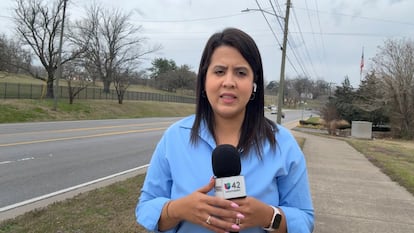

Colombian journalist Estefany Rodríguez was released Thursday from Immigration and Customs Enforcement (ICE) custody after posting a $10,000 bond, bringing an end to more than two weeks of detention that drew criticism from press freedom and human rights organizations in the United States. A reporter for Nashville Noticias specializing in immigration issues, she was arrested on March 4 in Tennessee and later transferred to detention facilities in Alabama and Louisiana. Her release came days after an immigration judge granted her bond, a decision that authorities initially appealed, delaying her release.
“Today we celebrate that Estefany has been released from the ICE detention center in Louisiana and is on her way home to be with her family,” said Mike Holley, an attorney with the Tennessee Immigrant and Refugee Rights Coalition, in a statement. “We are grateful that Estefany is able to walk away with her freedom to be with her family as she continues to fight for her right to remain in her community and in the U.S.”
The 35-year-old journalist arrived in the United States in 2021 after fleeing Colombia, where she had received death threats related to her work. She entered the country on a tourist visa and later applied for political asylum, a process that remains pending. She also holds a valid work permit and had begun the process of applying for permanent residency after marrying a U.S. Citizen.
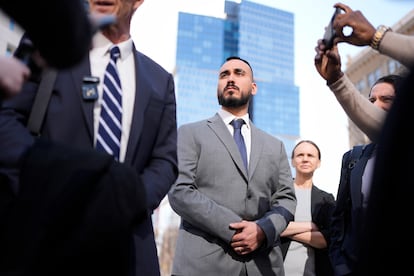
Despite this, the government has maintained that Rodríguez does not have lawful immigration status, arguing that her visa expired in 2021 and that she failed to attend mandatory immigration appointments. Her legal team has rejected that claim, noting that those appointments were rescheduled by the agency itself, including one that was canceled due to a winter storm that forced offices in Nashville to close.
Rodríguez’s attorneys have filed a wrongful detention challenge, arguing that her arrest was unlawful and carried out without a valid warrant and that it constituted retaliation for her journalistic work, in violation of the First and Fifth Amendments of the Constitution. Prior to her detention, Rodríguez had been actively covering ICE operations, including workplace raids and mass arrests. In fact, the day before her arrest, she reported on immigration detentions and was later stopped while traveling in a vehicle marked with her outlet’s logo.
During her detention, her legal team reported troubling conditions. According to court documents, Rodríguez spent several days in isolation after officials suspected she had lice and was subjected to a procedure in which agents poured a chemical liquid over her head, causing a burning sensation in her eyes. She was also unable to communicate with her attorneys for more than 10 days. Her lawyers are now seeking a court order to prevent ICE from subjecting her to similar treatment in the future, while continuing to litigate both her detention and her immigration status. Holley said the goal is not only to secure her ability to remain in the country but also to prevent further abuses, according to statements reported by the Associated Press.
In response to the case, several organizations have warned about the effect such detentions could have on journalists, particularly those who are not U.S. Citizens: “The predictable consequence of the arrest and detention of these individuals is to end that speech and to chill a vast amount of future speech, especially by non-citizen journalists fearful that hard-hitting reporting on sensitive topics could lead to their detention,” states a legal brief led by the Reporters Committee for Freedom of the Press
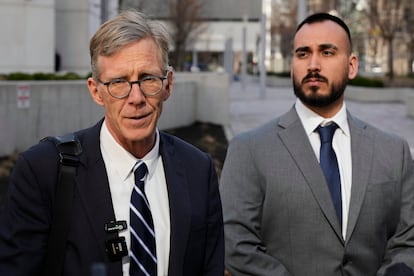
Similarly, the Committee to Protect Journalists (CPJ) warned about the broader impact of the case. “Her detention has had a chilling effect, undermining journalists’ ability, especially local reporters, to cover their communities without fear of retaliation,” said José Zamora, CPJ’s regional director for the Americas, in a statement. “The government must uphold press freedom and ensure all journalists can work safely and without reprisal.” The organization had previously also questioned the amount of the bond, calling it unusually high despite Rodríguez’s ties to the country, lack of criminal history, and family — including her seven-year-old daughter — living in the United States.
Although she is now free, Rodríguez’s legal situation remains unresolved. Her case will continue in the courts, where it will determine not only her immigration future but also whether her detention violated fundamental rights.
Tu suscripción se está usando en otro dispositivo
¿Quieres añadir otro usuario a tu suscripción?
Si continúas leyendo en este dispositivo, no se podrá leer en el otro.
FlechaTu suscripción se está usando en otro dispositivo y solo puedes acceder a EL PAÍS desde un dispositivo a la vez.
Si quieres compartir tu cuenta, cambia tu suscripción a la modalidad Premium, así podrás añadir otro usuario. Cada uno accederá con su propia cuenta de email, lo que os permitirá personalizar vuestra experiencia en EL PAÍS.
¿Tienes una suscripción de empresa? Accede aquí para contratar más cuentas.
En el caso de no saber quién está usando tu cuenta, te recomendamos cambiar tu contraseña aquí.
Si decides continuar compartiendo tu cuenta, este mensaje se mostrará en tu dispositivo y en el de la otra persona que está usando tu cuenta de forma indefinida, afectando a tu experiencia de lectura. Puedes consultar aquí los términos y condiciones de la suscripción digital.