Mai Sato, UN Special Rapporteur on Iran: ‘Military action is not a magic solution’
The Japanese sociologist warns that the repression of protesters against the Islamic Republic continues a month after the end of the demonstrations
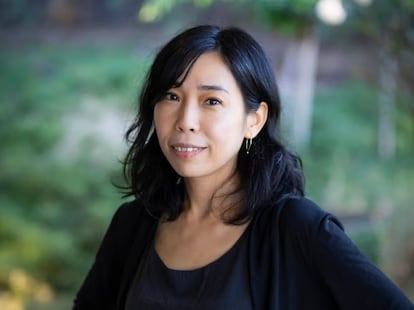

Mai Sato, the U.N. Special Rapporteur on Human Rights in Iran, speaks in the present tense about the repression against the recent demonstrations against the Islamic Republic. The reason, the Tokyo-born sociologist explains, is that arrests, the presence of security forces in the streets, and the searching of bystanders’ cell phones “are still happening,” a month after those demonstrations were brutally suppressed and thousands died in the streets.
In a video call on February 17 from London, Sato, who is also the director of the Institute for Crime and Justice Policy Research at Birkbeck, University of London, states her belief that the regime’s violence has been unprecedented more for its massive scale than for the oppression itself, which has been in place for decades.
Question. A month after the protests were suppressed, what is the estimated death toll?
Answer. The Iranian National Security Council published a figure of 3,117 deaths at the end of January. Of these, they said that 2,427 were “innocent people and protectors of order and security.” The Minister of Foreign Affairs then claimed that the remaining 690 were terrorists. Some of the numbers from civil society organizations reach 20,000, but even the death of a single protester was serious enough, as these were people who took to the streets exercising their freedom of expression and assembly. I believe that the death toll is much higher than the official figure of 3,000.
Q. Is this wave of repression unprecedented in Iran?
A. I agree in the sense that [this phenomenon] has occurred on a large scale, because these protests have spread to every province in the country. But if we are talking about the state killing its people, arbitrarily detaining individuals, threatening the families [of victims] so they don’t speak out, that’s nothing new. The repression of civil space, detentions, executions, and disappearances were already happening before, but on a much smaller scale and perhaps concentrated in certain provinces. What is new is that this time ordinary people, who perhaps did not previously consider themselves activists or human rights defenders, took to the streets.
Q. What do you think about the possibility of a U.S. Military attack?
A. I am very critical of any kind of military action without the approval of the U.N. Security Council. When there has been military action elsewhere, it has not provided clear solutions. I do not see military action as a magic solution to resolve the problems in Iran.
Q. Would that possible action “help” the protesters, as U.S. President Donald Trump suggested?
A. President Trump’s statements have shifted from expressing concern about the human rights situation of the Iranian people to talking exclusively about the nuclear agreement. I believe the change occurred when the president announced that those hundreds of Iranians would not be executed. I do not know if there will be an agreement between Iran and the United States [the second round of negotiations between the two concluded on Tuesday in Geneva, with Tehran announcing an “understanding”], but that should not be interpreted as meaning that the issues surrounding the protests have been resolved. These are two separate issues. Regardless of whether there is an agreement or not, we must address why the protests occurred and what their impact has been on human rights.
Q. Following the Israeli and American attacks in June, the repression increased.
A. Yes, it’s true. Many people were detained, and I believe that the Bahá’í [religious minority] was also used as a scapegoat, and that is happening right now with these latest protests. Following that military escalation, the state passed a law that broadened the definition of espionage, which was already a crime punishable by death.
Q. Has the Iranian regime committed crimes against humanity in these recent protests?
A. It would be very irresponsible of me to say yes, because this is a very serious accusation that requires investigation, even if we ask ourselves “Why can’t we define it that way?” The answer is that we don’t act that way in our own criminal justice systems either. I wouldn’t define someone as a murderer without a conviction for that crime, even if there are videos showing the alleged crime. It would be like labeling someone a criminal without them having gone through the courts. The U.N. Fact-Finding Mission, which was tasked by the Human Rights Council to investigate the protests, is mandated to examine protest-related violations.
Q. How many people have been arrested?
A. In mid-January, Iranian media quoted security officials as saying that some 3,000 people had been arrested. That was the latest official figure, and I do not believe there has been any update from the authorities. The same is true of estimates from civil society organizations. I’ve seen figures reported of these organizations as high as 50,000. I don’t know how many are being detained, how many have been forcibly disappeared. There are families who haven’t found their loved ones; they don’t know if they are dead or if they have been detained. Even families who knew their relatives had been arrested may have received a very brief phone call several weeks ago, but they have heard nothing since. There are reports of torture during detention, which has led to death in some cases, and of sexual abuse.
Q. What is the profile of the protesters and the role of women?
A. It has been a truly national protest, in every province, in large cities, in smaller towns, involving men, women, various ethnic and religious minorities, and also children. I would not classify it as a gender-based or women-led protest. The demonstrations of the Woman, Life, Freedom movement began [in 2022] against the compulsory veil. This is much broader. Perhaps there is a gender-based element in the type of abuse that may be taking place in detention centers, where women are more exposed to sexual torture.
Q. Is it true that families are being asked for money to recover the bodies of dead protesters?
A. Yes, I have received reports of this happening nationwide. Families are forced to sign a document stating that their relative was a member of the security forces or paramilitaries killed by protesters, or they are required to pay the equivalent of between $3,000 and $7,000. I believe this practice was carried out on orders from above.
Q. Can a regime that has killed thousands of people in the streets hold out?
A. In terms of long-term governance, I believe that the entire nation has raised its voice in this protest. Therefore, some kind of truth-seeking process is necessary.
Sign up for our weekly newsletter to get more English-language news coverage from EL PAÍS USA Edition
Tu suscripción se está usando en otro dispositivo
¿Quieres añadir otro usuario a tu suscripción?
Si continúas leyendo en este dispositivo, no se podrá leer en el otro.
FlechaTu suscripción se está usando en otro dispositivo y solo puedes acceder a EL PAÍS desde un dispositivo a la vez.
Si quieres compartir tu cuenta, cambia tu suscripción a la modalidad Premium, así podrás añadir otro usuario. Cada uno accederá con su propia cuenta de email, lo que os permitirá personalizar vuestra experiencia en EL PAÍS.
¿Tienes una suscripción de empresa? Accede aquí para contratar más cuentas.
En el caso de no saber quién está usando tu cuenta, te recomendamos cambiar tu contraseña aquí.
Si decides continuar compartiendo tu cuenta, este mensaje se mostrará en tu dispositivo y en el de la otra persona que está usando tu cuenta de forma indefinida, afectando a tu experiencia de lectura. Puedes consultar aquí los términos y condiciones de la suscripción digital.