Hunted by Maduro and detained by ICE: The uncertain future of former Venezuelan mayor Carlos García
Once at the helm of the city of Mérida, he now faces possible deportation to Ecuador, where he has no ties, despite having gone through the legal asylum process in the US
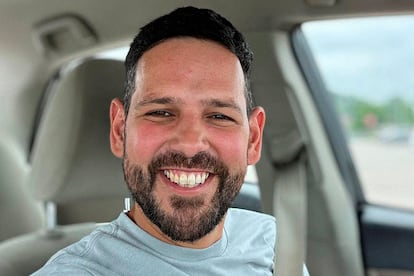

Former Venezuelan mayor Carlos García, 42, is facing a legal battle to avoid deportation from the United States. On January 23, he was detained by Immigration and Customs Enforcement (ICE) agents and taken to a detention center in Butler County, Hamilton, Ohio, where he lives with his wife and children. The couple was at an immigration appointment, as they have been doing every three months since arriving in the country on February 1, 2022. His wife encountered no trouble, but he was detained despite his long-standing asylum application and ample evidence that he is a political refugee. His lawyers filed a writ of habeas corpus with the immigration court to secure his release, but at the hearing on February 10, it was revealed that the Department of Homeland Security is seeking his deportation to Ecuador.
“Carlos has no family, home, or any kind of support in that country. He has never requested protection there. We are simply asking that he be allowed to defend his case where he formally requested asylum. As his wife and mother, I am deeply concerned that he will be sent to a place where he would be completely alone, without a support network, and far from his family. We trust that the process will be fair and that he will be able to continue his case where he started it,” stated his wife and spokesperson for the case, Gabriela Duarte.
Venezuela’s Supreme Court, controlled by the Chavista regime, removed García from his position as mayor in 2017 and sentenced him to 15 months in prison, citing his inaction against the wave of protests against the Maduro regime that swept through Mérida and the rest of the country that year. The lawyer, a graduate of the University of Los Andes and a member of the opposition party Primero Justicia, had no choice but to flee. He first settled in Cúcuta, Colombia, where his two children were born, but four years later decided to move to the United States in search of greater protection.
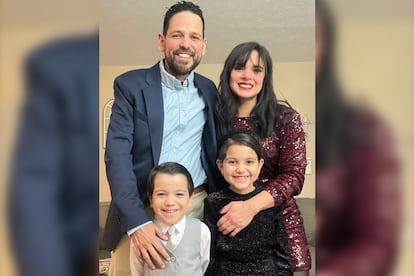
Along with his family and parents, he crossed the Rio Grande and surrendered to the Border Patrol in Hidalgo, Texas. After expressing fear of persecution and torture, he was granted entry into the country and released to await trial. García and his family also received Temporary Protected Status (TPS), an immigration benefit now eliminated by the Trump Administration.
Until this week, his family’s greatest fear was García’s deportation to Venezuela, which, despite Maduro’s capture, remains governed by the regime that tried to arrest him years ago. “Returning to Venezuela under the current conditions—with a justice system and a political system that has persecuted opposition leaders—could expose him to direct arrest and serious risks to his freedom,” his wife explained in the video announcing his arrest.
Deportees convicted in the past are subject to legal checks upon entering Venezuelan territory. García, who has a pending case, could be imprisoned simply by showing up at Caracas International Airport. Meanwhile, the Amnesty Law, approved in its first reading by the National Assembly, has been widely criticized by relatives of political prisoners and human rights defenders, who point out that the legislation does not include reparations for victims or guarantees of non-repetition. Furthermore, the recent arrest of political leader Juan Pablo Guanipa (García’s party colleague) has raised concerns among exiles about the lack of conditions for a safe return to the country.
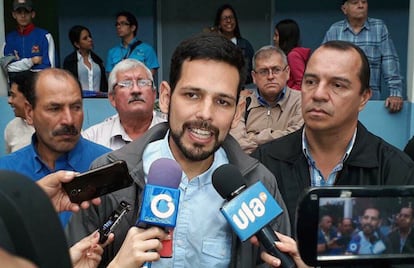
Reactions to the news of the former mayor’s arrest have come from both citizens who remember his administration and opposition activists. “I know Carlos García, who was mayor of Mérida in Venezuela, and he is a promising young man for our country. His arrest by ICE in the U.S., where he lives in exile with his family, is an incomprehensible and unjust act,” said Ramón Guillermo Aveledo, former executive secretary of the Democratic Unity Roundtable.
Exile did not keep Carlos García away from his political and social activism. The Mérida native is part of an opposition movement that has not ceased its demands for freedom and justice, but he has suffered the hardships of immigration like so many millions of his fellow Venezuelans. In the United States, he has earned a living as a delivery driver for companies like Amazon, DoorDash, and Uber.
The irony is that the former mayor lived in the United States in 2011 after being selected to participate in a State Department program for young leaders in the region focused on democracy and transparency. Now, that same country is seeking to deport him.
Sign up for our weekly newsletter to get more English-language news coverage from EL PAÍS USA Edition
Tu suscripción se está usando en otro dispositivo
¿Quieres añadir otro usuario a tu suscripción?
Si continúas leyendo en este dispositivo, no se podrá leer en el otro.
FlechaTu suscripción se está usando en otro dispositivo y solo puedes acceder a EL PAÍS desde un dispositivo a la vez.
Si quieres compartir tu cuenta, cambia tu suscripción a la modalidad Premium, así podrás añadir otro usuario. Cada uno accederá con su propia cuenta de email, lo que os permitirá personalizar vuestra experiencia en EL PAÍS.
¿Tienes una suscripción de empresa? Accede aquí para contratar más cuentas.
En el caso de no saber quién está usando tu cuenta, te recomendamos cambiar tu contraseña aquí.
Si decides continuar compartiendo tu cuenta, este mensaje se mostrará en tu dispositivo y en el de la otra persona que está usando tu cuenta de forma indefinida, afectando a tu experiencia de lectura. Puedes consultar aquí los términos y condiciones de la suscripción digital.