Estonian Foreign Minister Margus Tsakhna: ‘Putin is playing with Trump and the entire West’
In an interview with EL PAÍS, the politician calls on the EU to do more for Ukraine and to reassess its relationship with Cuba
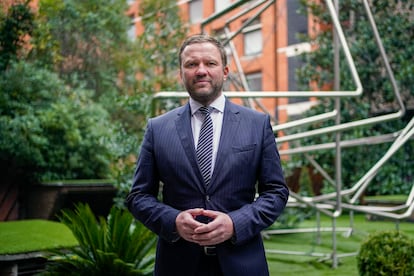

Estonia’s foreign minister arrives for the interview with a slight cold. Temperatures in the Baltic country have been extraordinarily low in recent weeks; the same is true in Kyiv, the capital of Ukraine, from where Margus Tsakhna (Tartu, 48 years old) has just returned, deeply affected by the suffering of a population struggling to stay warm during the harshest winter of the war.
Q. Estonia’s foreign intelligence service has just published a report warning that Russia is using peace negotiations as “a tool to manipulate the West.” What do you think the Kremlin is trying to achieve?
A. [Vladimir] Putin is playing with President [Donald] Trump and the entire West, trying to project the image that he wants peace. But, in reality, if you follow the facts and the figures, what you see is more war than ever. The bombings against the energy sector are insane. The situation in Kyiv is already genocide, we can call it that: it doesn’t even fit what we understand as a classic war. Putin is using negotiations to play for time. And, on the other hand, Trump promised that he would bring peace, but what we have seen so far has been pressure, primarily on Ukraine, in addition to some pressure on Russia, without any real change in Putin’s goals.
Q. Do you think there is any possibility that the war will end this year?
A. That is my hope. And the hope of Ukrainians. Ukraine is offering a ceasefire, demanding at least a truce in the energy sector, but Russia is not interested in that. [Volodymyr] Zelenskiy has publicly stated that the United States wants peace before June, but it’s hard to see that happening. We need to understand that we have to have two points for a peace plan: first, to support Ukraine militarily, financially, and politically, so it can fight. I met with President Zelenskiy, and he was clear: they will survive this winter, with a lot of casualties, but they have no other option but to fight. The second is to exert more pressure on Russia: Europe can do more.
Q. The European Commission is working on the 20th package of sanctions against Russia. What else might be included?
A. We have proposed, along with Sweden, Finland, and other countries, imposing additional tariffs on European imports from Russia and Belarus, because imposing tariffs does not require consensus, whereas sanctions do. Reaching consensus is difficult; there are always a couple of countries that block agreements.
One issue that isn’t discussed enough is that of Russian ex-combatants. There are nearly a million of them: soldiers with backgrounds as criminals, rapists, unstable individuals. Putin clearly wants to get rid of them, and these people will try to come to Europe. So we’ve proposed creating a Schengen blacklist [to bar them from entering the EU]. We’ve already included almost 1,500 names, but we need to work with other European countries.
Q. Do you believe that all EU member states should ban entry to any Russian defector?
A. Yes, absolutely. Besides protecting European citizens, it would send a clear message to the Russians: ‘If you’re going to fight, if you’re going to be an active part of this aggression, you will never enter Europe again.’
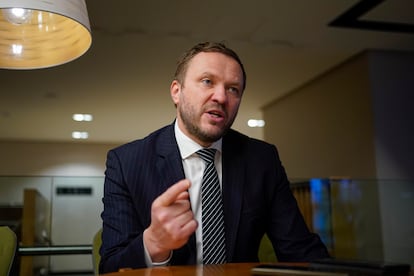
Q. In November, you were in Beijing pressuring your Chinese counterpart [Wang Yi] to do more to stop the war. To what extent does China have the capacity to limit Putin’s ambitions?
A. China is Russia’s main enabler in the war, both economically and through technical support. If China wanted to, it could end this war very quickly. But they don’t want to do it, unfortunately.
Q. You have used the term genocide. In four years, less than 0.1% of Ukraine’s civilian population has died from Russian attacks. In Gaza, the Israeli army has killed 4% of the population, and yet you have never spoken of genocide in reference to the Strip. Why?
A. We rely on International Criminal Court investigations. It is a very important institution, and we must follow its work. Of course, any crime against the civilian population, any violation of humanitarian law, must be taken very seriously. Is it happening in Ukraine? Is it happening in Gaza? Is it happening anywhere else in the world? Accountability is very important to us; international humanitarian law must be applied everywhere equally.
Q. Greenland has become another central issue for the EU and NATO in recent months. Estonia has indicated its willingness to send troops to the island, as some allies have already done.
A. Yes. We are part of the Nordic countries, and these military exercises were planned long ago. But at the same time, we have had this mess caused by President Trump suggesting he might resort to military force [to seize control of the Danish island]. Territorial integrity is a fundamental principle for Estonia: we will never recognize border changes achieved by force, in Ukraine or anywhere else. And, naturally, we express our solidarity with Denmark and Greenland.
Q. At the end of January, you argued in Brussels, at a meeting of foreign ministers, that the EU should reassess and toughen its relations with Cuba.
A. The EU policy on Cuba was adopted in 2016, now we are in 2026. And from our perspective what we see as well is that the Cuban regime is now directly supporting Russia. There are Cuban soldiers fighting or providing support in Ukraine. Therefore, in light of what has happened in Venezuela and the pressure the United States is exerting on these regimes, we must ask ourselves what we can do to help the Cuban people. We want Cubans to live in better conditions; regime change is crucial.
Q. Marko Mihkelson, chairman of the Estonian Parliament’s Foreign Affairs Committee, said in January that there are different points of view on Cuba within the Union and that, at the moment, the Spanish position prevails.
A. I don’t know how to comment on his words. You’ll have to ask him. I’m not blaming Spain; I’m only talking about the EU, the historical momentum when economically Cuba is really weak and Russia is unable to protect its allies: we saw it in Iran and Venezuela.
Sign up for our weekly newsletter to get more English-language news coverage from EL PAÍS USA Edition
Tu suscripción se está usando en otro dispositivo
¿Quieres añadir otro usuario a tu suscripción?
Si continúas leyendo en este dispositivo, no se podrá leer en el otro.
FlechaTu suscripción se está usando en otro dispositivo y solo puedes acceder a EL PAÍS desde un dispositivo a la vez.
Si quieres compartir tu cuenta, cambia tu suscripción a la modalidad Premium, así podrás añadir otro usuario. Cada uno accederá con su propia cuenta de email, lo que os permitirá personalizar vuestra experiencia en EL PAÍS.
¿Tienes una suscripción de empresa? Accede aquí para contratar más cuentas.
En el caso de no saber quién está usando tu cuenta, te recomendamos cambiar tu contraseña aquí.
Si decides continuar compartiendo tu cuenta, este mensaje se mostrará en tu dispositivo y en el de la otra persona que está usando tu cuenta de forma indefinida, afectando a tu experiencia de lectura. Puedes consultar aquí los términos y condiciones de la suscripción digital.