The sinking of Cuba: ‘We are a sacrificial altar’
The pillars of Castroism, such as healthcare, education, the fight against poverty, and even security, are crumbling in the face of Trump’s latest blows in a society that has lost hope. Only the repressive apparatus seems to remain intact
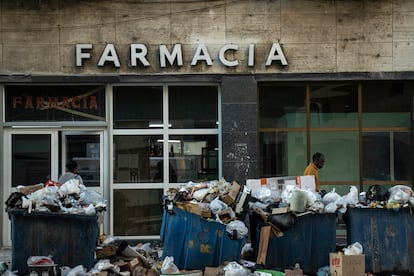
A few blocks from Revolution Square, in a former shantytown in Havana, Dr. Omitsa Valdés holds her consultations. It’s a dusty, dilapidated place where she tells patients they must bring their own syringe and medication from home. But if a general checkup is needed, including urine and blood tests, Dr. Valdés is even more direct: “If you can get it done yourself, I’ll write the order. If not, you’re out of luck, my dear, because the polyclinic you’re assigned to doesn’t have the re-agents,” she tells a patient while recycling old papers used to write prescriptions.
For a long time, Cuban medical services were the envy of the world. Even the WHO and the UN recognized until recently that the Family Doctors program, to which Dr. Valdés belongs, was the paradigm of efficient, universal primary care that reached every corner of the country. Today, medicines are scarce, the number of doctors dwindles as they flee the island, and hospitals suffer constant power outages that further complicate matters. International health organizations have shifted from praise to warnings about a humanitarian crisis that continues to escalate.
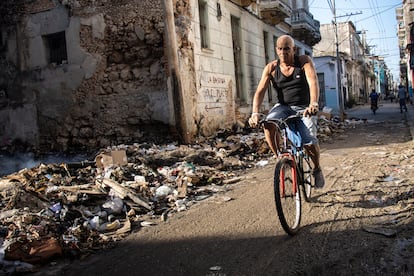
The decline of medical services embodies the collapse of a model, almost of an entire world, that for decades gave rise in Cuba, with its ups and downs, to a socialist laboratory in the heart of the Caribbean. A symbol of the 20th century, viewed from the outside with fascination, criticism, and fear. A relic that, after 67 years, is barely standing. The oil strangulation imposed by U.S. President Donald Trump has been the latest blow in a systemic crisis that began at least with the restrictions on tourism during the pandemic and the tightening of the more than six-decade-long embargo during the Republican’s first term.
Even the country’s most basic pillars can no longer withstand the collapse. “The conquests of the Revolution,” as Fidel Castro called them; or “the strengths of the Revolution,” as President Miguel Díaz-Canel now rephrases it. Healthcare, education, the fight against poverty, and even security are crumbling beyond repair. The population has lost hope and only the state’s intelligence and repression apparatus — also legendary for its fearsome nature — seems to remain intact.
“Medical power is screwed up”
Dr. Valdés spends her morning seeing patients with colds, elderly people coming in for routine checkups, or the occasional pregnant woman, though she doesn’t have much to prescribe. Patients trickle in. “What’s the point of a line? There won’t be any medicine at the pharmacy until at least next month,” remarks an elderly woman waiting her turn. The shortage of medicines, which according to official figures is nearing 70%, has been ongoing for months, exacerbated by a health crisis that includes dengue, chikungunya, and other respiratory viruses. These are diseases that family doctors once served as a bulwark against. In the 1980s, when the program was created, there was one doctor for every 350 people. Today, there is one for every 1,500 patients.
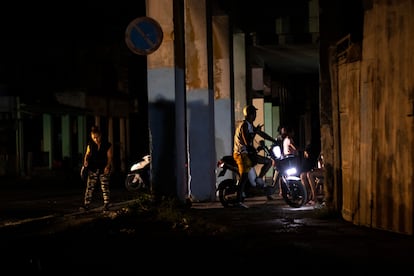
“Medical care has been ruined for a long time,” says an elderly woman, leaning on her cane, while waiting to have her blood pressure taken at the Miguel Enríquez Hospital. She looks down the peeling hallway with its burnt-out lightbulbs, where there isn’t even a bench to sit on, while dozens of people, some disabled, others fainting from painkillers, have to wait leaning against the walls. In line, another woman comments on the lack of experience among most of the doctors working at the hospital today, since most have migrated: “It’s been a long time since I’ve seen a doctor at this hospital who has any experience in their work.”
One of Castro’s countless slogans was “without education there is no revolution.” Cuba boasted that 100% of its children were enrolled in school. Among the draconian measures taken by the government recently to address the energy crisis are the temporary closure of universities and cuts to scholarships, leaving many students from the provinces adrift, forced to find extra work to support themselves in the capital. Primary and secondary schools remain open, but with very little electricity.
As Yovalis Álvarez picks up her daughter from the neighborhood school, which has been without electricity for most of the day, seven-year-old Thiago comes out arm-in-arm with his mother. He’s a bright child. He says that he spends most of his time in school with no electricity. But, as if it were a game, he claims to be able to predict with ease when and where the power will go out.
Never-ending repression
Shortly after 9:00 a.m. On Thursday, Yanet Rodríguez Sánchez, 39, left her home in a neighborhood in Holguín, in eastern Cuba, when a pair of State Security agents stopped her motorcycle and intercepted her. It was another morning in which Sánchez had woken up without rest, after a night in which, amid the blackout, she had slept only two or three hours — the most a Cuban can get now that electricity is practically a luxury. One of the agents grabbed her arm and warned her that she “couldn’t go anywhere.” “Go back home or you’ll be arrested,” Sánchez recounts him saying.
Sánchez was on her way to the courthouse, where Kamil Zayas Pérez and Ernesto Ricardo Medina — two influencers who have turned their project, El4tico, into the platform from which the government has been most frequently denounced in recent months within Cuba — were scheduled to appear before a judge. On February 6, both were arrested during a police operation in the early morning. Their cameras, phones, and computers were confiscated — everything they needed, from their small corner of the world, to break free from political apathy and demand change in the country. The government said enough was enough and cracked down on its most visible opponents: two content creators.
Now Sánchez, who a few days ago filed a legal appeal to find out where the influencers had been taken, has also become a target of the political police, who have stationed patrol cars to monitor her every move in the neighborhood. In Holguín, as throughout the island, fuel is scarce, and residents live without electricity for more than 12 hours a day, but the government has not lacked diesel to equip its repressive forces. “They allocate what little fuel they have left to mobilize cars and police to repress and monitor; they are experts at that,” Sánchez asserts.
It was her own neighbors who informed Sánchez of the operation in the surrounding area. Fidel Castro counted on the residents, in every neighborhood on the island, acting as informers against one another, always suspicious of the person next door, within what he called the Committees for the Defense of the Revolution (CDR). But 67 years later, with the facade of a country in ruins, fewer people are informing the government than warning of the maneuvers of its repressors. The Revolution has devoured its own ideology and Cubans, more than ever, are convinced of it.
In a country whose very existence is now measured by the drops of fuel it has left in its reserves, the government continues to dedicate resources to persecuting its opponents. Twenty-three-year-old Ankeilys Guerra Fis is now in prison for picking up his phone and calling for change in Cuba on Facebook. “Because this really can’t go on any longer,” he said.
Wilber Aguilar, the father of a 25-year-old man sentenced to 12 years in prison for participating in the July 11, 2021 protests — the largest in decades — woke up a few days ago to find his house guarded by police officers. Apparently, nothing had happened to warrant such surveillance. “How can it be that there’s no Mass today, nothing, and yet I have a patrol car parked right here?” He asked in a video shared on Facebook. The officers came to his door to tell him he couldn’t leave, but Aguilar doesn’t understand why, in a country on the brink of a major humanitarian crisis, the police are targeting him: “I’m a Cuban who wants to live with dignity, and I demand my son’s freedom. That’s not a crime.”
The safest country in the world?
The Cuban economic crisis is also evident in the stark statistics. Over the past five years, GDP has fallen by 11%, according to estimates from the Center for Studies of the Cuban Economy (CEEC). In 2025 alone, it plummeted by 5%. The decline in production, dependence on imports, and currency unification (the end of the convertible peso) have led to runaway inflation, which this year closed above 10%, although independent economists suggest it could be much higher. Regarding electricity capacity, Cuba is only able to supply 40% of its needs with heavy crude, which it can barely refine in its crumbling refineries. One of these facilities caught fire last week. Some energy companies predict a total blackout could occur in March.
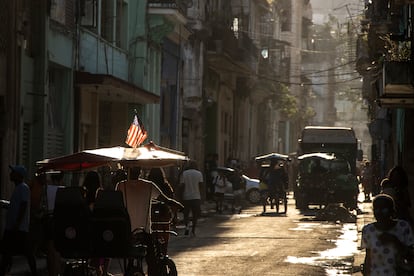
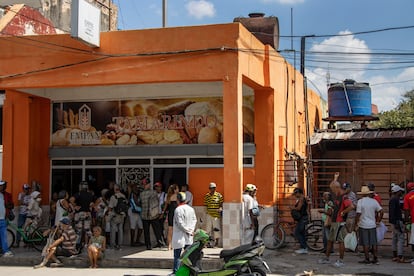
The streets of Havana are a hive of emergencies. Bus stops have been empty since the government canceled public transportation last week. There are enormous lines at banks of citizens hoping to withdraw some cash. Garbage is everywhere, and begging is increasingly prevalent in a country where the average monthly salary is barely $15 and the minimum pension is only $7. At some bodegas — the stores that sell products included in the ration books — the lines have grown longer in recent days. Among the few items the authorities sell at subsidized prices, there are only a few pounds of rice, sugar, salt, and little else left. Some people ask if they will receive any of the humanitarian aid that Mexico has sent. The bodega owner shrugs, unsure what to say.
Mexico, the last remaining supplier of refined oil after Nicolás Maduro’s removal, is looking for ways to circumvent Trump’s sanctions. This week it sent two ships carrying 277 tons of powdered milk. Previously, Cuba boasted of UNICEF data showing it was the only country in Latin America without child malnutrition. Today, UNICEF states that one-tenth of the island’s children live in conditions of “severe food poverty.” The Ministry of Public Health acknowledges that a growing number of Cubans are eating only once a day. And the latest study by the Cuban Observatory for Human Rights (OCDH) reveals that seven out of 10 Cubans have skipped breakfast, lunch, or dinner due to lack of money or food shortages, while almost 89% of the population currently lives in extreme poverty.
Cuban economist Omar Everleny Pérez believes the situation is far worse than during the so-called Special Period of the 1990s, after the loss of the Soviet lifeline. “Back then, the government focused on tourism and there was some openness to investment. Today, even those options are no longer viable. Micro, small, and medium-sized enterprises (MSMEs) that emerged during the economic opening are closing because there is no fuel to operate and they cannot repay the loans they took out.”
The figures for people leaving the country are overwhelming. Between 2022 and 2024, the population shrank from 11 million to 8.5 million, an unprecedented exodus. Pérez sums up the situation with a word “that has always been with the Cuban people”: hope. “But the limit has been crossed. People don’t have enough to eat, and the conditions are ripe for an increase in crime.”
Castro also used to repeat that Cuba is “the safest country in the world” and that capitalism “will never solve the problem of public order.” But Cubans have been noticing with concern the increase in insecurity in recent years. “The streets are hot.” It’s a phrase often used to describe how difficult daily life can be, and it’s been heard a lot in conversation lately. Calls for help constantly circulate on social media and WhatsApp statuses, asking for “a bicycle that was stolen from me last night,” a missing motorcycle, “a red and yellow backpack that was just snatched from me while I was walking down 23rd Avenue.”
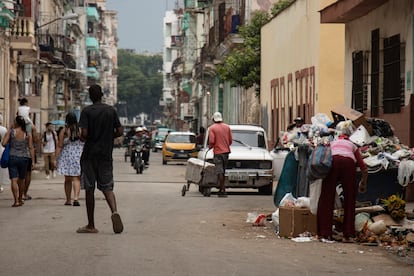
Cases are increasing, and solutions are scarce. It’s becoming less and less common to see police patrolling the city’s streets and neighborhoods, except during periods of heightened political tension. And even then, their presence is usually limited to the municipalities in central Havana. “If you’re robbed, the police show up four hours later, if they show up at all. But if you shout ‘Down with communism,’ they arrive immediately,” says a young woman whose home was recently burgled. She adds that the feeling is one of growing insecurity and powerlessness after a violent robbery or after opening the door to find her house emptied of all her appliances. “Starting over is anything but easy in a country like Cuba,” she asserts.
While some resign themselves to the loss of their belongings and try to put the incident behind them, others try to recover their possessions. “This message is for whoever broke into my house to steal,” Yasser González Cabrera can be heard saying in an Instagram reel that went viral at the end of January. He had been the victim of a robbery at his home, from which a computer, a generator, and his bicycle were stolen — resources he uses for his community project, Citykleta, where he tries to promote cycling in Havana.
Varadero, a silent paradise
Located 140 kilometers (87 miles) from Havana, Varadero, Cuba’s tourist hub, is another example of the island’s decline. Relaunched in the 1990s with high hopes of generating foreign currency, Varadero is now the skeleton of that tourism project, a weakened sector that has seen its worst visitor numbers in decades. Cleaning women mop the spotless floors repeatedly, lifeguards scroll through Instagram, and tour operators tell the few tourists visiting the island during these turbulent times that they will have access to gasoline. “You’ll be well taken care of. Don’t worry,” one of them says into a microphone on a tourist bus.
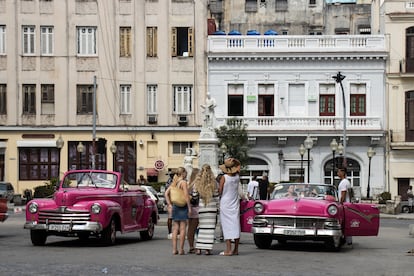
The wide avenues of Varadero are silent. Nothing like the lively street parties, the delivery trucks blasting music, or the salsa rhythms so common just a few months ago. The Cabaret, the rum bar, and the clothing stores have closed early, and the large hotels have taken advantage of the tourist exodus to carry out renovations and repair their facade signs. A handful of couples stroll hand-in-hand along the street, the classic cars used to ferry tourists around honking at them.
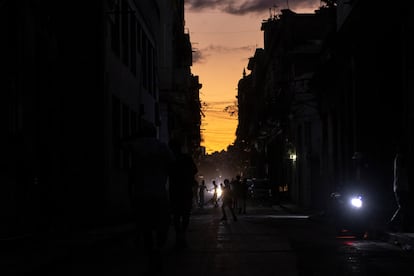
This city — named after its iconic 23-kilometer stretch of white sand and crystal-clear waters — hosts nearly 40% of the tourists who visit the country each year. But 2025 ended with abysmally low numbers, a 25% drop, prolonging the blow after Trump cut off the flow of American tourism, by far the main source. As of last Monday, Cubans have watched as Canadians, and now Russians, have been cutting their trips home early, clearly uneasy.
“This isn’t peak season, it’s nothing,” laments Fernando, an artisan in a deserted market. “I hope they come back next year.” Air Canada announced this week that it is suspending operations until March; Iberia is offering refunds and ticket changes, and, along with Air Europa, will be making a technical stop in Santo Domingo (Dominican Republic) to refuel. Only Aeroméxico is maintaining its standard operations.
Of the 50 or so hotels that dot this paradisiacal corner of the island, barely 20 are open. The smaller ones closed earlier this week and relocated their guests to the Meliá, Cuatro Palmas, or Iberostar. Inside any of these, the Caribbean bustle that once characterized Varadero is now hidden. In the lobbies, you’ll hear the swish of sandals, the whir of piña colada mixers, and a few words of Russian, English, and French. Diomel, a chef, fears that the hotel where he works will be the next to close. “If I’m not cooking here, I’ll make a living cooking outside or driving people to the airport... But it’s more peaceful here,” he says. Hotel employees’ salaries range from 4,000 to 5,000 Cuban pesos ($10 to $15), but many double their income just from tourist tips.
But not everyone in Varadero has a plan B. Fernando has a day off every two days, and Alain, a driver of the popular coco taxis, says he’ll figure it out. For now, he’s taking advantage of the situation before he runs out of gas and inflating the prices of each ride. He estimates he has four more days of fuel. “I’m a fortune teller, and I saved gas when there was some,” he says. “If I keep guessing, I know things will change... Not because of the Americans, but because of us.”
Jacky, 53, refills her thermos of beer before heading to Varadero beach. As they have the last four years, she and her school friends booked two weeks in February to swap the Montreal cold for the Cuban warmth. “Everyone at home texts me [telling me] to be careful, not to leave the hotel… I don’t know if we’ll have to find another destination next year, but this year I’m very relaxed,” she admits. She’ll travel back to Canada at the weekend, as planned. Ramona, from Switzerland, is a bit more worried. She’s been traveling to Varadero with her husband and two young children for six years, and each time she sees things getting worse. “My only concern is whether there’s enough gas for the buses,” she says. “The good news is that these beaches are all ours.”
The dilemma of exile
Airlines aren’t the only ones canceling routes. Cubamax, the U.S.-based agency specializing in travel, package delivery, remittances, and mobile phone top-ups in Cuba for the past 25 years, has officially informed its clients that, “due to the current severe fuel shortage,” it will be limiting shipments to essential supplies such as medicine. This situation is beginning to cause anxiety among Cuban families abroad, who fear they will be unable to help their loved ones during this critical time.
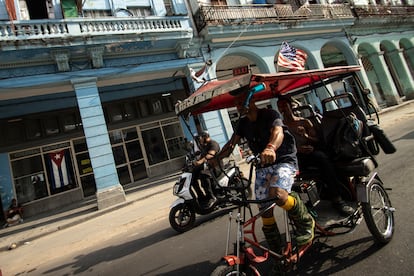
The situation is not only desperate, it is creating conflict within an exile community historically divided in two. There are those who advocate for the complete elimination of any aid to Cuba — remittances, food shipments, cell phone top-ups — arguing that this is how the regime is sustained, and those who insist they will not leave their relatives in the country without food or medicine.
There are also those on the outside who hope that Trump’s pressure on the island will drive people to the streets, and those who don’t dare ask Cubans to risk confronting the regime. Especially after over 1,000 people were detained during the 2021 protests, some of whom are serving sentences of more than 15 years in prison. “After July 11, I don’t have the nerve to ask the Cuban people to take to the streets,” says Janet Soto, a 31-year-old tattoo artist in Miami. “In the end, we are all pawns on a chessboard being played by the powerful. Cuba is a sacrificial altar, and Cubans will always end up getting hurt.”
Amid the chaos, new rituals are becoming increasingly common in Havana. A resident of the old town didn’t even flinch at the fireball that erupted a few days ago from a pile of trash scattered on the street corner near her house. None of the bystanders lifted a finger to extinguish the flames. The residents themselves had set fire to that mound of waste, in the darkness, to get the attention of the authorities after 16 hours without electricity in the area. And they succeeded. Once the flames were extinguished, the power returned.
An incendiary metaphor for a world that, to quote a Marxist classic, is not quite dying, while the new one also does not seem to have fully been born yet.
Sign up for our weekly newsletter to get more English-language news coverage from EL PAÍS USA Edition
Tu suscripción se está usando en otro dispositivo
¿Quieres añadir otro usuario a tu suscripción?
Si continúas leyendo en este dispositivo, no se podrá leer en el otro.
FlechaTu suscripción se está usando en otro dispositivo y solo puedes acceder a EL PAÍS desde un dispositivo a la vez.
Si quieres compartir tu cuenta, cambia tu suscripción a la modalidad Premium, así podrás añadir otro usuario. Cada uno accederá con su propia cuenta de email, lo que os permitirá personalizar vuestra experiencia en EL PAÍS.
¿Tienes una suscripción de empresa? Accede aquí para contratar más cuentas.
En el caso de no saber quién está usando tu cuenta, te recomendamos cambiar tu contraseña aquí.
Si decides continuar compartiendo tu cuenta, este mensaje se mostrará en tu dispositivo y en el de la otra persona que está usando tu cuenta de forma indefinida, afectando a tu experiencia de lectura. Puedes consultar aquí los términos y condiciones de la suscripción digital.