The daily struggle to survive in Cuba, an island on the verge of darkness
Three young Cubans, born at the end of the Special Period, describe their routines, fears, and survival strategies in the days leading up to a predicted energy collapse
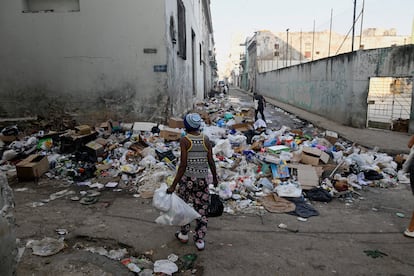
The Cuban anthropologist José María, 24, did not watch the press conference that Cuba’s president and first secretary of the Communist Party (PC), Miguel Díaz-Canel Bermúdez, delivered on Thursday, February 5, to address the energy crisis — worsened by recent U.S. Sanctions and the end of oil shipments from Venezuela.
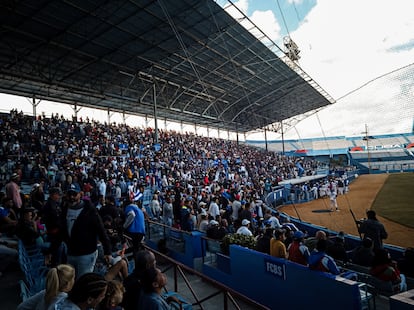
José María woke up late. The day before had been exhausting. After work, he went to the Latino Stadium — popularly known as El Coloso del Cerro — to watch a playoff game of the 64th National Series between the Cocodrilos of Matanzas and Havana’ s Industriales.
Industriales, from Havana, came out on top, but the young researcher felt none of the effervescence that once made the games one of the country’s most important spectacles. Something was different: the stadium that had shaped his childhood — where he snuck in whenever he could — was now nearly empty. “What it gives me right now is a deep sadness: the collapse of a society,” he says.
That night, in his apartment in Central Havana, he had dinner with a young woman he had been seeing for some time. Alone afterward, he put on the Argentine film Pizza, birra, faso on YouTube, about a group of young people in the 1990s who turn to petty crime amid economic collapse.
No, José María did not watch Díaz-Canel’s speech. “Luckily, I didn’t,” he says. Instead, he came across summaries on social media and isolated quotes from the leader. One of them featured the government’s call for municipalities to become self-sufficient amid the lack of fuel to transport food.
“It’s an extremely brutal policy. There are municipalities that can’t be self-sufficient precisely because of the government: for imposing so many obstacles on farmers, for having an inefficient development bank, for neglecting cooperatives. It’s deep demagoguery,” he explains.
He says the blackouts don’t affect him as much as others: his area is “privileged,” close to the water pump that supplies the municipality. He doesn’t have a generator, but he does have a rechargeable fan and a battery for his phone. From his apartment, on some days, he can see entire neighborhoods plunged into darkness: Los Sitios, Cayo Hueso, 20 de Mayo, and La Victoria — areas with a high concentration of precarious housing. In La Victoria lives his father, along with his wife and their two children.
José María can’t “imagine” what will happen if Cuba finally runs out of oil. Imagination has become a lost practice in the Cuban context. That reality feels very far away. Too far.
In his nearly two-hour address, Díaz-Canel spoke of “Option Zero,” an updated version of the contingency plan conceived by Fidel Castro during the Special Period after the fall of the USSR, and forecast the arrival of “hard times.” Some of the most concrete measures would be announced throughout the day by different state agencies: the closure of government buildings, remote work, and a reduction in interprovincial transport. The clock keeps ticking, and without knowing whether the Cuban government’s announced measures will be effective, time is running out.
Lidia is 29. She was born and raised in a “microbrigade neighborhood” in Santiago de Las Vegas, about 19 kilometers (11.8 miles) south of Havana. In one of those concrete buildings erected by worker brigades in the 1970s. Her parents still live there, in an apartment they share with her two grandmothers, aged 96 and 84.
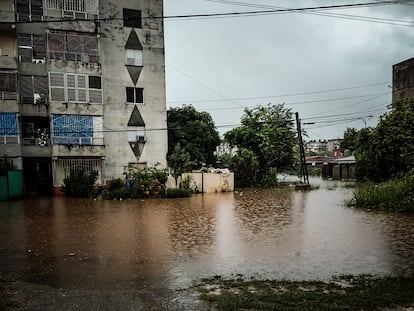
In mid-2025, Lidia — who graduated in journalism from the University of Havana — moved on her own into an old house divided into small apartments on 23rd Street in Vedado. The dynamics of the “periphery” had limited her professional and social life. She never worked as a journalist. Now she works as a sales clerk at a photovoltaic energy equipment store, selling solar-powered generators from 8:00 a.m. To 6:00 p.m. It isn’t her dream job, but it’s manageable, close to her new home, and allows her to pay the rent.
She only managed to watch fragments of the conference on her phone. When the leader was about to speak, she was about to take a shared taxi from La Piquera to visit her family. There were many cars waiting to fill up and few passengers, and the fare had risen by 100 Cuban pesos ($4) compared with previous days. “The first piece of news that day was that the full trip would now cost 1,000 pesos [$41],” she says. “Luckily, I had it.”
At her parents’ house she found a situation that was “normal.” The family had a portable EcoFlow generator running — very popular on the island — that her uncle sent from the United States when the crisis began to intensify. Before, they used it only in emergencies, but now they can’t cook without electricity: for months the government has not distributed liquefied gas in the area. The device had to last long enough to prepare meals and heat water to bathe the grandmothers.
Lidia thought about watching the rest of the conference but didn’t. That night she had a birthday party in the municipality of Playa. To her surprise, the taxi charged her only 300 pesos ($13) — the usual fare. “Everything seems normal, in quotation marks,” she repeats.
Lidia also can’t talk about the future, not even the immediate one. For her, the questions pile up: How long can this go on? Have we already hit bottom? And if so, how do you surface again?
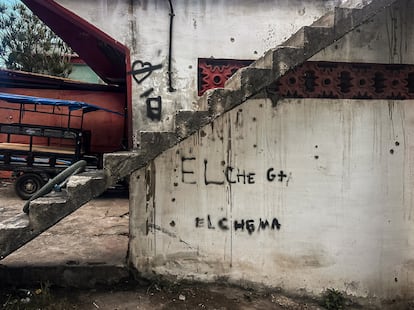
Alejandra will turn 33 in March. She lives in Havana with her husband and their five-year-old daughter. She studied industrial engineering, but now works in digital marketing for private businesses.
“It’s hard for me to talk about my current situation because I’m very aware that I’m privileged within Cuban society. My husband has a car and my salary is in dollars. Even so, everyday life is becoming increasingly difficult,” she says
On Thursday, February 5, she woke up at 6:30 a.m. To prepare the family lunch. In her home they cook with an electric stovetop; they’ve had no gas for months. That day they were lucky — the power didn’t go out too early. They dropped their daughter off at school and went on with their respective routines.
At the corner of 23rd Street, near Lidia’s place, Alejandra waited 15 minutes for a taxi to take her to the University of Havana, where — until recently — she attended an in-person course. The fare, which used to cost 150 pesos ($6), had risen to 200 ($8). She describes avenues that were almost deserted.
In the afternoon, she cooked at her mother-in-law’s house, where the electricity is rarely cut because of its closeness to several hospitals. That kitchen has become a meeting point for several family units who prepare food for one or two days. Alejandra has dubbed them her tribe. At 9:00 p.m., her mother called: there was power again in her area and she could return home.
She didn’t watch the presidential conference live. Some time ago, she decided to be happy — even if that sometimes means disengaging a little and pressing on.
Psychological exhaustion
Alejandra, Lidia, and José María describe themselves as privileged. In Cuba in 2026, privilege seems to be measured by a different yardstick.
“Blackouts don’t affect me as much as others, but they hit hard in the most everyday actions,” Alejandra explains. “One day I got home with my daughter and, once again, there was neither gas nor electricity. Exhausted after eight hours of work, I had to feed my daughter and I couldn’t. I burst into tears.”
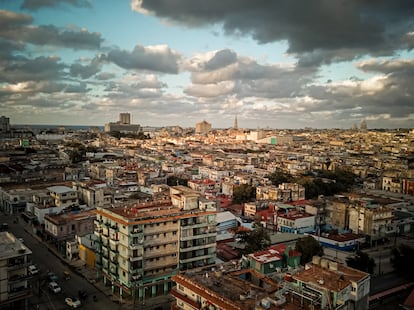
Before the most recent sanctions imposed by Donald Trump and the detention of Nicolás Maduro, blockouts were usually scheduled. Now they can last between six and 12 hours — or more in the upcoming days — and come without warning. The result is enormous psychological strain, translated into anxiety, frustration, and sometimes fear.
As a result of that episode and others that followed, the “generator” they rarely used became indispensable in Alejandra’s home. It doesn’t power much — just a lamp and a television. “But something is something,” she says. In the middle of darkness and silence, the young mother prefers to keep a light on in the bedroom, even if only to believe that everything is fine.
The outages have affected her work, which is tied to managing social media. Without electricity, mobile data become unstable, and when the connection fails, everything that defines the value of her work fails with it. Some clients have dropped her services for not meeting expectations in terms of numerical results.
Rest and leisure have also changed. Alejandra and her partner used to attend the International Jazz Plaza Festival every year, almost religiously. In 2026, during its 41st edition, they saw only one concert at the National Theater. The hall was nearly empty, occupied mostly by foreigners whose tour packages included festival tickets.
The blackout is compounded by other obstacles: transportation, food, and accessing medicines.
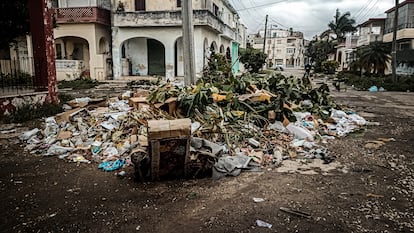
Medicines that can’t be obtained through the social and economic networks that form within neighborhoods must be sought on the black or informal market, where a vial of gentamicin can cost 300 pesos — or 1,800 ($75) if delivery is included. “If you live far away, the cost goes up,” José María explains.
To eat, the anthropologist spends about $60 a month — around 30,000 Cuban pesos on the informal market. He doesn’t go hungry. But a family of four, by his calculations, can double or even triple that amount, even though the average salary on the island sits between 6,600 and 6,800 Cuban pesos (about $300). “The problem isn’t food; it’s dollarized prices,” he adds.
His mother moved to the United States in 2021 after obtaining a scholarship at the University of Miami. She’s the one who sends him a few dollars every month. Otherwise, he wouldn’t be able to get by on his state salary of 4,000 Cuban pesos ($170).
Survival strategies
Lidia, for her part, has taken to making pickles as a way to preserve vegetables and prepare dishes that require little cooking or refrigeration. The 29-year-old doesn’t know how to ride a bicycle, but faced with the need to see her parents — at least once a week — she’s no longer thinking about spending her savings on a new computer, but on any kind of bike. She would cross the entire city — if she could — on foot. “I’ve gotten used to walking,” she says.
Her privilege, she explains, is being able to decide where to live and pay her rent without having to do something she finds ethically questionable. She also feels privileged to be part of a family support chain in which her uncle, from the United States, often sends everything from food to products to ensure her grandmothers’ care.
It is February 2026, and the ghost of the Special Period once again roams the island. It moves through homes, streets, and official speeches. It never left. Alejandra hears her mother repeat over and over that “it was worse back then,” perhaps to make herself feel better. “We’re at the same point as 30 years ago,” she says. “For me, having this repeat is even harder.”
José María was born at the end of the crisis. He has no memories of his own, but like many, he grew up listening to the same stories: weight loss, illnesses caused by stress — some temporary, others permanent — the myth of pizzas made with condoms, blanket steaks, and the rafters.

During the Special Period there were smuggled dollars, but nothing to buy. Today there is food, but not enough money. It is a cumulative crisis, as economist Julio Carranza notes.
If the 1990s were marked by the rafter crisis, the 2020s have been defined by the mass protests of July 11, which culminated in the detention of more than a thousand demonstrators.
In the months that followed the protests, José María felt deeply unsettled. The blackouts, official discourse, mass migration, and impoverishment pushed him to think about the need to occupy public space and demand the government’s resignation. The existence of an autocratic regime — an oligarchy both military and civilian — was indisputable even for sectors more aligned with the government.
But time passed, and a normalcy returned that, in Cuba, is always relative. “Normal” in Cuba is an abstract concept.
Lidia speaks of a capacity for adaptation that surprises even herself. She wonders whether she has learned to live without electricity. Because even with power, the body seems unable to find peace.
“Every day I feel more desperate to save myself. And even if I do, everything else will sink. Reality is increasingly uncomfortable, and coexistence with others becomes hostile because everyone is tense and worried,” she says.
Alejandra notices how this “normalcy” has transformed her personality and her way of mothering, painful as it is to admit. “There’s no power … and instead of speaking gently, I lose my patience. I yell. She cries because she doesn’t understand what’s happening […] I’m scared. I don’t want to think about the future. You adapt. And that, sometimes, is the most dangerous thing.”
For Lidia, Alejandra, and José María — three children of the Special Period — optimism about a quick or short-term solution is waning. An agreement between Washington and Havana does not appear to be a priority for Cuba’s leadership.
Despite the lack of signs of improvement, José María does not want to leave Cuba — not now. What still ties him there is familiarity and a professional growth he would like to achieve before leaving — if he ever does. There are also many places in the country he has yet to see.
Lidia has also thought about leaving, but nothing has materialized enough to make the leap. More than the country’s current context, she fears the nostalgia of those who leave. She’s seen it in many friends and acquaintances. Traveling and emigrating are not the same. “If the basics are a luxury, what is dreaming?” She asks.
In the face of an announced collapse, what keeps Lidia going is the hope of still being able to gather with her friends — at least those who remain. Some will leave soon, but for now they are still there. Hope, if it exists, is internal: it does not come from the Cuban government or from Trump.
Sign up for our weekly newsletter to get more English-language news coverage from EL PAÍS USA Edition
Tu suscripción se está usando en otro dispositivo
¿Quieres añadir otro usuario a tu suscripción?
Si continúas leyendo en este dispositivo, no se podrá leer en el otro.
FlechaTu suscripción se está usando en otro dispositivo y solo puedes acceder a EL PAÍS desde un dispositivo a la vez.
Si quieres compartir tu cuenta, cambia tu suscripción a la modalidad Premium, así podrás añadir otro usuario. Cada uno accederá con su propia cuenta de email, lo que os permitirá personalizar vuestra experiencia en EL PAÍS.
¿Tienes una suscripción de empresa? Accede aquí para contratar más cuentas.
En el caso de no saber quién está usando tu cuenta, te recomendamos cambiar tu contraseña aquí.
Si decides continuar compartiendo tu cuenta, este mensaje se mostrará en tu dispositivo y en el de la otra persona que está usando tu cuenta de forma indefinida, afectando a tu experiencia de lectura. Puedes consultar aquí los términos y condiciones de la suscripción digital.