Cubans at their limit: ‘How is it possible that in my country they listen to anyone but the people?’
Many Cubans on the island, struggling with daily blackouts or shortages of food and transportation, are urging Donald Trump to act soon
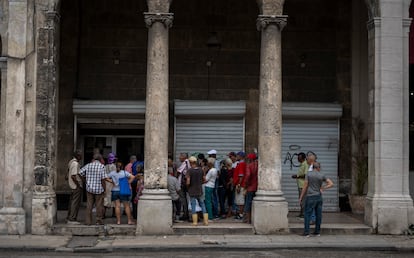

When Yenisey Taboada heard Cuban President Miguel Díaz-Canel say last Friday that his government was negotiating with the United States, she wondered why the authorities had never been able to talk to their own people. She is the mother of Duannis León Taboada, a 26-year-old who joined the massive protests of July 11, 2021, and ended up serving a 14-year prison sentence. The mother reflects on how the government, now open to talks with the Trump administration, sentenced so many people for demanding basic freedoms. “How is it possible that in my country they are able to sit down and listen and dialogue with anyone, except with our children, with our brothers and sisters, with these people who are, literally, dying?”
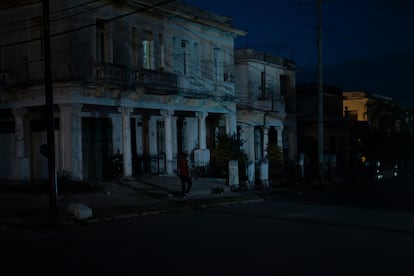
At 6 a.m. On Tuesday, the lights came back on in Taboada’s house in Arroyo Naranjo, Havana, after 17 hours without electricity due to the collapse of the National Power System, which plunged the entire island into darkness. The return of electricity is always good news, but Taboada greets it with little enthusiasm, like someone who knows the power will be cut off again at any moment. “We’ve been suffering blackouts of 15 and even 24 hours for eight months now; it’s incredibly draining emotionally. We’ve also been without drinking water for many days, and you can’t live without water.”
In reality, Taboada no longer receives any news with fervor. She has learned over time to tame any emotion. When Cuban authorities announced a few days ago the release of 51 political prisoners — without mentioning that this was part of any negotiations with the White House, but rather through Vatican mediation — Taboada tried not to entertain any hope that her son would be among those freed. “It’s a strategy, a manipulation by the Cuban dictatorship. Families are once again filled with hope, desperate, dependent on a phone call to go and pick up their loved one,” she says. Her son wasn’t among those released, but even if he had been, his mother wouldn’t consider it fair. “It’s not 51, it’s more than 1,000 political prisoners. And the others? When will the others be released?” She wonders.
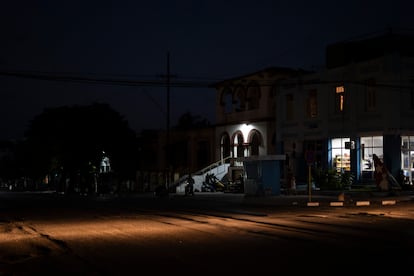
Quite a lot has happened in the Cuban sphere in recent months: the capture of Nicolás Maduro, which left the island without its main ally, Venezuela; the national emergency declared by Donald Trump, which has limited fuel imports to Cuba since January; the numerous pronouncements from the United States that the country will see change before the end of the year; and the opening to allow Cubans abroad to revitalize a completely collapsed economy. With Cuba making headlines around the world daily, it is the Cubans on the island who seem to sense least that anything is changing for them. They continue, as they have for months, to endure blackouts, undertake long walks due to lack of transportation, or struggle to put food on the table.
“This is torture. My nerves are frayed, I barely sleep. Sometimes I get angry seeing myself like this and for not having left Cuba sooner,” says a retired woman from Luyanó, near Havana, who asked to remain anonymous. In the eastern part of the country, the situation is sometimes much worse. In Bayamo, Maydelis Solano has been without electricity for more than 30 hours. “The social discontent is immense, and no measure taken by the Cuban leaders will benefit the people. Unfortunately, we are living through critical times.”
However, according to Solando, there’s something many Cubans are repeating on the street, now that they’re on the verge of despair: the idea that if Trump is going to do something for Cuba, if he’s even going to take over the country, it should be now. “Our hope is placed in the United States government. On the streets, all you hear people saying is that they want Trump to intervene in Cuba now; we need him, and that’s our hope.”
Until now, it was assumed that this was not what was going to happen. That is, that Trump — who went from attacking Venezuela to waging war in Iran — only intended to bring about economic change on the island. Even his Secretary of State Marco Rubio, the son of Cuban immigrants, had said on several occasions that before any political change, Cuba needed economic change. But Trump’s recent statements hint at Washington’s plan toward Havana. This Monday, from the Oval Office, Trump asserted that it would be “an honor” for him to “take Cuba.”
Some people don’t pay much attention to the Republican’s statements, or don’t think he wants to unleash a humanitarian crisis just 90 miles from Florida, but Taboada is among those who believe that, whatever happens, it should be ordinary Cubans who suffer the least. “Today, the people are waiting for change; they fear war, they fear bombs, but they need something to happen. Hopefully, it will be as peaceful as possible, but it needs to happen now.”
However, the plans and points of negotiation between Washington and Havana remain unclear. On Monday night, Óscar Pérez-Oliva Fraga, Cuba’s Deputy Prime Minister and Minister of Foreign Trade and Investment, officially announced the country’s strategy to encourage Cubans living abroad to reinvest in the agricultural sector, participate as business owners, and generally contribute to revitalizing the economy. Nevertheless, Rubio declared on Tuesday from the White House that these measures are insufficient. “Cuba has an economy that doesn’t work and a political and governmental system that can’t fix it. So they have to change dramatically. What they announced yesterday is not dramatic enough. It’s not going to fix it,” he stated.
While Havana and Washington negotiate behind closed doors at the governmental level, what most Cubans are certain of is that any dialogue cannot fail to include real political transformations. “We Cubans don’t want the continuation of the dictatorship in a prosperous, cosmetic version,” says Carolina Barrero, director of Citizenship and Freedom, an organization that promotes civil and political rights in Cuba. Barrero, like others at this time, demands that any talks address an amnesty for the island’s political prisoners, a Constitution that guarantees political pluralism, and an electoral law that leads to free elections. “We want a free and prosperous Cuba without the Castros. We want to close a nearly seventy-year cycle of a murderous dictatorship that has destroyed our country.”
Sign up for our weekly newsletter to get more English-language news coverage from EL PAÍS USA Edition
Tu suscripción se está usando en otro dispositivo
¿Quieres añadir otro usuario a tu suscripción?
Si continúas leyendo en este dispositivo, no se podrá leer en el otro.
FlechaTu suscripción se está usando en otro dispositivo y solo puedes acceder a EL PAÍS desde un dispositivo a la vez.
Si quieres compartir tu cuenta, cambia tu suscripción a la modalidad Premium, así podrás añadir otro usuario. Cada uno accederá con su propia cuenta de email, lo que os permitirá personalizar vuestra experiencia en EL PAÍS.
¿Tienes una suscripción de empresa? Accede aquí para contratar más cuentas.
En el caso de no saber quién está usando tu cuenta, te recomendamos cambiar tu contraseña aquí.
Si decides continuar compartiendo tu cuenta, este mensaje se mostrará en tu dispositivo y en el de la otra persona que está usando tu cuenta de forma indefinida, afectando a tu experiencia de lectura. Puedes consultar aquí los términos y condiciones de la suscripción digital.