What is competency porn, the trend that consists of watching people do things well?
‘The Pitt’ is the greatest exponent of this genre of shows and films in which the characters plan and execute tasks efficiently
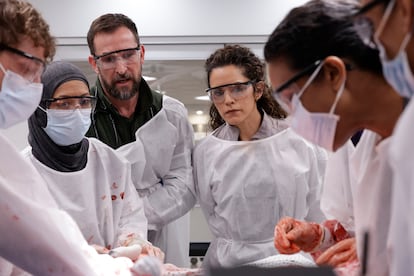

Internet niches, like pleasure-seeking, are becoming increasingly specific. One such niche involves watching TV shows or movies featuring people who are efficient in their work, skillfully and precisely planning, executing, and solving problems. This phenomenon — which does not include sexual content — is called competency porn. In January, coinciding with the premiere of the second season of The Pitt, this trend skyrocketed. The American series, set in the emergency room of a Pittsburgh hospital, is one of the most frequently cited examples of competency porn. In each episode (one for each hour of on-call duty), doctors and residents face the challenges of an overwhelmed healthcare system.
The term “competency porn” first appeared in 2009 on the blog of American screenwriter John Rogers. During the writing of the series Rules of Engagement, and due to budget constraints, the team was forced to open an episode with a particularly calm scene. “We discovered, to our surprise, that we love briefing scenes. For the audience, watching competent people joke and plan was a big part of the appeal,” Rogers wrote. They began calling this formula competency porn.
Since then, the concept has expanded. The FX series The Bear, set in the world of haute cuisine, is reminiscent of the hyper-competent journalists in the films All the President’s Men and Spotlight. Even fictional accounts of military and criminal operations circulate as agreed-upon examples on social media. The term also fits into a broader rhetorical trend that describes certain hobbies as pornographic, such as foodporn, earthporn, or historyporn.
For Estonian researcher Katrin Tiidenberg, who specializes in social media practices and self-care technologies, people tend to take what they value and elevate it to the realm of the erotic or romantic. Tiidenberg sees this as a reaction to the social and political climate. A job well done contrasts sharply with the chaos, the crisis of institutional legitimacy, and the distrust of governments and large corporations that many people experience in their daily lives. “If we wanted to be provocative, we could say that it’s the same reaction that leads some people to desire governments we call authoritarian or even fascist,” she states.
The Polish psychoanalyst Dolf Zillmann proclaimed more than 40 years ago that entertainment choices are guided by a hedonistic motivation for regulating emotions. But just as pornographic preferences don’t always translate into real-life practices or desires, the pleasure of watching highly competent people doesn’t necessarily lead to becoming more efficient. According to Tiidenberg, “it can be inspirational or motivational,” but it doesn’t guarantee influence on the viewer.
This fantastical territory also encompasses the fondness for admiring characters who, while brilliant at their jobs, are ethically questionable or flawed in their private lives. Such is the case with The Jackal, about a hitman, or Dr. McKay in the first season of The Pitt, who was forced to wear an electronic ankle monitor after a fight with her ex-husband’s partner. Tiidenberg interprets it this way: “Protagonists who are very good at something, and at the same time a little odd, have always been popular. It gives hope to those of us who are, in some way, odd.” An identification that proves comforting.
Sign up for our weekly newsletter to get more English-language news coverage from EL PAÍS USA Edition
Tu suscripción se está usando en otro dispositivo
¿Quieres añadir otro usuario a tu suscripción?
Si continúas leyendo en este dispositivo, no se podrá leer en el otro.
FlechaTu suscripción se está usando en otro dispositivo y solo puedes acceder a EL PAÍS desde un dispositivo a la vez.
Si quieres compartir tu cuenta, cambia tu suscripción a la modalidad Premium, así podrás añadir otro usuario. Cada uno accederá con su propia cuenta de email, lo que os permitirá personalizar vuestra experiencia en EL PAÍS.
¿Tienes una suscripción de empresa? Accede aquí para contratar más cuentas.
En el caso de no saber quién está usando tu cuenta, te recomendamos cambiar tu contraseña aquí.
Si decides continuar compartiendo tu cuenta, este mensaje se mostrará en tu dispositivo y en el de la otra persona que está usando tu cuenta de forma indefinida, afectando a tu experiencia de lectura. Puedes consultar aquí los términos y condiciones de la suscripción digital.