Juan Nicolás: Deportation of a two-month-old baby is the latest scandal at Dilley detention center
The mother reports that the family and the newborn were taken across the border into Mexico with just $190 while the child was sick with bronchitis
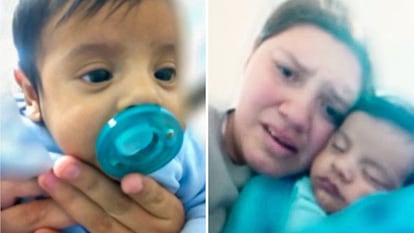

At the Dilley Family Detention Center, scandals erupt week after week. The latest involves the deportation to Mexico of Juan Nicolás, a two-month-old baby allegedly diagnosed with bronchitis, along with his mother, father, and 16-month-old sister. The case has once again brought attention to the deplorable conditions inside the South Texas center, and to the cruelty the Trump administration inflicts on migrants as part of its mass deportation campaign.
Before the Guatemalan family was deported to Mexico, the case came to light through allegations made by Democratic Representative Joaquín Castro of Texas. For weeks, the congressman had raised concerns about the detention of the newborn, and this week he confirmed that Juan Nicolás had been ill for some time and had not received adequate medical attention at the Dilley facility. On Tuesday, Castro, who claimed to be in direct contact with the mother, Mireya López Sánchez, reported that, according to her, Juan Nicolás had bronchitis, had been unresponsive, and yet had been discharged.
Castro also stated that López Sánchez appeared before an immigration judge on Tuesday morning. At the hearing, she was told she would be deported with her baby, but was not told where or when. “We are all deeply concerned that Juan and his mom will be deported and that Juan’s health will continue to deteriorate. His life is in danger because of ICE’s monstrous cruelty,” Castro posted on X.
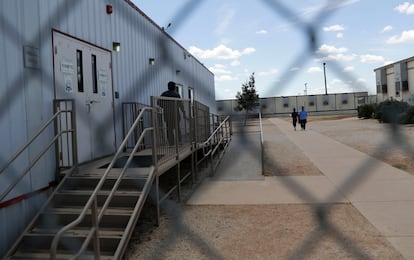
On Tuesday afternoon, news of his deportation was confirmed by the congressman and by the television station Univision. According to both, Juan Nicolás and his mother were “abandoned” on the other side of the border with only $190. They managed to find a place to spend the night, and on Wednesday were able to access medical attention. According to statements made by López Sánchez to Univision, the diagnosis is acute bronchiolitis, in addition to gastroesophageal reflux. On Wednesday night, the mother stated that Juan Nicolás was receiving treatment and that the family would seek to return to Guatemala once the baby recovered.
As the story gained traction throughout the week, the Department of Homeland Security (DHS) released its own brief account of the events on social media, placing the blame squarely on López Sánchez. “The mother chose to take her child into custody with her. The mother chose to enter and remain in the country illegally. The mother chose not to take $2,600 and free flight home,” read a post from Wednesday morning.
DHS spokeswoman Tricia McLaughlin, who announced yesterday that she would be leaving her post, stated in remarks to the political publication The Hill that the child was “in stable condition and medically cleared for removal” and that pediatricians provided the parents with a saline nasal spray and a bulb syringe to continue treatment after the removal. McLaughlin also said that the mother had been detained on January 21 near Eagle Pass, Texas, after crossing the border without authorization, and that a judge issued a final deportation order on February 18. “She received due process.”
López Sánchez, however, described a different experience. In an interview with Univision, she said a doctor threatened to withdraw her son’s medical care if she continued speaking publicly about his condition. “Implying that if I kept talking about what was happening, he wouldn’t be protected anymore,” she recounted. Tearfully, speaking from Mexico, she pleaded for help: “I have nothing. I need a house, I need a roof over my head, something. More than anything, I need care for my children because they are unprotected.”
The public heard their plea. A GoFundMe campaign was launched with the goal of raising $15,000 to ensure the health of Juan Nicolás and his 16-month-old sister Mia, and to provide them with some stability to build a better future. Less than 24 hours later, Lara Jones, identified as the campaign manager, announced its closure, as they had raised over $80,000 from just under 2,000 donations. “Juan’s family is completely overwhelmed with gratitude for the outpouring of love and support they have received. Due to your incredible generosity, we have decided to close donations for the time being. We have exceeded our initial goal, and the funds raised will allow them to secure safe housing, meet their urgent needs, and begin the long process of recovery and rebuilding after everything they have endured. Your compassion has provided them with something they lacked just days ago: stability, dignity, and hope. On their behalf, thank you.”
The case of Juan Nicolás is not an isolated incident. It adds to a series of recent controversies that have once again placed migrant children at the center of the debate, particularly at the Dilley center, operated by the company CoreCivic. The facility had been closed for years but reopened in early 2025, after Trump’s return to the White House. The intensification of immigration policy and the promise to carry out “the largest deportation in history” prompted the reopening of closed centers and the expansion of detention capacity.
Since then, approximately 3,500 people have passed through Dilley, more than half of them minors, according to data published by ProPublica. The outlet also revealed that nearly 300 children sent to the center remained in detention for more than a month, despite the Flores Agreement establishing a 20-day limit for holding minors in immigration facilities.
In the last month, complaints about conditions inside the center have multiplied. The case of five-year-old Liam Conejo Ramos, arrested along with his father in Minneapolis and transferred to Dilley, brought the center into sharp focus. Until then, Dilley had not been the subject of so much news coverage, despite civil rights organizations and specialized lawyers having warned for months of serious deficiencies in food, access to clean water, medical care, and adequate educational services.
Sign up for our weekly newsletter to get more English-language news coverage from EL PAÍS USA Edition
Tu suscripción se está usando en otro dispositivo
¿Quieres añadir otro usuario a tu suscripción?
Si continúas leyendo en este dispositivo, no se podrá leer en el otro.
FlechaTu suscripción se está usando en otro dispositivo y solo puedes acceder a EL PAÍS desde un dispositivo a la vez.
Si quieres compartir tu cuenta, cambia tu suscripción a la modalidad Premium, así podrás añadir otro usuario. Cada uno accederá con su propia cuenta de email, lo que os permitirá personalizar vuestra experiencia en EL PAÍS.
¿Tienes una suscripción de empresa? Accede aquí para contratar más cuentas.
En el caso de no saber quién está usando tu cuenta, te recomendamos cambiar tu contraseña aquí.
Si decides continuar compartiendo tu cuenta, este mensaje se mostrará en tu dispositivo y en el de la otra persona que está usando tu cuenta de forma indefinida, afectando a tu experiencia de lectura. Puedes consultar aquí los términos y condiciones de la suscripción digital.