From a Palm Beach mansion to Windsor Castle: How the Epstein case sent shockwaves around the world
The arrest of former Prince Andrew is the most significant consequence of the latest revelations about the disgraced financier’s international network of power and sex
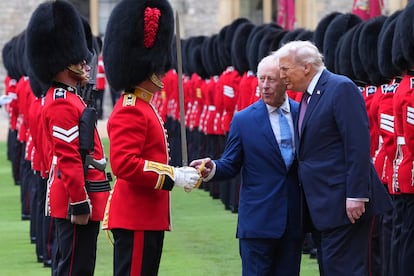

Three decades after the first complaint in New York against Jeffrey Epstein — which the FBI dismissed — the case of the disgraced financier and sexual predator has become a global scandal. This Thursday, it crossed yet another Rubicon with the arrest in the United Kingdom of the former Prince Andrew, on what happened to be his 66th birthday.
It has also been two decades since Epstein was first prosecuted in Florida, after investigators gathered dozens of complaints from minors who had suffered sexual abuse in his Palm Beach mansion. And the pedophile was about to be tried again for those acts in New York in 2019 when he died in a cell in what the coroner ruled a suicide.
At his death, he left behind a network of trafficking and sexual abuse with hundreds of victims, both minors and adults (up to 1,200, according to some estimates), as well as a dense web of ties to powerful figures and friendships that, in many cases, remained intact even after his first conviction in 2008 for two state crimes, which included his registration in a public sex offender registry. His crimes also left a vast trail of documents that the U.S. Department of Justice is now publishing, compelled to do so after months of resistance by a law passed almost unanimously by both chambers of the U.S. Congress.
After the release of two batches of Epstein documents sparked controversy in the United States over the number of usual suspects involved (in addition to Donald Trump, Bill Clinton, Noam Chomsky, Steve Bannon, Bill Gates, and Woody Allen, among others) and anger among the victims over the handling of the redacted sections (for failing to protect the identity of some victims and being excessively protective of the alleged perpetrators), the latest batch arrived three weeks ago. It is the largest to date — 3.5 million documents available here, including 2,000 videos and 180,000 images — and the one with the greatest international impact.
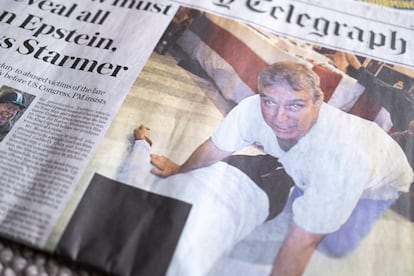
These files have put a nail in the coffin of Andrew Mountbatten-Windsor’s reputation and led to his arrest for what they once again reveal about his closeness to Epstein, to whom he allegedly passed confidential economic information from the British government while serving as special envoy for International Trade. What’s more, they have also forced Labour politician Peter Mandelson to resign his seat in the House of Lords — after losing his post as ambassador to the United States in September, he now also faces a criminal investigation — and have triggered an ongoing crisis for Prime Minister Keir Starmer, who has offered up the resignation of three members of his Cabinet in an attempt to contain the scandal.
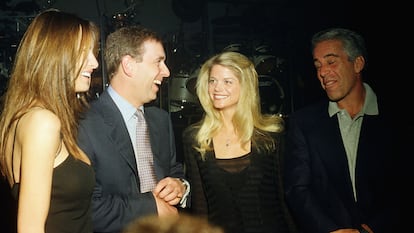
After the United Kingdom, Norway is the country where the latest revelations about Epstein have hit hardest, especially within its royal family, to the point of undermining the public’s trust in one of the world’s traditionally least corrupt systems. In addition to Mette-Marit, the crown princess, who has come under intense scrutiny for a series of emails exchanged with Epstein, the latest document release has implicated a former prime minister (Thorbjørn Jagland), a former foreign minister (Børge Brende), and a pair of respected diplomats (Mona Juul and Terje Rød-Larsen), whose children Epstein even attempted to leave $10 million to — money they never received.
That global network had branches in Poland, Russia, Israel and the Gulf monarchies, and included prominent names such as former French minister of culture Jack Lang: the scandal has forced him to resign as head of the Arab World Institute in Paris.
Germany, Ireland, Lithuania, Latvia, and Turkey have launched or are considering launching criminal investigations. All this new information has led a group of independent experts appointed by the United Nations Human Rights Council to define Epstein’s reach as a “global criminal enterprise.” “So grave is the scale, nature, systematic character, and transnational reach of these atrocities against women and girls, that a number of them may reasonably meet the legal threshold of crimes against humanity,” said the experts.
Few consequences in the United States
Meanwhile, the scandal continues to dominate the news in the United States — though with relatively few consequences, beyond a handful of resignations or dismissals in the private sector, for those (including women such as Kathryn Ruemmler, a Goldman Sachs executive) named in the Epstein files, a reputational stain that does not necessarily indicate they committed any crime or were aware of the predator’s offenses.
It is paradoxical that the only two people who have so far been arrested in connection with Epstein are British: in addition to the former Prince Andrew, there is Epstein’s best friend/accomplice/facilitator, Ghislaine Maxwell, who has been serving a 20‑year sentence since 2022 in a minimum‑security prison in Texas, where she was transferred after meeting with Deputy Attorney General Todd Blanche.
Maxwell appeared before the U.S. Congress 10 days ago and repeatedly invoked her Fifth Amendment right not to testify. Her lawyer said that day that his client was willing to reveal everything she knows — and to exonerate Trump and Clinton — if she were granted immunity, which no one in Washington is in a position to rule out these days.

What those who have spent weeks combing through the vast number of new documents released by the Department of Justice (which still has millions more to declassify) do know is that they tell a murky story about the inner workings of power during a period — from the late 1990s to the rise of the #MeToo movement — in which that small circle of wealthy and famous people around the world spoke the lingua franca of money, advantageous connections, mutual protection, and sex, whether aboard private jets or hidden away on the remote island owned by Epstein. And all of it, as Robert Draper noted in The New York Times, unfolded “in the midst of rising populist anger and ever-growing inequality” and during a time marked by “the decline of America’s manufacturing sector and the subprime mortgage crisis, in which millions of Americans lost their homes.”
Far from dispelling them, the release of new materials has fueled fresh theories and revived old conspiracies — such as the claim that Epstein was killed because he was about to expose everything, or the one insisting he is still alive, hiding in Israel and spending his days playing video games. Isn’t one of the main drivers for such theories the supposed existence of a society of powerful men who act as they please, untouched by the rules that apply to everyone else?
In the United Kingdom, on Thursday, those rules were indeed applied, leading to the arrest of former Prince Andrew, whose brother, King Charles III, said shortly after the detention that “the law must take its course.” It is still unclear where that course will lead, or whether the downfall of Queen Elizabeth II’s favorite son will mark the beginning of a new era of accountability in the Epstein case. It began 30 years ago with a complaint in New York that the FBI ignored, and in its latest incarnation it has taken the shape of a global cataclysm.
Sign up for our weekly newsletter to get more English-language news coverage from EL PAÍS USA Edition
Tu suscripción se está usando en otro dispositivo
¿Quieres añadir otro usuario a tu suscripción?
Si continúas leyendo en este dispositivo, no se podrá leer en el otro.
FlechaTu suscripción se está usando en otro dispositivo y solo puedes acceder a EL PAÍS desde un dispositivo a la vez.
Si quieres compartir tu cuenta, cambia tu suscripción a la modalidad Premium, así podrás añadir otro usuario. Cada uno accederá con su propia cuenta de email, lo que os permitirá personalizar vuestra experiencia en EL PAÍS.
¿Tienes una suscripción de empresa? Accede aquí para contratar más cuentas.
En el caso de no saber quién está usando tu cuenta, te recomendamos cambiar tu contraseña aquí.
Si decides continuar compartiendo tu cuenta, este mensaje se mostrará en tu dispositivo y en el de la otra persona que está usando tu cuenta de forma indefinida, afectando a tu experiencia de lectura. Puedes consultar aquí los términos y condiciones de la suscripción digital.