Denver authorizes local police to detain ICE agents for excessive use of force and orders protection for protesters
Mayor Mike Johnston’s executive order marks a direct challenge to Trump’s immigration crackdown and restricts federal operations on city property
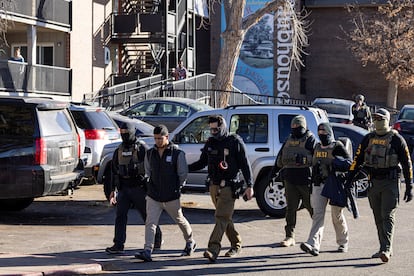

Resistance to Donald Trump’s immigration policies continues. The mayor of Denver, Colorado, Democrat Mike Johnston, has signed an executive order prohibiting Immigration and Customs Enforcement (ICE) agents from operating on municipal property and authorizing local police to protect peaceful protesters and even to detain federal agents in cases of excessive use of force.
The order states that ICE agents may not use municipal facilities — including parking lots, parks, and other public spaces — to coordinate immigration operations without a court order or other valid legal warrant. It also instructs the Denver Police Department and the sheriff to intervene if they witness actions that could result in serious injury or death to a person during an immigration operation.
“If we see any ICE agent using excessive force against a Denver resident, we will step in to detain that officer and remove them from the situation,” Johnston said during a press conference. The mayor said the city will hold federal agents to the same standard it applies to its own officers.
The decision comes after months of tension over the Trump administration’s intensified immigration policy and following the deaths of two U.S. Citizens in Minneapolis during a federal operation, Renee Good and Alex Pretti. Those events sparked protests and intensified criticism from civil rights advocates, who denounce violations of due process and freedom of expression.
Local police chief Ron Thomas said the priority will be to avoid confrontation. “We are not looking to create hostility or to create conflict,” he said, although he noted that all officers — including federal agents — have a legal obligation to intervene in cases of illegal or excessive use of force. Thomas explained that the department has developed simulation scenarios to prevent clashes.
The order also reaffirms local policies that limit cooperation with federal immigration authorities. Municipal agencies will not share databases or enter into technological agreements with the Department of Homeland Security unless explicitly required by law. Likewise, the ban on immigration raids in schools, churches, hospitals, libraries, and stadiums remains in place, and racial profiling is prohibited. The city council is also considering an ordinance that would prohibit federal agents from wearing masks and require them to display their name and badge number, with exceptions for undercover operations or special tactics.
The political context adds weight to the measure. During the 2024 campaign, Trump falsely claimed that Aurora, a city neighboring Denver, had been taken over by Venezuelan gangs and promised an intervention that he said would be a “bloody story.” Although the metropolitan area has not experienced a deployment of that magnitude, immigration arrests in the Denver region have increased by more than 200% during the president’s second term, according to researchers at the University of Colorado.
Denver has already faced federal lawsuits for alleged interference in the enforcement of immigration laws. However, Johnston defended his city’s continued “welcoming” stance, while insisting that he cannot prevent federal authorities from acting within their jurisdiction when they have legal backing. In previous hearings on Capitol Hill, the mayor had adopted a more moderate tone and recalled that Denver has cooperated with ICE in the past.
For Johnston, the goal is to send a clear message to residents, especially the Latino and East African communities that have expressed fear of possible mass raids. “We want to be the ones policing our own city,” said the mayor.
Sign up for our weekly newsletter to get more English-language news coverage from EL PAÍS USA Edition
Tu suscripción se está usando en otro dispositivo
¿Quieres añadir otro usuario a tu suscripción?
Si continúas leyendo en este dispositivo, no se podrá leer en el otro.
FlechaTu suscripción se está usando en otro dispositivo y solo puedes acceder a EL PAÍS desde un dispositivo a la vez.
Si quieres compartir tu cuenta, cambia tu suscripción a la modalidad Premium, así podrás añadir otro usuario. Cada uno accederá con su propia cuenta de email, lo que os permitirá personalizar vuestra experiencia en EL PAÍS.
¿Tienes una suscripción de empresa? Accede aquí para contratar más cuentas.
En el caso de no saber quién está usando tu cuenta, te recomendamos cambiar tu contraseña aquí.
Si decides continuar compartiendo tu cuenta, este mensaje se mostrará en tu dispositivo y en el de la otra persona que está usando tu cuenta de forma indefinida, afectando a tu experiencia de lectura. Puedes consultar aquí los términos y condiciones de la suscripción digital.