Over 100,000 government employees have gone a month without pay due to DHS shutdown
A lack of political agreement on limiting the powers of ICE agents means there is no solution in sight. The closure is beginning to have visible consequences for citizens as reserve funds run out
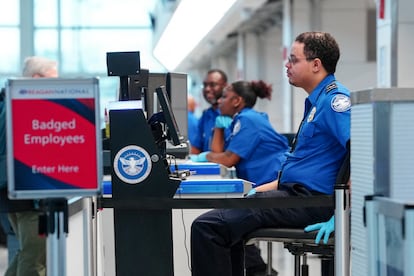

While Markwayne Mullin, a former mixed martial arts fighter from Oklahoma, is on the verge of taking the helm of the U.S. Department of Homeland Security (DHS), most of the agencies under his purview have been without funding since February 14. On that day, a shutdown went into effect after the Senate failed to pass a funding bill for the agency. Since then, more than 100,000 essential employees in the intelligence services, the Transportation Security Administration (TSA), aviation security, emergency services, and the National Guard, among others, have been working without pay.
The disagreement between Republicans and Democrats over a law that would set limits on the actions of U.S. Immigration and Customs Enforcement (ICE) and the Border Patrol has left DHS funding on hold for 34 days. Without that legislation, which seeks to bring oversight of the controversial immigration agency in line with that of other federal law enforcement agencies, Democrats will not release DHS funding. Nor is a solution in sight.
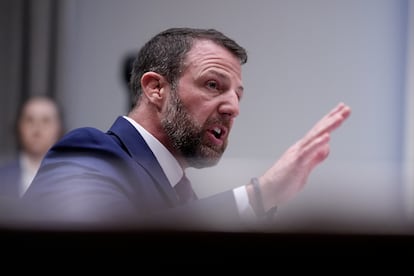
On Thursday, Mullin passed the Senate Homeland Security Committee’s confirmation hearing, and the committee has sent his nomination to the Senate for final confirmation. If successful, he will head the department that has faced the most criticism over the past year due to the Trump administration’s aggressive immigration policies, which have included mass deportations and indiscriminate raids on migrants.
The department’s former head, Kristi Noem, was fired by Donald Trump a few weeks ago for her role in the immigration crisis—she had labeled two U.S. Citizens killed by immigration police as “domestic terrorists”—and for questions surrounding her management of the department, including spending more than $200 million on advertising campaigns to improve her image.
The DHS shutdown is beginning to have visible consequences for citizens as reserve funds run out and employees go unpaid. This department has some 270,000 workers, but more than half have been deemed non-essential and sent home without pay until the budget impasse is resolved. Another 100,000, classified as essential, are required to report to work, but they too have stopped receiving pay as the administration’s remaining funds have run out. Sick leave among these employees is skyrocketing, and many services are being affected.
Airport lines
The country’s major airports are experiencing long lines at security checkpoints and flight delays due to staff shortages. “As the weeks continue, if this continues, it’s not hyperbole to suggest that we may have to quite literally shut down airports, particularly smaller ones,” said Adam Stahl, acting deputy administrator of the Transportation Security Administration (TSA), on the conservative network Fox News.
More than 10% of TSA security screeners—and up to 30% at larger airports such as New York’s—did not show up for work last Monday, the highest rate since the start of the government shutdown. Federal employees are paid weekly or biweekly. Last week was the first in which they did not receive a single dollar in pay, yet they still have to pay for their children’s school, their mortgage or car loan, and put food on the table. So many are taking leave to seek extra income until the conflict is resolved.
Sign up for our weekly newsletter to get more English-language news coverage from EL PAÍS USA Edition
Tu suscripción se está usando en otro dispositivo
¿Quieres añadir otro usuario a tu suscripción?
Si continúas leyendo en este dispositivo, no se podrá leer en el otro.
FlechaTu suscripción se está usando en otro dispositivo y solo puedes acceder a EL PAÍS desde un dispositivo a la vez.
Si quieres compartir tu cuenta, cambia tu suscripción a la modalidad Premium, así podrás añadir otro usuario. Cada uno accederá con su propia cuenta de email, lo que os permitirá personalizar vuestra experiencia en EL PAÍS.
¿Tienes una suscripción de empresa? Accede aquí para contratar más cuentas.
En el caso de no saber quién está usando tu cuenta, te recomendamos cambiar tu contraseña aquí.
Si decides continuar compartiendo tu cuenta, este mensaje se mostrará en tu dispositivo y en el de la otra persona que está usando tu cuenta de forma indefinida, afectando a tu experiencia de lectura. Puedes consultar aquí los términos y condiciones de la suscripción digital.