Brazilian cinema has high hopes of making Oscar history
‘The Secret Agent’ and Wagner Moura are nominated in four categories just one year after Brazil won its first ever Academy Award
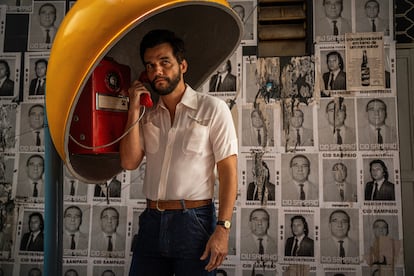

Brazil hopes to win a second Oscar for Best Picture on March 15 in Los Angeles, and perhaps even a third in a different category. It would be a colossal triumph for a country that failed to win the last World Cup and never won a Nobel Prize, not to mention the fact it would come just a year after the Brazilian film industry won its first ever gong.
The Oscar hopeful is The Secret Agent, a thriller about a professor persecuted by the dictatorship who escapes to Recife during Carnival in 1977, a film that director Kleber Mendonça Filho, 57, had written expressly for actor Wagner Moura, 49. Premiered at Cannes and the Golden Globes and acclaimed by critics both at home and abroad, more than two million Brazilians have gone to the cinema to see it. Its success follows that of the Oscar-winning I’m Still Here, a drama also set during the military regime.
The Secret Agent has four nominations; for Best Picture, Best International Feature Film, Best Leading Actor (Wagner Moura) and Best Casting. Another Brazilian, Adolpho Veloso, is up for Best Picture and Best Cinematography with Train Dreams. The euphoria, while not quite that of a year ago, is arresting. Brazilians are preparing to follow Sunday’s gala in style as though it were a World Cup final. Almost four decades have passed since any country won the Oscar for best foreign film two years in a row. That happened to be Denmark for Babette’s Feast in 1987 and Pelle the Conqueror in 1988. For writer Xico Sá, who lived through the vibrant Recife of the 1970s, the awards and Oscar nominations reflect “the consolidation of Brazilian cinema’s status in the world and is a great incentive for young generations to make films in Pernambuco and throughout Brazil.”
The director and the star of The Secret Agent have been involved in months of intense promotional campaigns abroad. Both born in northeastern Brazil during the dictatorship (1964-1985), Mendonça Filho is the son of a historian while Moura’s father served in the military. Both have emphasized the political nature of the film and have openly expressed their views on the political role of cinema and festivals, the threat of authoritarianism both at home and in the United States, together with other current issues.
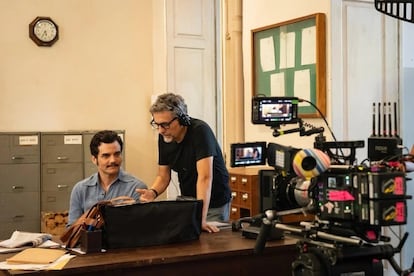
“In Brazil, remembering is a political act,” Mendonça Filho has insisted. In his film, the oppression of the military regime is much less evident than in I’m Still Here. There are no tanks, no dungeons. Instead, there’s a heavy air that suffocates those who dare raise their voices. And the villain is not a ruthless dictator, but a businessman protected by the generals who sends a couple of hitmen to kill Professor Armando Solimões, played by Moura. It is not difficult to detect traces of the attitude to culture during Jair Bolsonaro’s presidency.
“This is a film that was born from how Kleber and I felt when Brazil was under this sort of fascist government,” Moura told Variety magazine. Moura has lived in Los Angeles for years with his wife and three teenage children and achieved international fame as Pablo Escobar in the Netflix hit series Narcos. Before that, he starred in Tropa de Elite, as a brutal Rio de Janeiro police chief, having earlier cut his teeth in soap operas.
The actor has publicly said that cinema is a source of national pride, that artists are admired despite Bolsonaro’s four-year term when the government treated art as a waste of public money and cut subsidies, in addition to attacking it as a supposed nest of communism. Moura himself was at the receiving end of this attitude in the shape of the thousand obstacles to premiere Marighella, a biography of the leader of the resistance against the dictatorship and his directorial debut.
“You guys never had the experience of living under a dictatorship. You don’t know what that is, what that feels like or how bad that is. It happens slowly. And if you don’t have a reaction to the little things, that’s when they take over,” he told Variety. In this and other interviews he has expressed how proud he feels that his country tried, condemned and imprisoned President Bolsonaro over his attempt at an insurrection.
A reflection of the radical change the new government in 2023 meant for culture was the film session President Luiz Inácio Lula da Silva organized so that he and several of his ministers could watch Mendonça’s thriller at his residence with the cast. After the film won four Oscar nominations, the president tweeted: “Brazilian cinema is experiencing one of the best moments in its history! The nomination of The Secret Agent [...] Is a recognition of our culture and Brazil’s ability to tell stories that move the world.”
Lula da Silva’s government restored the Ministry of Culture, which is led by singer Margareth Menezes, renewed public investments in cinema, and brought back screen quotas. Last year, more than 360 Brazilian films were screened. Cinema theaters were also reopened. There have never been so many – more than 3,500 spread throughout the country. Last year, 14 cities opened their first ever cinema. And the success of I’m Still Here contributed to a tripling of the audience for national films.
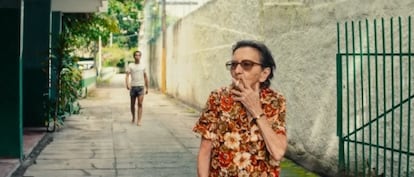
Actress Tânia Maria stands out in a cast whose director was nominated for an Oscar. Tânia Maria, 79, plays an anarcho-communist woman who runs the shelter in Recife where the professor takes refuge with other dissidents. Her performance — the perennial cigarette, the hoarse voice — has elevated her to the status of diva among her compatriots.
The writer Sá recalls how “the Bolsonaro years [2019-2022] were deadly for Brazilian cinema” due to the abrupt end to subsidies as well as open hostility. “The Secret Agent has been funded by several countries. We have filmmakers who can survive without public funds, but those kids starting to make films after being encouraged by Kleber’s success need them,” he says. He adds that since the 1990s Pernambuco has had its own incentive program and, thanks to that, local filmmakers can screen at least one major film annually. The Secret Agent is a celebration of Recife, of Pernambuco, of northeastern Brazil. That is one of the hallmarks of Mendonça. There is the carnival of Recife and the frenetic dance called frevo, national icons along with the Volkswagen beetle.
“It is a very faithful portrait of the city, of color, of culture, of local speech,” says Sá, who recalls that, already in the 1920s, Recife had a silent film industry. This film “is also a great showcase for the Northeast and redresses a certain imbalance because the Rio-São Paulo axis has always been more favored by the cultural industry,” he says. For the Northeasterners, traditionally seen by their compatriots in the rich Southeast as victims of droughts who are driven to emigrate, the portrait of a modern Recife in the 1970s, with a very rich culture and majestic movie theaters such as the São Luiz, is a source of great pride.
Sign up for our weekly newsletter to get more English-language news coverage from EL PAÍS USA Edition
Tu suscripción se está usando en otro dispositivo
¿Quieres añadir otro usuario a tu suscripción?
Si continúas leyendo en este dispositivo, no se podrá leer en el otro.
FlechaTu suscripción se está usando en otro dispositivo y solo puedes acceder a EL PAÍS desde un dispositivo a la vez.
Si quieres compartir tu cuenta, cambia tu suscripción a la modalidad Premium, así podrás añadir otro usuario. Cada uno accederá con su propia cuenta de email, lo que os permitirá personalizar vuestra experiencia en EL PAÍS.
¿Tienes una suscripción de empresa? Accede aquí para contratar más cuentas.
En el caso de no saber quién está usando tu cuenta, te recomendamos cambiar tu contraseña aquí.
Si decides continuar compartiendo tu cuenta, este mensaje se mostrará en tu dispositivo y en el de la otra persona que está usando tu cuenta de forma indefinida, afectando a tu experiencia de lectura. Puedes consultar aquí los términos y condiciones de la suscripción digital.