ICE used arrest quotas and surveillance technology in Oregon immigration raids, rare court testimony shows
Federal data and reports show a sharp increase in arrests in the state in 2025, while lawyers denounce tactics that could violate civil rights
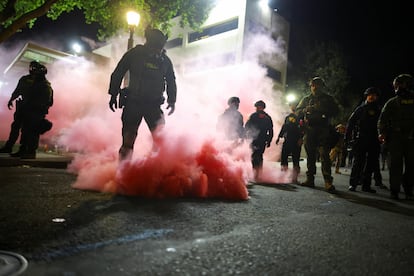

Rare sworn testimony from federal agents revealed that Immigration and Customs Enforcement (ICE) officers in Oregon were instructed to meet daily arrest quotas and use technological tools to identify potential “targets” during immigration raids, according to The Guardian.
The information emerged during hearings for a class-action lawsuit filed by the immigrant rights organization Innovation Law Lab, which challenges the practice of detaining people without a warrant or probable cause. The case compelled agents to testify in court, offering a rare glimpse into internal tactics that are not typically made public.
During a hearing held in December, an agent identified as “JB” testified that his team received a verbal order to make eight arrests per day during operations in the state. The group consisted of between nine and 12 officers. When the plaintiffs’ attorney asked him if he had met the quota, the agent replied, ““I made as many arrests as I could, as long as it was lawful.”
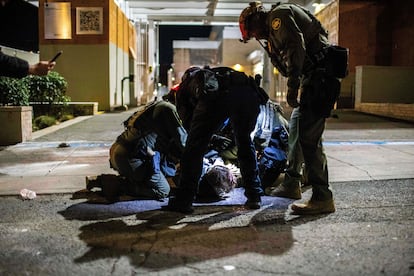
The operations were linked to a federal campaign known internally as Operation Black Rose, which took place in the Portland area last year and, according to data from the Department of Homeland Security, resulted in more than 1,200 arrests as of mid-December.
The testimony also revealed for the first time in court the use of an app called Elite, described by the agent as a tool similar to Google Maps, which shows the estimated concentration of people with an “immigration nexus” in certain areas. As he explained, the app helps locate areas where there is a higher probability of finding people subject to detention. However, he acknowledged that the data is not always accurate. “The app could say 100%, and it’s wrong. The person doesn’t live there. And so it’s not accurate. It’s a tool that we use that gives you probability, but there’s … no such thing as 100%,” he stated during the hearing.
The use of this tool was evident during an operation conducted on October 30 in Woodburn, south of Portland, where officers followed a van transporting farmworkers to their workplace. The officers smashed the vehicle’s windows and detained its seven occupants. During that same operation, another officer used a facial recognition app called Mobile Fortify to identify a worker who was detained and transferred to a detention center in Washington State. She was later released.
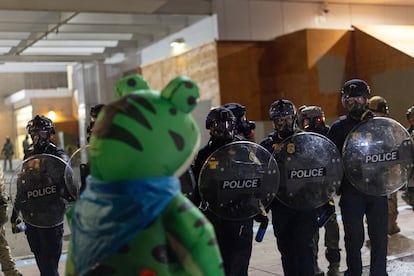
Federal Judge Mustafa Kasubhai, who reviewed the case, harshly criticized the tactics used, noting that tools like Elite could create inaccurate information and lead to the detention of people who are in the country legally.
As the case proceeds through the courts, federal data released this week shows the scale of the increase in immigration detentions in the U.S. Northwest during 2025. An analysis by the University of Washington’s Center for Human Rights found that Oregon recorded 1,655 immigration arrests last year, more than in the previous three years combined. The increase was particularly notable in the final months of the year.
Between January and September 2025, monthly detentions in the state remained below 100, but in October and November they exceeded 400 per month, according to an analysis based on official ICE forms used to initiate deportation proceedings. The researchers noted that the Portland metropolitan area was one of the main hubs of that activity. “We were frankly blown away by the scale of the arrests in the Portland area from October to December of last year,” Phil Neff, the university center’s research coordinator, told reporters.
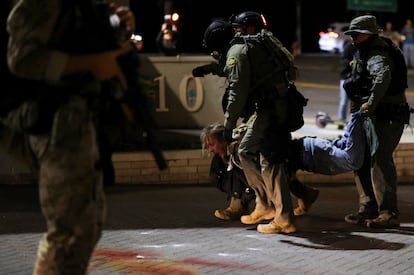
Other reports have also documented a sharp increase in arrests during that period. Data collected by researchers and analyzed by Oregon Public Broadcasting indicates that in some counties in the Portland area, arrests skyrocketed by more than 600% after President Donald Trump described the city as “war-torn.” The figures show that Multnomah, Washington, and Marion counties recorded the largest increases during the fall of 2025.
Attorneys and civil rights organizations argue that the pressure to increase arrests may have contributed to questionable practices during operations. Stephen Manning, executive director of the Innovation Law Lab and one of the lawyers behind the lawsuit, stated that court testimony shows how arrest quotas can influence the way officers conduct their operations. “The law is an impediment to the quotas,” he told The Guardian.
The lawsuit seeks to put a stop to arrests without a warrant and to determine whether the tactics used by agents violated constitutional protections against unreasonable searches and seizures. Meanwhile, investigators warn that the available data may even underestimate the actual number of arrests, since the records analyzed reflect only a fraction of all ICE detentions.
Sign up for our weekly newsletter to get more English-language news coverage from EL PAÍS USA Edition
Tu suscripción se está usando en otro dispositivo
¿Quieres añadir otro usuario a tu suscripción?
Si continúas leyendo en este dispositivo, no se podrá leer en el otro.
FlechaTu suscripción se está usando en otro dispositivo y solo puedes acceder a EL PAÍS desde un dispositivo a la vez.
Si quieres compartir tu cuenta, cambia tu suscripción a la modalidad Premium, así podrás añadir otro usuario. Cada uno accederá con su propia cuenta de email, lo que os permitirá personalizar vuestra experiencia en EL PAÍS.
¿Tienes una suscripción de empresa? Accede aquí para contratar más cuentas.
En el caso de no saber quién está usando tu cuenta, te recomendamos cambiar tu contraseña aquí.
Si decides continuar compartiendo tu cuenta, este mensaje se mostrará en tu dispositivo y en el de la otra persona que está usando tu cuenta de forma indefinida, afectando a tu experiencia de lectura. Puedes consultar aquí los términos y condiciones de la suscripción digital.