Iran: The country the West came to know through film
For decades, Persian-language movies have showcased Iranian culture and people. Today, the country’s great directors are exiled in Europe
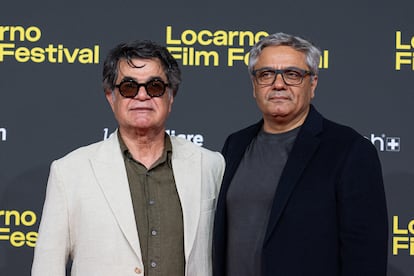

When the Islamic Republic was established in Iran in 1979, that now-rattled dictatorship — adhering to the radical Islamism it championed — decided that women and love would disappear from Iranian cinema. But, at the same time, it believed that film could be an ideological weapon for domestic anti-Western consumption, as well as a propaganda tool at international festivals.
In the absence of a free press, however, the creative explosion of Iran’s film industry has served to make the rest of the world understand the lack of freedoms that stifles Iran. Over the years, this has led to the exile of leading Iranian filmmakers, who now reside across Europe.
One of the most cultured countries in the world — with a highly prestigious film museum in Tehran — is, once again, suffering another wave of destruction.
For decades, film lovers worldwide have watched in awe as Iranian cinema exploded with creativity, overcoming all obstacles. If stories about women and love were forbidden, children were used as protagonists, creating allegories that defied censorship. The first well-known name — and the one who achieved stardom — was the late Abbas Kiarostami (1940-2016). By the early-1990s, his films were already being screened in Europe. In 1997, he won the Palme d’Or for Taste of Cherry.
Before the Revolution, he had worked at the Center for the Intellectual Development of Children and Young Adults, where he founded the film department. Hence, his first films featured children. Kiarostami often shot in rural settings, with conversations frequently taking place in cars, in a fable-like tone underscored by the ambiguity of the narrative. This was his style, certainly… but also the best way to circumvent the shadow of the ayatollahs.
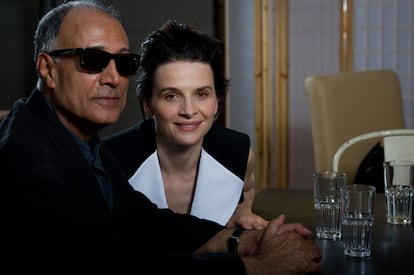
The next well-known name was Mohsen Makhmalbaf, whose daughters — Samira and Hana — have also directed. A friend and collaborator of Kiarostami, he has made films like Gabbeh (1996). Also part of this wave were Majid Majidi, Bahman Ghobadi (the Kurdish-Iranian director twice won awards at Spain’s San Sebastián Film Festival and has been in exile for decades, though he is very active on social media) and Jafar Panahi, who began as Kiarostami’s assistant.
Of the active filmmakers worldwide, only Panahi has won the Palme d’Or at Cannes (for his It Was Just an Accident), the Golden Bear at Berlin (Taxi, filmed secretly in a taxi, with him driving) and the Golden Lion at Venice (The Circle), in 2025, 2015 and 2000 respectively. He has been imprisoned on several occasions because, since 2010, he has participated in virtually every anti-government event and demonstration in Iran. He was even arrested in 2022 at the gates of Evin Prison, when he was inquiring about the situation of two fellow filmmakers: Mohammad Rasoulof and Mostafa Aleahmad.

Panahi’s films offer the best way to understand contemporary Iran. In The Circle (2000), he addressed sexism in his country. In Offside (2006), he recounts how women sneak into soccer stadiums to enjoy the sport as spectators. And, in This Is Not a Film (2011), 3 Faces (2018) and No Bears (2022), he played a version of himself to show that filmmaking can continue even under persecution, effectively finding ways to work despite a 20‑year ban.
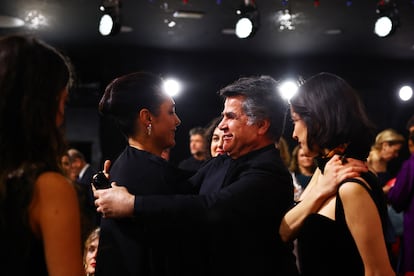
During the 2025 Cannes Film Festival — where he won the Palme d’Or — Panahi, who had defied a filming ban, told EL PAÍS: “I will return home. It may sound strange to you, but the Iranian people have much more at stake. The most important thing is our country and achieving its freedom. Let’s make that moment happen together, a moment when no one dares to tell us what we should wear, or what we should or shouldn’t do.”
He had not left Iran for decades (his films were smuggled out on USB drives), and yes, he eventually went back. He left again four months ago for the Oscars campaign, and now his return seems impossible: he has been condemned for making “propaganda against the system.” Still, he has vowed to go back after the Oscar ceremony on March 15, where It Was Just an Accident is France’s official submission in the category of Best International Feature Film.
On February 26, Panahi was in Paris for the César Awards, where he met with the large Iranian artistic community exiled there, including actress Golshifteh Farahani. And, on February 28, in Barcelona — while attending the Goya Awards, where he was also a finalist — he declined to speak to the press, although he did chat with some guests about the destruction caused by the bombing of Tehran.
However, on Monday, March 2, he did keep a long-scheduled appointment: an interview with Jon Stewart on The Daily Show. After Stewart’s monologue — in which he criticized Trump for attacking Iran without congressional approval — Panahi said: “If you say [1%] of what you just said in Iran, the sentence will be execution.”
He emphasized that the ayatollahs’ regime doesn’t even allow “peaceful protest.” This past January, following demonstrations demanding greater freedoms, Iranian authorities killed more than 30,000 people. “There are many Iranian filmmakers now who are in prison. And in the past two months that there were protests, one of our filmmaker friends got killed,” the director said.
Incidentally, he has never considered himself a hero. As he told this newspaper: “The heroes are my fellow citizens, especially the women.”
Panahi spent the 2022 protests against compulsory hijab laws in prison alongside Rasoulof, the most combative Persian filmmaker. And, in April 2024, Rasoulof only had a few hours to decide whether to return to prison or flee. He ended up escaping on foot to Turkey and, from there, on to Hamburg, where his daughter lived. Days later, he presented The Seed of the Sacred Fig (2024) at Cannes, having become the most hated filmmaker in the Islamic Republic.
Rasoulof shot his penultimate movie hidden behind a bushy beard, while his last project was filmed remotely, via the use of walkie-talkies. In recent days, he has spoken out on social media. On his Instagram account, he wrote in a post after the death of Ali Khamenei, the supreme leader: “He is, undoubtedly, the most hated figure in contemporary Iranian history.” And in a subsequent post, he expressed his hope for political change: “The Iranian people desire the right to determine their own destiny and this desire for political change can no longer be suppressed.”
“Everyone is extremely happy that the dictator is dead,” Mahshid Zamani, a film critic and member of the Los Angeles-based Independent Iranian Filmmakers Association, posted on social media. “That’s overshadowing all other reactions at this point, though people are concerned about what happens next.”
In The Hollywood Reporter, Zamani states that the Iranian diaspora has long been calling for international intervention. For instance, she refers to a January 10 open letter from Shirin Ebadi — an Iranian human rights activist and Nobel Peace Prize laureate — signed by, among others, Iranian director Mohsen Makhmalbaf, in which President Trump was asked to “come to the aid of the Iranian people. Now is the time to act against the machinery of repression and prevent the continued killing of a people who seek dignity, justice and freedom.”
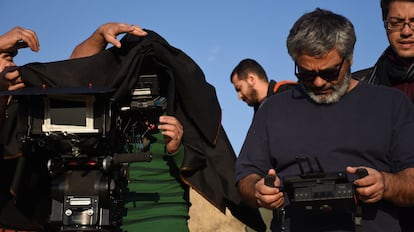
There are many more Iranian filmmakers persecuted in Iran. For instance, last April, Maryam Moghaddam and Behtash Sanaeeha — directors of My Favorite Cake (2024) — were given a 14-month suspended jail sentence for “disturbing public opinion” (their lead actress did not wear a hijab). Released over the summer, there’s no news about them.
Other filmmakers are in exile, like the actress and director Zahra Amir Ebrahimi, who is brilliant in both fields (she fled Iran when a sex tape of her — recorded without her knowledge — was made public).
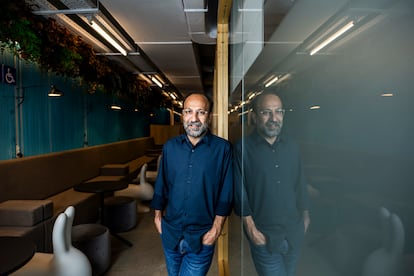
In Paris — the residence of many Iranian exiles, including Ebrahimi, director and painter Mitra Farahani, the cartoonist and filmmaker Marjane Satrapi (author of Persepolis) and the acting star Golshifteh Farahani, two-time Oscar winner (for A Separation and The Salesman) — Asghar Farhadi is finishing his new film. A former darling of the regime (for years, Rasoulof criticized Farhadi for his perceived weakness), he fell out of favor with the ayatollahs. This dispute became public when, in 2022, he was tried for plagiarizing a documentary in the making of his film, A Hero (2021).
Farhadi will likely premiere Parallel Tales (2026) at Cannes, with a French cast that includes Isabelle Huppert, Virginie Efira, Vincent Cassel and Catherine Deneuve. So far, he hasn’t spoken out publicly against the government, but even Farhadi has ended up thousands of miles from Tehran, longing for his country.
Three years ago, he told EL PAÍS: “We fought against the restrictions; we created [art] despite the difficulties and the obstacles. And, the more that pressure increased, the harder we fought. One way or another, we battled to make films.” We’ll see what kind of cinema remains after the war.
Sign up for our weekly newsletter to get more English-language news coverage from EL PAÍS USA Edition
Tu suscripción se está usando en otro dispositivo
¿Quieres añadir otro usuario a tu suscripción?
Si continúas leyendo en este dispositivo, no se podrá leer en el otro.
FlechaTu suscripción se está usando en otro dispositivo y solo puedes acceder a EL PAÍS desde un dispositivo a la vez.
Si quieres compartir tu cuenta, cambia tu suscripción a la modalidad Premium, así podrás añadir otro usuario. Cada uno accederá con su propia cuenta de email, lo que os permitirá personalizar vuestra experiencia en EL PAÍS.
¿Tienes una suscripción de empresa? Accede aquí para contratar más cuentas.
En el caso de no saber quién está usando tu cuenta, te recomendamos cambiar tu contraseña aquí.
Si decides continuar compartiendo tu cuenta, este mensaje se mostrará en tu dispositivo y en el de la otra persona que está usando tu cuenta de forma indefinida, afectando a tu experiencia de lectura. Puedes consultar aquí los términos y condiciones de la suscripción digital.