Why is Greenland Danish? Would it be defended by NATO?: The key questions about the Arctic island Trump wants to annex
The vast territory, rich in natural resources and business opportunities due to climate change, has been in Washington’s sights for over a century
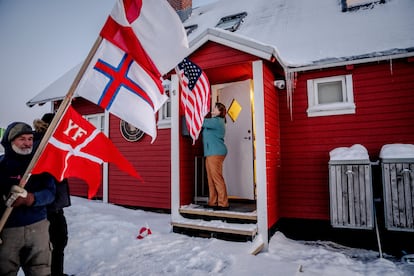

Denmark and seven other European countries sent small contingents of troops to Greenland last week — in a largely symbolic gesture — to participate in military exercises on the vast Arctic island that Donald Trump covets. The U.S. President announced tariffs of up to 25% on these eight allies if they did not cease opposing his plan to control Greenland, although he withdrew the threat on Wednesday.
“I would like to make a deal, you know, the easy way, but if we don’t do it the easy way, we’re going to do it the hard way,” Trump warned on January 9. Shortly beforehand, the Republican had openly questioned Danish sovereignty over the island: “There are no written documents, it’s only that a boat landed there hundreds of years ago, but we had boats landing there, also.”
“I won’t use force,” the Republican declared Wednesday during his address at the Davos Economic Forum in Switzerland, where he insisted on the “need” to control Greenland. In the event of a U.S. Invasion, Danish soldiers must engage in combat without waiting for orders, according to a 1952 military directive that the Danish Ministry of Defense has confirmed remains in effect.
Why does Greenland belong to the Kingdom of Denmark?
Copenhagen’s control of the world’s largest island does not date back half a millennium, as Trump suggests, but to just over three centuries.
The first inhabitants of Greenland — Paleo-Inuits — arrived around 4,500 years ago. From the 10th century onwards, Norse explorers and settlers established themselves in coastal areas, but all communities of European origin had disappeared by the end of the Middle Ages.
In 1721, Lutheran missionary Hans Egede led an expedition to Greenland from the then-Kingdom of Denmark and Norway with the aim of evangelizing the Indigenous population. After his trip, Danish citizens began to settle in the vicinity of Nuuk, the capital, marking the beginning of the period of Danish colonization.
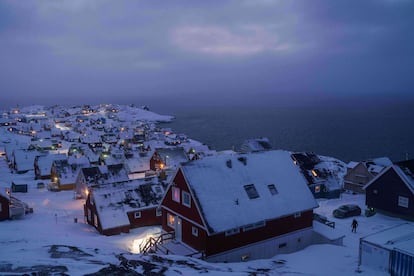
The gigantic island, separated from Canada by just 26 kilometers (16 miles) at its closest point, ceased to be a colony when it was formally incorporated into the Kingdom of Denmark in 1953, and Greenlandic citizens obtained Danish nationality.
Since when has the US had an interest in annexation?
Although Trump’s idea of incorporating Greenland into the U.S. May seem far-fetched, the Republican is merely reviving old Washington aspirations. The U.S. Attempted to acquire this strategic territory on several occasions in the 19th and 20th centuries. An 1867 State Department report emphasized the strategic location of the giant ice island, along with its abundant natural resources. “We should buy Iceland and Greenland, especially the latter. The reasons are political, military, and commercial,” the document stated.
A formal attempt to acquire Greenland came in 1946. The $100 million in gold offered by President Harry Truman was rejected by Denmark. Had they accepted, it would not have been the first sale of a colony by the Scandinavian country: in 1917, the Caribbean islands of St. Thomas, St. John, and St. Croix became the U.S. Virgin Islands after a payment of $25 million.
Trump canceled an official trip to Copenhagen in 2019 because Danish Prime Minister Mette Frederiksen was unwilling to discuss a possible sale of Greenland — an area roughly the size of Germany, France, Spain, Italy and the United Kingdom combined.
Following his victory in the 2024 presidential election, Trump took up the Greenland issue with far more vigor than during his first term. In the weeks leading up to his return to the White House, the Republican repeatedly stated that “ownership and control” of Greenland was an “absolute necessity for the United States for reasons of national security.”
Are there any US troops there?
The Nazi occupation of Denmark in April 1940 left Greenland suddenly cut off from its colonial power. Danish authorities signed an agreement granting the United States full freedom to deploy troops, build bases, and operate on the island during the Second World War. The pact entailed the creation of a strategic network of military installations intended to secure Greenland against any German attempt to dominate the Arctic.
In addition to its strategic geographic location, Greenland possessed one of the essential mineral resources of World War II: cryolite, indispensable for large-scale aluminum production. Without it, the mass production of aircraft — crucial for Allied air superiority — would have been impossible.
During World War II, the United States built 17 bases in Greenland, which also served as vital resupply points for transatlantic air routes. After the German defeat, most of these facilities were closed, but the Arctic island regained a central role during the Cold War.
Following the signing of a new treaty by Washington and Copenhagen — which remains in force today — the world’s leading power built the Pituffik base in the northwest of the island, crucial for space surveillance, missile early warning systems, and air defense. It once housed thousands of military personnel, although after the Soviet collapse, Washington drastically reduced the number. There are around 200 U.S. Troops deployed today.
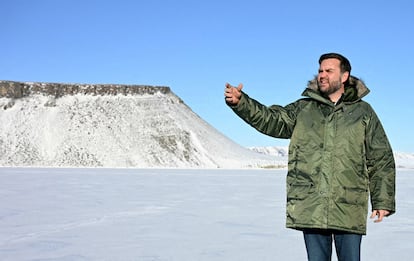
The 1951 treaty — in which the United States explicitly recognizes “the sovereignty of the Kingdom of Denmark” — grants Washington the right to build new bases, ports, airstrips, and radar stations in Greenland, and to deploy thousands of troops and install ground-based air defense systems. “During the Cold War, there were as many as 6,000 U.S. Troops stationed at various bases. Presumably, the U.S. Could increase its military presence again if it deemed it needed reinforcements in Greenland, without having to dispute Danish sovereignty,” argues Marion Messmer, a researcher at Chatham House, in a recent report.
Why does it have such geostrategic value?
Trump has justified his belligerent tone toward Denmark — an allied country and founding member of NATO — by citing the need to protect Greenland from a hypothetical future aggression by Moscow or Beijing. “We’re not gonna have Russia or China occupy Greenland, and that’s what they’re going to do if we don’t,” he said last week.
The growing interest of Moscow and Beijing in the Arctic is evident. The melting ice caused by climate change offers new economic opportunities, with the gradual opening of new shipping routes and the possibility of exploiting mineral resources and hydrocarbons that until recently were inaccessible due to the ice. Russia has refurbished more than a dozen old military bases on its northern coast, in addition to opening several new ones. In 2018, China published a white paper in which it defined itself as an “Arctic Near State.”
“If Russia were to launch missiles against the United States, they would likely fly over Greenland, making the island a strategic location for deploying interceptors as part of the Golden Dome defense system — a priority for the Trump administration. However, what is unclear is why Washington needs total control of Greenland for its own defense,” explains Messmer.
Is it part of NATO?
Greenland belongs to the Atlantic Alliance, but most experts maintain that the mutual defense clause —Article 5 of the Treaty that governs the organization — would not be applicable if the United States attacked Danish territory, because that clause was conceived for cases in which an ally was attacked by a country outside the organization.
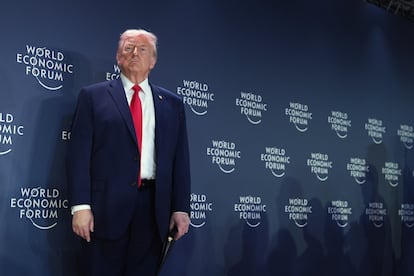
Frederiksen, the Danish prime minister, asserted last week that an attack on Greenland would bring an end to the Alliance. “If the U.S. Chooses to attack another NATO country militarily, then everything stops, including NATO and thus the security that has been established since the end of the Second World War,” she declared.
And what about the EU?
Although it is a member of NATO, Greenland is not part of the EU. The semi-autonomous territory left the bloc in 1985 due to a dispute over fisheries policy. Greenland was subsequently classified as an EU Overseas Country or Territory (OCT), and therefore maintains certain cooperation agreements with the Union.
Unlike Greenland, the Faroe Islands — the third territory that makes up the Kingdom, along with the Arctic island and mainland Denmark — have never been part of the EU. The archipelago of 56,000 inhabitants (the same as Greenland), located between Iceland and Scotland, gained self-government in 1948 and chose not to join the European Economic Community (the precursor to the EU) along with the rest of the Kingdom in 1973, primarily to protect its fishing resources. Today, it is considered a “third country” by the EU.
Greenland’s status as a CTO — which it shares with French Polynesia or the Netherlands Antilles — raises doubts about whether the Danish island is covered by the EU’s collective defense clause, which stipulates that member states have “the obligation” to provide “help and assistance by all means at their disposal.”
European Commission President Ursula von der Leyen, Defense Commissioner Andrius Kubilius, and French President Emmanuel Macron asserted last week that the clause in Article 42.7 of the EU Treaty would indeed be applicable in the event of an attack on Greenland. However, Copenhagen would face the requirement of unanimity and the consequent risk that some states, such as Hungary, would block the measure to appease Trump.
Could it become an independent state?
Aspirations for self-determination have been brewing in Greenland since it gained a degree of autonomy in 1979 and the Greenlandic parliament (Inatsisartut) was established. Thirty years later, its powers have expanded considerably, although defense, foreign policy, and monetary policy remain entirely under the control of Copenhagen. The autonomy statute, approved in a 2008 referendum, sets out rules for a potential independence process.
To begin that process, the Greenlandic government would have to formally express its intention to sever ties with Denmark. Both parties would then begin negotiations, addressing legal, economic, and administrative aspects. Once a definitive independence treaty is agreed upon, it would have to be approved by the Danish parliament before being submitted to a referendum among the Greenlandic population. Finally, before the transition can begin and Greenland can become a member of the UN, the independence treaty would have to be ratified by the Danish parliament (where two of the 179 members are Greenlandic).
Four of the five parties in the Greenlandic parliament support secession, although all but one advocate for a gradual, long-term process, recognizing that the Greenlandic economy is not prepared to survive without subsidies from Copenhagen. Around half of the Greenlandic government’s annual budget comes from Danish aid, and over 90% of the island’s export revenue comes from fishing.
Naleraq, the only pro-independence party advocating for an immediate break with Denmark — and defending direct negotiations with Washington, bypassing Copenhagen — came in second place with a quarter of the vote in last year’s elections. The other secessionist parties, along with Atassut — the only one supporting the current status quo — formed a coalition government to demonstrate unity in the face of Trump’s threats.
What is the relationship between Nuuk and Copenhagen?
The shared history of Greenland and Denmark is complex and bears deep wounds from the colonial era that are difficult to heal. Until Trump’s return to power, the relationship between the island and the former colonial power was at one of its most strained points.
Danish public radio revealed in 2022 that thousands of Greenlandic women, many of them minors, were forced to use intrauterine devices to prevent pregnancy in the 1960s and 1970s. Several Greenlandic politicians described this chapter of history as “genocide.” Frederiksen apologized to the victims during an official ceremony last September.
In February of last year, just before the Greenlandic elections, Danish public television aired a documentary about the extraction of cryolite between the late 19th century and 1987. The report estimated that Copenhagen had profited to the tune of 400 billion Danish kroner (around $63 billion) from the exploitation of this mineral. “We are all aware that we have enormous wealth in this land and that we have not represented an expense for the Danish state. Its subsidies are nothing more than a reimbursement for the cryolite mine,” declared the then-Greenlandic prime minister, Múte Egede, during his campaign.

Despite all this, during the last 12 months, marked by Trump’s threats, ties between Nuuk and Copenhagen have strengthened once again. “If we had to choose between the U.S. And Denmark right now, we would choose Denmark,” Greenlandic Prime Minister Jens-Frederik Nielsen emphasized last week at a press conference alongside Frederiksen.
Mikkel Vedby Rasmussen, a professor of political science at the University of Copenhagen, told Reuters a few days ago that debates in mainland Denmark about whether Greenland is worth keeping have been overshadowed by widespread outrage over Trump’s threats. “It’s not part of the political landscape in Denmark. I fear we’ve entered a mode of unbridled patriotism,” he said.
Sign up for our weekly newsletter to get more English-language news coverage from EL PAÍS USA Edition
Tu suscripción se está usando en otro dispositivo
¿Quieres añadir otro usuario a tu suscripción?
Si continúas leyendo en este dispositivo, no se podrá leer en el otro.
FlechaTu suscripción se está usando en otro dispositivo y solo puedes acceder a EL PAÍS desde un dispositivo a la vez.
Si quieres compartir tu cuenta, cambia tu suscripción a la modalidad Premium, así podrás añadir otro usuario. Cada uno accederá con su propia cuenta de email, lo que os permitirá personalizar vuestra experiencia en EL PAÍS.
¿Tienes una suscripción de empresa? Accede aquí para contratar más cuentas.
En el caso de no saber quién está usando tu cuenta, te recomendamos cambiar tu contraseña aquí.
Si decides continuar compartiendo tu cuenta, este mensaje se mostrará en tu dispositivo y en el de la otra persona que está usando tu cuenta de forma indefinida, afectando a tu experiencia de lectura. Puedes consultar aquí los términos y condiciones de la suscripción digital.