Human Rights Watch director: ‘AI, in the hands of autocratic governments, will accelerate their ability to control and surveil the population’
Philippe Bolopion warns that ‘there is a risk that the U.S. Switching sides on the global scene may strengthen the authoritarian wave that has been taking over the world.’ He argues that resistance will only succeed if the countries that still believe in democracy can unite strategically

What was unthinkable not so long ago is now commonplace: ethnic cleansing, premeditated famines, the trampling of the rule of law, interference in foreign countries without even a pretense of legal justification… the list goes on. The so-called “democratic backsliding” isn’t the future: it’s the present. This is what Human Rights Watch (HRW) has laid bare in its annual report, released this month. The compilation of human rights violations confirms that we’re witnessing the collapse of the global order that was meticulously crafted over decades, amid the apparent passivity of many of its defenders.
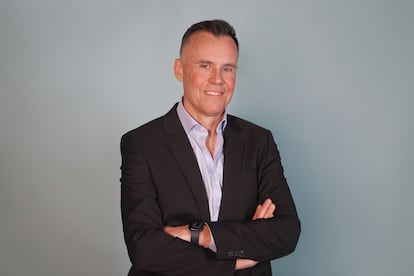
The new executive director of HRW, 52-year-old Philippe Bolopion, who was born in Cayenne, the capital of French Guiana, explains that we’re facing “a steady decline,” one that has been accelerated due to “the trajectory of the United States.” Artificial intelligence, he asserts via videoconference from Washington, D.C., is the new battleground for human rights, and such technology is a very dangerous tool in the hands of authoritarian governments.
Question. You maintain that 2025 marked a turning point for human rights. Is the end of this freefall in sight?
Answer. It’s 20 years in a row of democracy receding every year, so it’s not like ups and downs. There’s been a pretty steady decline, and you could almost feel an acceleration with the trajectory of the U.S., given how influential it is on the global system. There are reasons to worry that the trend won’t reverse in 2026. If you look at the trajectory of quite a few countries — including in Western Europe — it’s hard to imagine that we’ve reached the peak of autocracy and that democracy will now spread.
Q. How did we get here?
A. There’s a phenomenon that’s quite well documented: democracy is often degraded at the hands of popular leaders who get elected democratically. They then start, little by little, [to undermine] the checks and balances that are put on them. They make it harder for the opposition to eventually be electorally successful, they tighten up the grip on independent media and civil society. It’s part of the playbook. We’ve lost quite a bit of ground in the last few years. And I think that’s because in multilateral institutions, or on the global stage, there are fewer and fewer countries that are standing up for human rights. And the countries that are trying to undermine the system from within— Russia and China, now joined by the U.S. — are becoming more influential, more powerful, and more successful.
Democracy is often degraded at the hands of popular leaders who get elected democratically. They then start, little by little, [to undermine] the checks and balances that are put on them.
Q. Trump legitimizes autocracy in the eyes of other would-be tyrants across the five continents. How far will the domino effect unleashed by this superpower go?
A. I think you’re right that there’s a risk of a domino effect reaching a critical mass, where the phenomenon accelerates. If a country as powerful as the U.S. Empowers other would-be autocrats or governments with illiberal tendencies around the world — which, if you look at the National Security Strategy of the State Department, there’s a clear sense that they want to empower illiberal movements in Europe, for example — there is a risk that the U.S. Switching sides on the global scene may strengthen the authoritarian wave that’s been taking over the world over the last 20 years.
Q. The assault on democracy in the United States contrasts with the lack of a response. It’s as if we’re suffering from collective denial and disbelief in the face of what we see every day. How do you explain this?
A. So, domestically, I do think that there’s been a lack of institutional reaction, given the severity of the attacks on the basic pillars of American democracy. For example, it’s surprising that Congress hasn’t resisted more the aggressive extension of executive power. Or that the business world seems to be, by and large, cowering to Donald Trump. The popular reaction is a bit more robust, but the institutions are under strain. We’re [currently observing whether or not] the justice system will preserve its independence.
Q. And globally?
A. The threat made by the Trump administration to invade Greenland was a huge wake-up call for the world. And I think that, while many world leaders were prepared for the U.S. To disengage from the multilateral system, they weren’t prepared for the U.S. To potentially become an adversary of it. The response [in Davos] from the prime minister of Canada — Mark Carney — really captured the mood of the moment and really sort of crystallized how many countries around the world now realize that they need to protect themselves.
Q. You mention Canada, but where is the EU? The absence of decisive European action has been glaring.
A. The response has been a bit disorganized. And that’s why Carney’s speech was so powerful, because it was essentially a call on middle powers, democratic countries – which are still attached to human rights and democracy – to join together in a more organized and strategic way. And, for us, that’s the only way to protect the rules-based world order that has allowed the human rights movement to flourish. Democracies around the world must stand up to the Trump administration, but also to Russia and China, which are working together to undermine the very idea of democracy and human rights at a global level.
Q. Europeans have lost credibility in recent times in many parts of the world because of the double standards applied in Ukraine and Gaza, paving the way for autocrats.
A. The double standards around the world are always very corrosive to the idea of human rights. If you’re a European country and you denounce Russian war crimes in Ukraine, but you’re silent about genocidal acts by the Israeli government, your credibility is much diminished. If you’re a country like South Africa and you’re denouncing — as you should — ethnic cleansing in Gaza, but you’re not quite as clear about the situation in Ukraine, for example, that’s also damaging. I completely agree that, for this new coalition of countries that are dedicated to protecting the rules-based order, to have legitimacy and credibility, they need to uphold true values and true principles, not double standards.
Double standards are always very corrosive to the idea of human rights.
Q. These countries also need laws. We’ve seen how international law is being trampled with impunity, how international courts are being delegitimized, and how judicial independence is being endangered. How many generations will it take to restore the rule of law?
A. I believe that the creation of the International Criminal Court (ICC) more than 20 years ago was an incredible step forward in terms of advancing the idea of accountability, even for heads of state who are responsible for the commission of atrocities. And the court has done a lot of work. [The judges] issued arrest warrants for the prime minister of Israel, Benjamin Netanyahu. They’ve issued arrest warrants for [Russian President] Vladimir Putin for the situation in Ukraine. So, they’re trying to do their part, but they’re now under sanctions from the Trump administration, and they’re facing legal actions in Russia. They’re under siege; they’re under attack. [The ICC] is the kind of institution that this new alliance of democracies should dedicate themselves to protecting. Without a rules-based world order, smaller countries — even middle powers — are incredibly vulnerable to the whims of aggressive superpowers. And that’s exactly the Donroe Doctrine that the U.S. Is probably claiming. But frankly, it also resembles the long-term projects of the Chinese government and the Russian government, who may not be as upfront in laying things out.
Q. Have they already succeeded? Are human rights a thing of the past?
A. No, the amazing thing with human rights is that they are enduring and you cannot suppress them, even in the most authoritarian countries. Even in China, during COVID, there were protests that forced the government to pull back. And people are protesting in Iran today, at the risk of their lives. So, I think the idea of human rights is enduring, but have we lost ground in the last few years? Are we on the back foot? Are we facing a dangerous moment? Yes, 100%.
Q. Besides accumulating data, corporations are concentrating unprecedented wealth. What role has inequality played in the erosion of human rights? In Europe, impoverished and angry voters are defending human rights violations — for instance, against migrants — that were unthinkable just years ago.
A. I do think inequality is quite relative to a democratic society and a democratic system. The ways in which it plays out are complex, something that we want to study a bit more closely, because at times, people who are economically disenfranchised actually vote for populist movements that are in favor of less taxes on the rich. The Trump economic agenda is pretty transparent: it’s less government, slashing food stamps and programs… things like that. I think it’s complex to understand what brings people into the hands of populist movements. Sometimes, it has a lot to do with identity: rejection of the rights of others, rejection of the rights of migrants, rejection of the rights of LGBTQ+ people. I think that voters sometimes forget that limiting the rights of others won’t improve their own condition. In fact, eventually, their own rights will be limited.
Q. Meanwhile, the space for human rights defenders is shrinking. Physically, this is happening in places like Gaza or Iran — where access is very difficult — but it’s also due to funding cuts to organizations. Is there a space for resistance?
A. I do think that keeping the space open for civil society is essential to preserving strong democratic institutions. Even at Human Rights Watch, over the last 15 years, our ability to operate around the world has been constrained. For 30 years, we used to have an office in Russia. It’s now closed. We used to have an office in Hong Kong. It’s now closed. We used to have our Israel-Palestine director a few years ago; he was expelled from Israel. We’re no longer able to operate in Egypt. The world in which Human Rights Watch and other organizations like ours can work freely is shrinking. And we’re often the canaries in the coal mine: when governments start going after organizations that define human rights, it’s not long before they go after the news media and political opponents. It’s part of the authoritarian playbook.
Q. Generation Z is taking to the streets to protest, but the level of repression and the concentration of power make any progress extremely difficult. Is it realistic to call for resistance under these conditions?
A. At the end of the day, we shape our future collectively. And so, I do believe that if governments that are still dedicated to democracy and human rights work together with civil society, with popular movements, then these trends can be reversed. You know, autocracy isn’t an attractive model. Eventually, people want to have their basic rights. I think there’s hope.
Q. Major donor countries — the U.S., but also European countries — have drastically cut their development aid budgets, allocating those funds to defense. We see major humanitarian crises, like the one in Sudan, that are ignored, while conflicts around the world intensify. Are we on the brink of a new world war?
A. With the Trump administration not only withdrawing from the rules-based world order but working against it, we’re in a dangerous new world. And in a dangerous new world, some countries want to prioritize their military, their defense, over development aid. And that’s yet another reason why it’s really important to try to protect this entire architecture and ecosystem of rights. Because without that, it’s a return to the law of the jungle. And nobody wins in that new climate, except for the superpowers.
Tu suscripción se está usando en otro dispositivo
¿Quieres añadir otro usuario a tu suscripción?
Si continúas leyendo en este dispositivo, no se podrá leer en el otro.
FlechaTu suscripción se está usando en otro dispositivo y solo puedes acceder a EL PAÍS desde un dispositivo a la vez.
Si quieres compartir tu cuenta, cambia tu suscripción a la modalidad Premium, así podrás añadir otro usuario. Cada uno accederá con su propia cuenta de email, lo que os permitirá personalizar vuestra experiencia en EL PAÍS.
¿Tienes una suscripción de empresa? Accede aquí para contratar más cuentas.
En el caso de no saber quién está usando tu cuenta, te recomendamos cambiar tu contraseña aquí.
Si decides continuar compartiendo tu cuenta, este mensaje se mostrará en tu dispositivo y en el de la otra persona que está usando tu cuenta de forma indefinida, afectando a tu experiencia de lectura. Puedes consultar aquí los términos y condiciones de la suscripción digital.