Following the trail of El Mencho’s last battle in Tapalpa
EL PAÍS gained access to the cabin complex, nestled in a luxurious mountain retreat in Jalisco, where the world’s most wanted drug trafficker and his security detail staged their last stand with the Mexican army
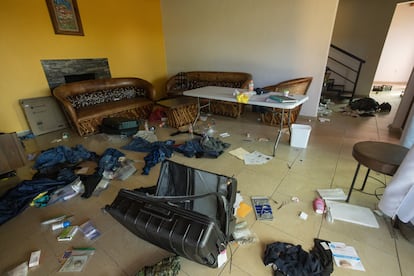

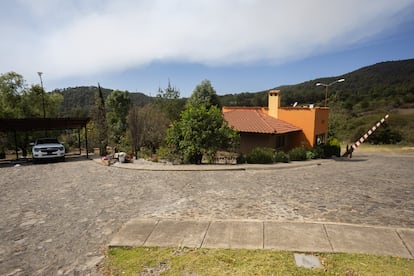
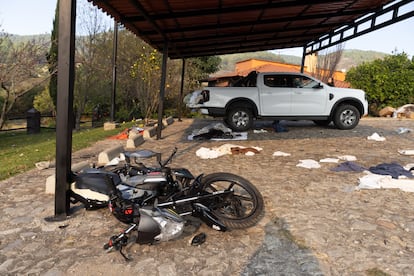
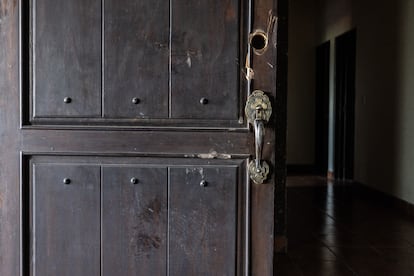
The cabin has two rooms: one decorated with taxidermied animal heads, the other a war zone. The sofa is against the door, bullets litter the floor, a window has been shattered by a gunshot, a trunk serves as a trench, and there’s also a deer missing an ear. It’s the largest house in the La Loma luxury cabin complex in Tapalpa, a favorite town of Jalisco’s wealthy and, as of last Sunday, the site where the Mexican army killed Nemesio Oseguera Cervantes, “El Mencho,” the leader of the Jalisco New Generation Cartel (CJNG). On this property — which includes a dozen houses, a basketball court, trampolines, and parking — traces of blood, shell casings, bullet holes, vehicles, and tactical gear still remain. These are the remnants of the last battle fought by El Mencho and his security team before the drug lord fled into the trees with four of his bodyguards. There, in the undergrowth, he was mortally wounded. Even now, smoke rises from the forest.
EL PAÍS gained access to this cabin complex three days after the military operation. Its doors were open, without federal or state protection. It was full of remnants of the confrontation, surrounded by scorched fields and burned-out vehicles. There were no members of any security forces nearby either. The Cabañas La Loma lodge has been identified by the U.S. Treasury Department as one of the businesses linked to the CJNG since 2015. In the town, it was known as one of the most exclusive places in this mountain range, which is accustomed to seeing people moving around with bodyguards in luxury vehicles.
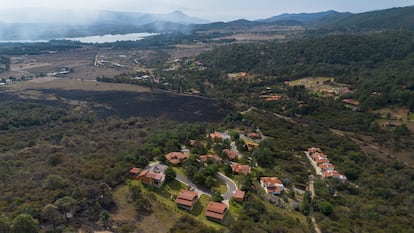
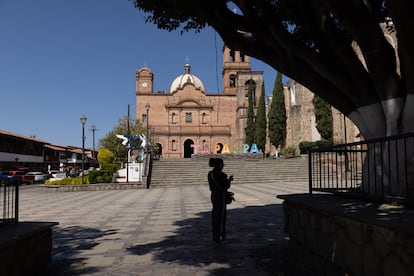
Tapalpa is located about two hours from Guadalajara, the capital of Jalisco. With around 20,000 inhabitants, it’s not a strategic location, unlike other nearby towns that have direct connections to Colima and Michoacán, part of the CJNG stronghold. “It’s always been a place to relax,” says a taxi driver, who recounts that the singer Alejandro Fernández built his cabin here, that the boxer Canelo Álvarez occasionally spends a few days here, and that Jalisco’s leading politicians and businesspeople own homes among these pine forests. “It’s so peaceful that even the bad guys want to come and relax here,” laughs a vendor in the main square.
In town, this complex was known for occasionally being rented out for parties where major regional Mexican music groups would perform, “the kind that cost over a million pesos [about $60,000] a night.” Last Saturday, there was one of those parties, a resident says. Around 5 a.m., Catalina — a pseudonym — woke up to the noise. “At first, I thought it was fireworks to celebrate the patron saint’s day,” says this young woman, who lives in that area, “but they just kept going off.” It was constant gunfire. As dawn broke, Pedro, 79, was told by his daughter not to go out; he couldn’t go to the market to buy his menudo soup because “something big” was happening. “We got a call because there was a big federal operation over there in the country club area,” the taxi driver says.
Number 39
The Tapalpa Country Club was built three decades ago on the outskirts of town. Located right off the highway, it’s almost as big as the town itself. One of its houses, number 39, had been under surveillance by the Mexican army since February 20. The soldiers had identified one of El Mencho’s romantic partners (he is married to Rosalinda González Valencia, who was arrested in 2018). The drug lord’s mistress — whose name has not been released — was taken to Tapalpa that Friday. With “additional” assistance from the U.S. Government, the army pinpointed the exact house where they were staying, which was surveilled by a drone using night vision. The woman left town the next day, but El Mencho remained.
There, a golden opportunity arose for the Mexican authorities, who for a year have been grappling with Donald Trump’s relentless pressure to deliver results on security. The leader of the Jalisco New Generation Cartel was the ultimate prize, the most-wanted criminal on both sides of the border. Elusive and cautious, only three known photos of him were in circulation, and he was usually protected by 100 men within his security detail. However, in the early hours of Sunday, February 22, the big boss, the top dog, was caught off guard.

The confrontation with the military didn’t take place at the house inside the gated community, which, except for a broken-down door, was intact, but rather at the heavily guarded Cabañas La Loma, about 1.2 miles away. The army’s account states that, first, a group of soldiers deployed to surround the property with the objective of arresting El Mencho, but his bodyguards responded “with a very violent attack,” according to Defense Secretary Ricardo Trevilla. In “repelling” the attack, the soldiers killed eight of El Mencho’s bodyguards throughout the property. They recovered seven rifles, eight vehicles, two ATVs, and two rocket launchers (one a Belgian Blindicide and the other a Russian RPG, the same model which had been used a decade earlier to shoot down a helicopter that was targeting El Mencho in the same area).
Traces of the battle
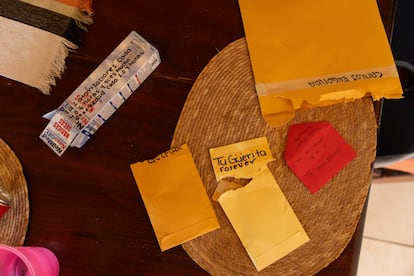
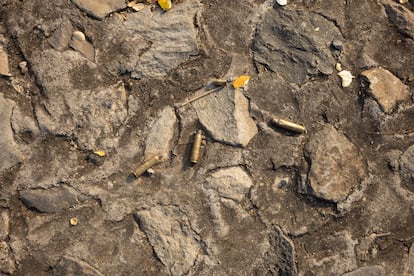
Traces of the reaction against the army remain. Shell casings are scattered in the parking lot; there is blood on the ground and in a pickup truck. A motorcycle lies overturned, riddled with bullet holes. Boots, tactical belts and gloves, balaclavas, bulletproof goggles, military neck gaiters, holsters, and knife sheaths are strewn throughout the property. Most of the cabins have shattered glass, both in doors and windows. Bullet holes are visible in walls and entrances, even next to religious statues. A Saint Jude and a Virgin of Guadalupe image are found in almost every house, along with prayers and love letters. “Don’t forget me. I love you very much,” reads one small red envelope. “Your Güerita forever,” reads another yellow one.
The 10 cabins that EL PAÍS entered appeared to have been occupied and then urgently vacated: food remained in pots and pans, half-cooked dishes sat on the stove, excrement was found in the toilets, feminine hygiene products lay in the wastebaskets, toothpaste was left in the sinks, and dirty knives lay on the countertops. The entryway of the highest house was filled with dozens of medications, including an oxygen tank and insulin, and painkillers and melatonin were found in every cabin. There were notebooks filled with doodles, invitations to bullfighting tournaments at ranches, and weightlifting instructions. Jeans, T-shirts, socks, and boxers were scattered in the bedrooms and on the lawn. Boxes of coconuts and frozen potatoes, cereal, eggs, cans of corn, cheese, soda, bottles of alcohol, and cookies were strewn throughout the property and the surrounding area.

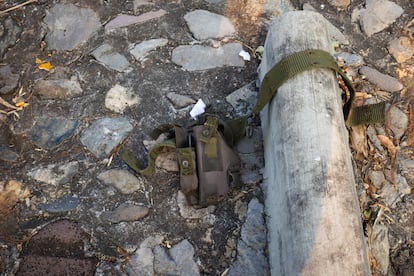
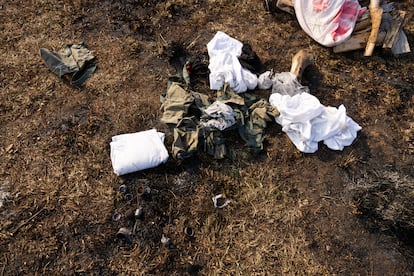
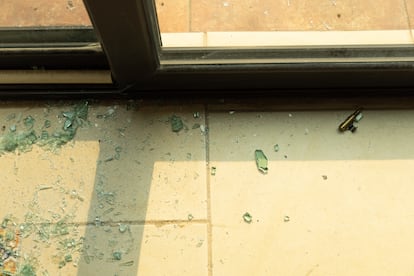
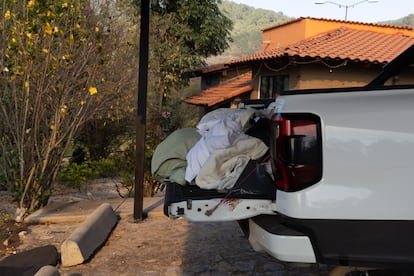
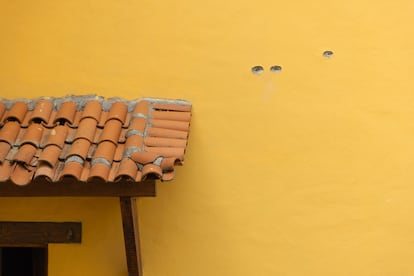
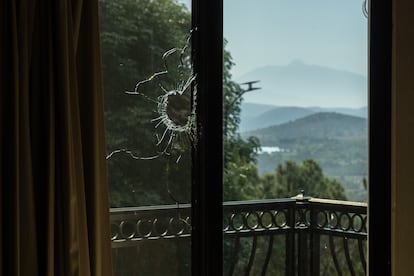
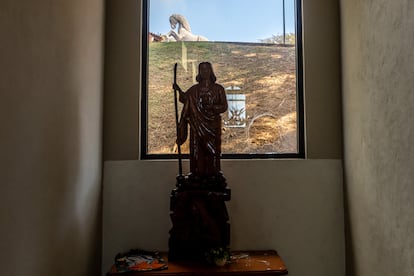
This was the first scene of the battle, but not where El Mencho died. The drug lord fled upon seeing the soldiers arrive. He was accompanied by four of his bodyguards, a rocket launcher, grenades, three rifles, and two handguns. They disappeared into the forest. There, a Special Forces team pursued them. Neighbors report that six helicopters also arrived. One was fired upon by the kingpin while he was among the trees and had to make an emergency landing in Sayula, about 30 miles away. At one point in the fight, which had already lasted more than five hours, the sound changed. “It sounded like a bomb, the ground shook,” the taxi driver said. “Dad, why is the ground shaking?” His son asked him. Another resident echoed this: “It wasn’t bullets anymore, it sounded like bombs.” The army has not reported that its units fired any other type of ammunition, nor that El Mencho detonated the grenades he was carrying. The forest through which the drug lord escaped continues to spew smoke.
Reprisals
After midday, silence fell. According to General Trevilla, El Mencho and two of his bodyguards were in critical condition and needed to be evacuated. Once the situation was under control, a helicopter landed to take them to Guadalajara. However, they died en route. The military changed their plan: they couldn’t take the body of the Jalisco New Generation Cartel leader to the capital of Jalisco. They moved it to Morelia, Michoacán, and from there to Mexico City, so that the Attorney General’s Office could conduct forensic identification.
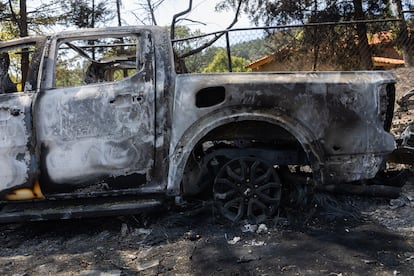
Meanwhile, the CJNG had already begun its wave of violence in retaliation for the death of its leader. The cartel set up more than 250 roadblocks, 65 of them in Jalisco. Three days later, the charred remains of a truck carrying melons, a delivery truck, and several cars used to block the roads are still visible. “All the entrances to Tapalpa were closed,” the taxi driver commented. As soon as the military left after the operation, “the town was left alone, adrift.” Night fell, and the cartel emerged. “They were like dogs,” said Joame, a resident of Tapalpa. “I was in the kitchen when I heard them shout, ‘Bring gasoline to burn down the Oxxo!’”
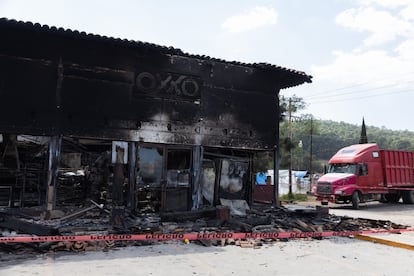
They doused it with gasoline and set it alight. The establishment is located a few meters from a gas station. “My biggest fear was that I would arrive and everything would explode,” said this 53-year-old woman, who lives right across the street with her son. “So I went out with buckets of water, but Civil Protection saw me and said, ‘Ma’am, don’t risk your life.’” It was 9 p.m., and she was on edge until 2 a.m. When the fire began to subside. “The government left us to deal with them alone,” she insists. “Neither the mayor nor the governor showed up; nobody helped us here,” the taxi driver concurs. A municipal police officer consulted by this newspaper acknowledges that the order they received was to stay inside their homes.
In Tapalpa, they already had experience extracting drug traffickers. In 2023, an army operation was staged following the disappearance of José Isidro Grimaldo, a cavalry colonel, who had vanished in the town a year earlier. On November 25, armed helicopters arrived in these mountains and took Juan Carlos Pizano Ornelas, known as “El CR,” the CJNG’s local boss, who was linked to the officer’s disappearance. The colonel’s remains have never been found, and the town forgot about the experience within days. “But this time it’s different,” the taxi driver acknowledges: “He’s a world-renowned figure, not just anyone.” Now they’re worried about the return of tourism — their livelihood — and that the cartel might retaliate further. “Of course I’m afraid, but I say that in the meantime, we have to keep working, we have to keep living, there’s no other way.”
Sign up for our weekly newsletter to get more English-language news coverage from EL PAÍS USA Edition
Tu suscripción se está usando en otro dispositivo
¿Quieres añadir otro usuario a tu suscripción?
Si continúas leyendo en este dispositivo, no se podrá leer en el otro.
FlechaTu suscripción se está usando en otro dispositivo y solo puedes acceder a EL PAÍS desde un dispositivo a la vez.
Si quieres compartir tu cuenta, cambia tu suscripción a la modalidad Premium, así podrás añadir otro usuario. Cada uno accederá con su propia cuenta de email, lo que os permitirá personalizar vuestra experiencia en EL PAÍS.
¿Tienes una suscripción de empresa? Accede aquí para contratar más cuentas.
En el caso de no saber quién está usando tu cuenta, te recomendamos cambiar tu contraseña aquí.
Si decides continuar compartiendo tu cuenta, este mensaje se mostrará en tu dispositivo y en el de la otra persona que está usando tu cuenta de forma indefinida, afectando a tu experiencia de lectura. Puedes consultar aquí los términos y condiciones de la suscripción digital.