A Mariachi school persists, and thrives, amidst an immigration crackdown
Despite the persecution of migrants across the US, the Nuevo Amanecer Academy in Queens, New York remains an optimistic community hub, supporting hundreds of students and families
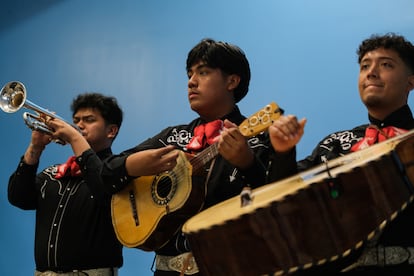
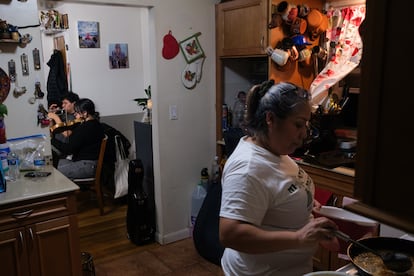
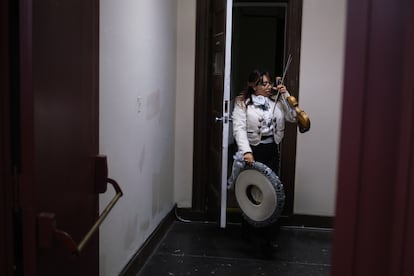
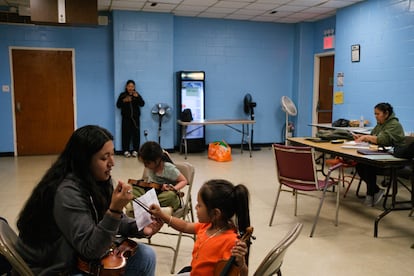
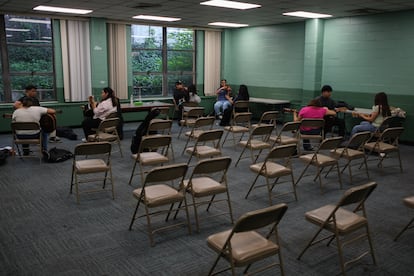
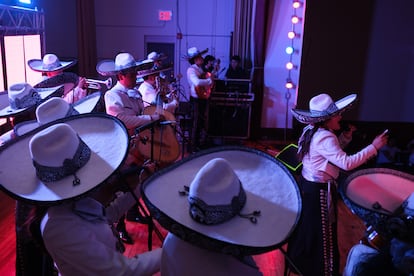
At dusk on a recent Wednesday evening, as a chilly rain came down outside, the hallways of a parish recreational center in Queens slowly began to fill. One by one, students of all ages filtered in. They walked up and down the green-tiled hallway, shaking the hand of each person already seated as the strains of violins tuning and the rhythmic strumming of guitar chords filtered out of neighboring classrooms. A girl ran to practice, clutching a violin case as large as her body. The parents lining the hallway — many of whom are students themselves — settled in to wait for their own lessons.
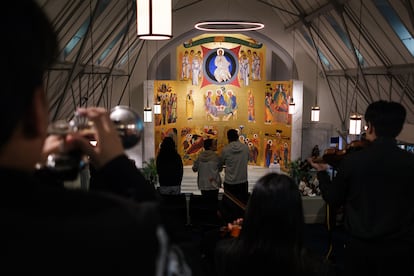
Anthony Benitez, 18, shook hands with José, a trumpet player who had just arrived. Benitez usually has his violin class on Mondays. Today, he had traveled over an hour from Harlem for the school’s monthly rosary, held before an altar of the Virgin Mary playing the piano, and a community dinner. “It makes me feel proud, simply because of the specific time we’re in right now,” Benitez said, in reference to punitive immigration enforcement that has forced many Latino and immigrant families into hiding. Benitez, who was born in the United States to Mexican immigrants, wore a baseball hat with a patch of the Mexican flag. “It definitely takes a lot of courage for kids my age to represent their culture.”
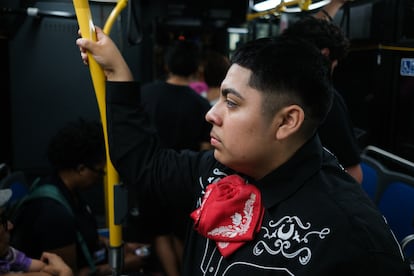
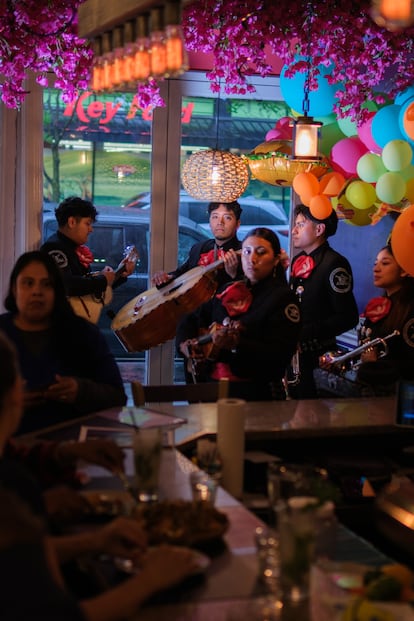
In a time of widespread persecution and criminalization of immigrants across the U.S., the Academia De Mariachi Nuevo Amanecer serves as a bright spot of community, pride, and support for its hundreds of students and families. In churches, schools, and living rooms across the city, the school’s classes allow parents to share their heritage with their children — or children born in the U.S. To connect with their parents’ culture.
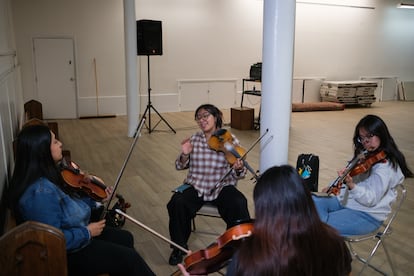
One night last spring, Dyana, 23, was urging her students to leave their timidity behind. “Move your arms so I can hear you!” She told them. Her students, all beginner violinists at least a decade older than Dyana, carefully worked their way up a scale, more or less in unison.
Dyana spends most of her evenings teaching violin in a network of school classrooms and church basements around New York City. Other nights, she performs with her mariachi group of childhood friends, cousins, and siblings, who all teach their own classes. “It’s pretty much become a lifestyle,” she said, on a rare night off.
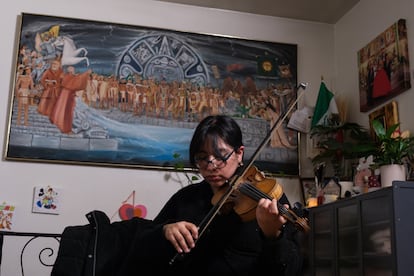
Dyana, like many of the school’s young teachers, started as a student in the Academy’s early days. When a family friend, Valentin Martinez, first decided to start a mariachi school almost 11 years ago, Dyana was hesitant to join. She was already singing in a church choir with her friends and cousins, and mariachi’s reputation as the old-fashioned music of family reunions lessened its appeal.
“Even when I was in school, a lot of kids didn’t like the music from their own country,” said Dyana, who works as an elementary school teacher when she isn’t teaching mariachi. She declined to share her last name with EL PAÍS.
Martinez, who immigrated from Mexico 20 years ago, wanted to perform at celebrations for Our Lady of Guadalupe, the patron saint of Mexico whose feast day is celebrated across the city. But, as a church choir, his group couldn’t compete with the preferred mariachi bands, so Martinez decided to start his own. He hired local instructors and enlisted his own children and the children of family friends.
“We feel very proud of our culture,” said Martinez. “This is music that is very, very beautiful, very lovely, and we enjoy playing it.’
Dyana quickly came around. Mariachi, she found, was an opportunity to connect with her parents’ heritage and share it with others, and to spend time with her friends. “Even though we weren’t born there, we still carry some of our traditions and our culture here,” she said.
Little by little, other students began to join. Parents enlisted their children and often signed up for classes themselves. As more families found out about the school, students began to arrive from as far away as The Bronx, Coney Island, and New Jersey.
Now the school, Academia de Mariachi Nuevo Amanecer, or New Dawn Mariachi Academy, is one of the most prominent in the city, with hundreds of students and dozens of classes for guitar, violin, and trumpet. In the process, the school’s teachers have developed a deep appreciation for the nuances of the genre.
It “was important to us and also felt like we were doing something for our parents and the community that people weren’t really seeing before,” Dyana said. “I feel like somehow life, the universe, whatever, has kind of just driven me to that.”
Traditional mariachi, which stems from 18th-century indigenous, Spanish, and African musical elements, revolves around romantic themes and sounds more “mellow,” said Dyana, whose favorite music genre is K-pop. “The more modern songs, they make you feel very powerful; they have so many new skills and new techniques,” she said. “When you learn all this new music, it makes you feel empowered.”
Community
As the children started their lessons, one parent set up a small altar with a painting of the Virgin Mary, decorated in a pink frame with flowers. Once a month, the school community holds a rosary service with a potluck of tacos dorados and rice.
“In the world of mariachi, it’s not just about the music; it’s the culture ‚” said José, the father of a student who is himself a student. “This is the first time we’ve found ourselves in a group that, as much as friends or acquaintances, feels almost like family.”
José and his wife, who are both originally from Mexico, were walking through a park in Queens three years ago when they came across players from the Academy giving a performance. They were immediately intrigued. “We said, ‘You know what? We want a future for our son and to show him the culture of our country,’” José said. He himself had never been drawn to music as a child — “I had never had the opportunity” — but he decided to try it, too. “I believe it’s never too late to start. As long as God continues to grant us life, we must continue forward.”

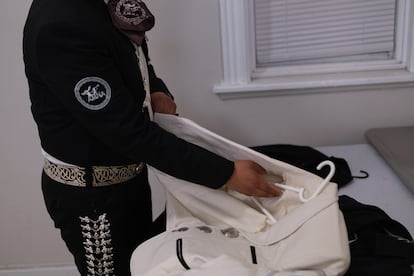
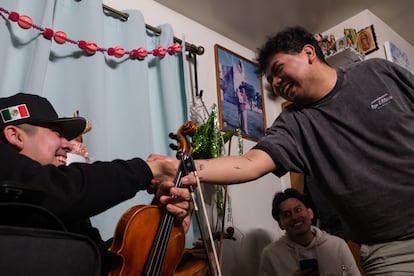
José was just 14 years old when he came to the United States from Mexico City in 1999. Like many undocumented New Yorkers, he has not been able to return. José shared only his middle name with EL PAÍS to avoid retaliation by immigration authorities.
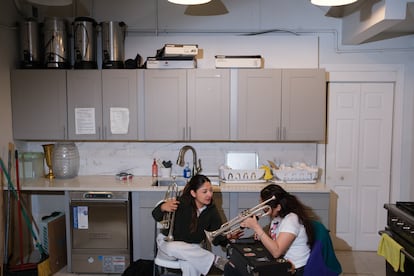
Every Wednesday evening, José, his wife and their son trek out to the church in Queens. José and his son are learning the trumpet; his wife plays the violin. His son does not share the same enthusiasm as his parents, but they try not to force him. “I feel the trumpet has a wonderful sound,” José said. “Very, how do you say it, sentimental, just like the violin. That’s why my wife chose the violin, too.”
One song in particular calls his attention, Así Fue, by Juan Gabriel. There’s a moment near the end of the song where the trumpet solo soars out over the background music. “When you hear the sound of that song played by the trumpets, it’s a feeling that reaches your soul, your heart,” José said.
“I am proud to be a mariachi, to represent the culture of our country, especially on this side, in the United States,” he said. “I have built my entire life here. One day, through the grace of God, I hope to return.”
Immigration enforcement looms
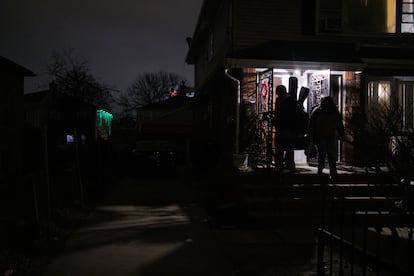
The specter of immigration enforcement has weighed heavily on the school community, especially as aggressive ICE raids and unrestrained, sweeping deportations have risen under the Trump administration. At the school’s recent annual anniversary party, where students performed the songs they had been diligently practicing for months, two community members were stationed outside the church, watching out for ICE agents.
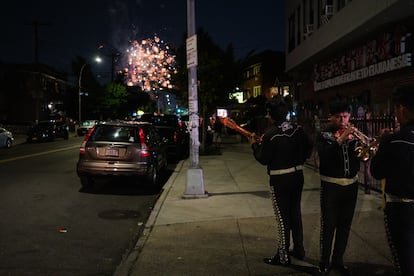
As immigration raids increased last year, José and his wife worried about leaving the house and considered pausing their lessons at the school. But after careful discussions, they decided to continue. “We have no choice but to keep going, keep bringing the boy to school, to music school, keep nurturing him in this mariachi tradition, and put aside everything that’s happening for the moment,” he said. “Fear won’t get us anywhere.”
“It’s something that has reached, really, our everyday lives,” Dyana, the teacher, said. “You really don’t know what to expect today or tomorrow.”
Last fall, one family at the school faced a mistaken raid by immigration authorities. The family, whose three children take classes at the Academy, stayed home for two weeks following the raid. Soon, however, they returned to the school. “We were isolated [at home], and arriving here and listening to the music, you could forget your problems,” said their mother, who declined to share her name with EL PAÍS, fearing retaliation. “As a mother, this is something very beautiful, because our tradition continues. Even though we’re in a different country, we aren’t losing our customs,” she said.
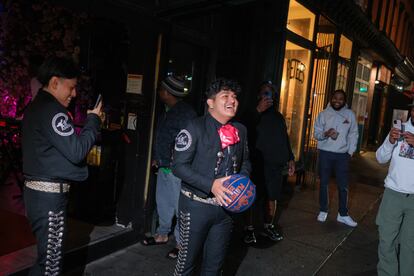
Benitez, the high school student, described himself as a “shy person” who had never been to a protest before. He feels more outgoing, he said, when he plays mariachi. A few months ago, his group was hired to perform at an anti-ICE protest in the city. Some members of the group chanted along with the protest. “Part of a protest is to make noise, to make yourself known,” he said. “And we did that by doing what we like to do – and that’s playing music.”
Sign up for our weekly newsletter to get more English-language news coverage from EL PAÍS USA Edition
Tu suscripción se está usando en otro dispositivo
¿Quieres añadir otro usuario a tu suscripción?
Si continúas leyendo en este dispositivo, no se podrá leer en el otro.
FlechaTu suscripción se está usando en otro dispositivo y solo puedes acceder a EL PAÍS desde un dispositivo a la vez.
Si quieres compartir tu cuenta, cambia tu suscripción a la modalidad Premium, así podrás añadir otro usuario. Cada uno accederá con su propia cuenta de email, lo que os permitirá personalizar vuestra experiencia en EL PAÍS.
¿Tienes una suscripción de empresa? Accede aquí para contratar más cuentas.
En el caso de no saber quién está usando tu cuenta, te recomendamos cambiar tu contraseña aquí.
Si decides continuar compartiendo tu cuenta, este mensaje se mostrará en tu dispositivo y en el de la otra persona que está usando tu cuenta de forma indefinida, afectando a tu experiencia de lectura. Puedes consultar aquí los términos y condiciones de la suscripción digital.