Nepal’s Generation Z seeks to defeat the old guard in the upcoming elections: ‘We want to see new faces’
The September protests forced Prime Minister K. P. Sharma Oli to resign and triggered an electoral process marked by the risk of new outbreaks of violence
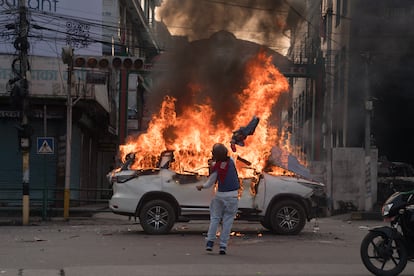
Nepal has become a pressure cooker in the run-up to the March 5 snap elections, triggered by the September Gen Z riots that shocked the world and ousted the then-prime minister, communist party boss, Sharma Oli. The protests forced the resignation of the then prime minister, Khadga Prasad Sharma Oli, and opened the door to change in this mountainous country of 30 million people after years of nepotism, corruption and a lack of opportunities for the younger generation.
But few believe that meaningful change is on the cards, at least for now. With so many different agendas, fresh protest could break out from any direction as Nepalis go to the polls to elect a new government and prime minister who could turn out to be the deposed Sharma Oli, 73, who has bounced back.
Among the 3,000-odd member of parliament candidates hoping to fill the 275 seats in Congress, there are those who want to see the monarchy reinstated, while others come from the very same government that resigned after the protests, which erupted following the government ban on 26 social media platforms, including YouTube, Facebook, Instagram and WhatsApp. Finally, there is the Gen Z Alliance, which is waiting to see if any of its demands will be met.
Violence could erupt “at any time,” said Mahabir Pun during an interview with EL PAÍS, adding that the security forces are prepared for any eventuality. Mahabir served for several months as education minister in the non-political interim government led by former chief justice, Sushila Karki after the September riots. In line with the Gen Z collectives, Mahabir wants to see social justice, development and an end to the corruption as he runs as an independent to represent the Myagdi district west of Pokhora.
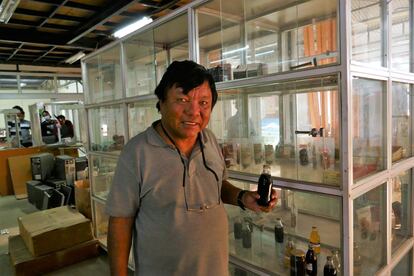
A favorite with Gen Z, Mahabir is the antithesis of a nepo baby. During his time as minister of education, he set up his sleeping quarters in his office in the ministry and refused to use a secretary or security detail unless on official business. He is also renowned in Nepal as a social entrepreneur who founded the National Innovation Center Nepal to nurture grassroots initiatives after establishing Wi-Fi in some of Nepal’s most remote villages in the late 1990s and early 2000s. Now 71, he does not rule out running for prime minister one day.
“Change will only come when we vote for people with a different approach to power and a different mindset. This will take time. The culture of favoritism is the cross of Nepali society,” he told EL PAÍS.
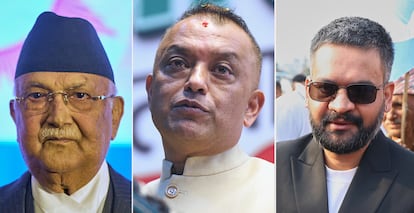
Along with Sharma Oli, one of the main contenders for the top job is 35-year-old rapper, engineer and former mayor of Kathmandu, Balendra Shah, or Balen as he is known locally from the centrist Rastriya Swatantra Party. A rare new face on the political circuit, he is the favorite to win with Gen Z because of his age. Others angling for the top job include Harka Sampang, 42, from the grassroots populist nationalist Shram Sanskriti Party and the Nepali Congress’ 49-year-old Gagan Thapa who is focusing his campaign on blitzing corruption.
A country of young people
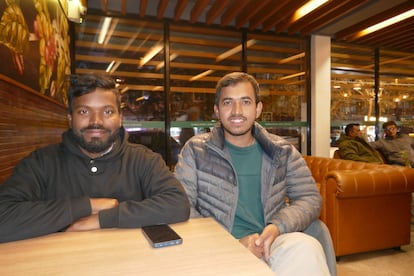
Gen Z activists Sudip Seth and Ashutosh Jha are among those skeptical that change is around the corner, even with Balen in power. Both engineers who belong to one of the 13 collectives under the Gen Z Alliance umbrella, they were involved in the September protests and participated in drawing up the 10-point agreement subsequently signed by members of the alliance and the interim government. This agreement demands accountability for the deaths caused by the authorities during the protests and systematic reform leading to opportunity for marginalized groups and the young.
Sudip, along with other members of the Gen Z Alliance, has been pressing political parties to include these 10 points in their manifesto, during a Manifesto Consultation in January.
If conditions don’t change in Nepal, it will be reduced to “a country of old people,” protestor Roshan Khatri told EL PAÍS. Fifty-six percent of the country is under 30, according to the 2021 census. Around 1,500 leave the country to seek opportunities abroad every day, reports Rastriya Shramik Mahasangh Nepal, a national federation of labour unions.
In 2024 alone, more than 741,000 Nepalis were given permits to work outside the country, according to the Ministry of Employment. Seventy-seven percent of these were between 18 and 34. Meanwhile, the Institute for Integrated Development reports that the remittances from overseas workers account for 26.2% of the country’s GDP.
With a World Bank estimate of 20.8% young people between the ages of 15 to 24 within Nepal unemployed in 2024, it is hardly surprising that the country is clamoring for opportunities for its young people. The World Bank describes Nepal as one of Asia’s poorest and slowest-growing economies. The average salary for a public school teacher ranges from €120 ($140) to €240 ($280) per month. Other salaries are as low as €60 ($70).
A new outbreak of violence?
“If whoever comes to power doesn’t respect the 10-point agreement and dialogue doesn’t work, more protest is the only way to go,” Sudip told EL PAÍS, adding that neither he nor Ashutosh are in favor of violence.
“The protests got out of control because there was no single leader. The 20 killed by police on September 8 in Kathmandu [later the toll rose to over 50] made the anger much worse and then thousands more came out onto the streets,” he said.
On the second day of the two-day demonstrations, after Oli had resigned, the situation descended into anarchy with government buildings and the prime minister’s office torched, along with the Supreme Court, police stations, high-end stores, the Hilton and private residences including that of Oli. The few police still present were stripped of their clothes and pelted with stones as they ran into the filthy Bagmati river to escape the mob, the activists told EL PAÍS. At least three were killed.
The problem, political analyst Chandra Dev Bhatta told EL PAÍS, is that “politics in Nepal has been hijacked by the same clique of professional politicians for 30 years. And it has become musical chairs — they all want a shot at being prime minister.”
“We want to see new faces,” said Ashutosh who is currently helping Sudip set up a Gen Z party with an eye on the local and provincial 2028 elections and the aim of attracting like-minded figures, such as Mahabir Pun. When told of their ambition, Mahabir responded, “I am happy to join any party of people who want to work together for the development of Nepal.”
As the elections loom, many ordinary Nepalis are placing their faith in Balen, whose credentials as an engineer have raised expectations that he might focus on infrastructure if he is voted in, though not so much on social justice — some call him the Trump of Nepal. But it is unlikely his Rashtriya Swatantra party will get a majority. “The elections will result in a coalition, and coalitions have always failed in the past,” the political analyst Chandra Dev Bhatta told EL PAÍS. “The likelihood of more protests is high.”
Sign up for our weekly newsletter to get more English-language news coverage from EL PAÍS USA Edition
Tu suscripción se está usando en otro dispositivo
¿Quieres añadir otro usuario a tu suscripción?
Si continúas leyendo en este dispositivo, no se podrá leer en el otro.
FlechaTu suscripción se está usando en otro dispositivo y solo puedes acceder a EL PAÍS desde un dispositivo a la vez.
Si quieres compartir tu cuenta, cambia tu suscripción a la modalidad Premium, así podrás añadir otro usuario. Cada uno accederá con su propia cuenta de email, lo que os permitirá personalizar vuestra experiencia en EL PAÍS.
¿Tienes una suscripción de empresa? Accede aquí para contratar más cuentas.
En el caso de no saber quién está usando tu cuenta, te recomendamos cambiar tu contraseña aquí.
Si decides continuar compartiendo tu cuenta, este mensaje se mostrará en tu dispositivo y en el de la otra persona que está usando tu cuenta de forma indefinida, afectando a tu experiencia de lectura. Puedes consultar aquí los términos y condiciones de la suscripción digital.