The lives uprooted by Argentina’s dictatorship and rebuilt in Spain: ‘I am a child of exile’
The 1976 coup in Argentina forced thousands of people to flee. Those who experienced it tell their stories 50 years later
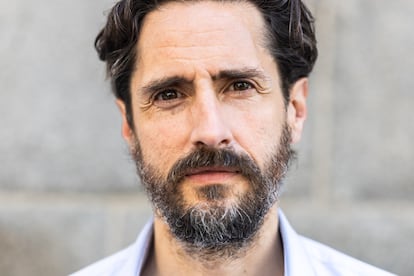

Diego Fernando Botto and Cristina Rota met at an acting workshop in Buenos Aires. After performing in a play together, they fell in love. In 1974, their daughter María was born, and a year later they had their second child, Juan Diego. Botto’s teacher believed he was the best in his class and that he would go far. He was a talented and handsome young man. Those who knew him in Argentina described him as optimistic, energetic, and fun-loving.
On March 24, 1976, the military staged a coup—the fourth in just over two decades—and ushered in the bloodiest period in Argentine history. Botto was kidnapped on March 21, 1977. None of his family or friends saw him alive again. Rota searched everywhere for him, but simply doing so involved immense danger. In 1978, the actress realized she had become a target of the dictatorship too. In November of that year, with two young children and another one on the way, she left everything and fled to Spain.
“Throughout my childhood, the fantasy that one day I would turn a corner and meet my father was always with me,” says the actor Juan Diego Botto in a telephone interview, after a day of filming last week in Madrid. This Tuesday marks half a century since the civic-military coup that installed the dictator Jorge Rafael Videla in power and forced thousands of Argentinians into exile. The exact number of those who had to flee is unknown. Many of those who left went to Spain. And there they stayed after all these years.
“Dad is in jail,” their mother explained to her children as soon as they were old enough to understand. “María and I would draw pictures of how we imagined our father in jail, and we would put him alone in a prison. In our minds, the minds of children, my father was the only person in jail in Argentina,” recalls the 50-year-old actor.
“There’s a constant search, a hope that never ends,” Botto says. “But the concept of the disappeared generates something very painful: it places the burden of the decision of considering them dead on the families,” he explains. “One day you say: ‘Well, I just have to accept that they’re gone and that they’re not coming back.’”
Human rights organizations and victims’ families maintain that more than 30,000 people were “disappeared” during the dictatorship, a figure that the current president, Javier Milei, and sectors that downplay state crimes reduce to less than 9,000. “I believe that the coup was so drastic, so brutal, because they wanted to eliminate once and for all the working class that sought to build a different country and that they didn’t know how to manage,” says the writer and journalist Martín Caparrós, at his home on the outskirts of Madrid.
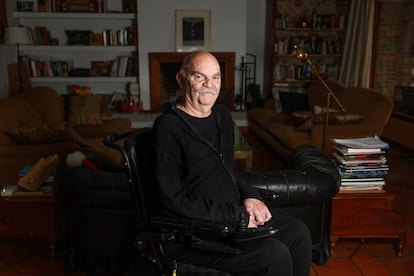
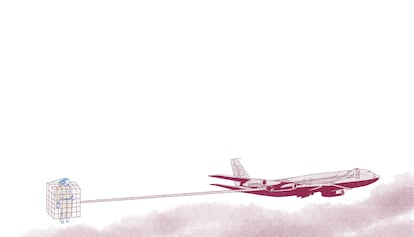
“Argentina in 1976 was unlivable: the military government was utterly cruel; people were being kidnapped, killed, taken away on a plane and thrown into the sea,” says the businessman and writer Abrasha Rotenberg, who will turn 100 in May. Rotenberg, father of the actress Cecilia Roth and the musician Ariel Rot, was a co-founder of La Opinión, a leading newspaper that saw at least six of its journalists kidnapped or murdered during that period.
“I received threats every day, but I was crazy, I thought, ‘No, even if they threaten you, nothing’s going to happen to you,’” he says. One night, his teenage son was kidnapped and taken to a police station as he was leaving a concert. “Get out of here fast, or you’ll never get out again,” they told him after holding him for hours. Rotenberg, who had previously had to leave Stalin’s USSR and had also witnessed Hitler’s early years in Germany, understood that they had to leave. “We came to Spain for a year, and I ended up staying 37,” he says over the phone from Buenos Aires. “I was an exile from the day I was born.”
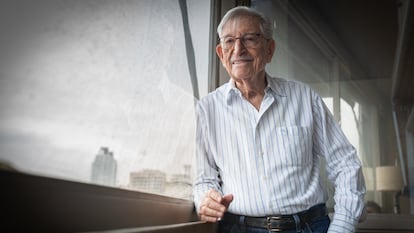
Although the military dictatorship ended in 1983, its mark is permanent. “Exile is like the death of your parents, it never ends,” explains writer Clara Obligado, who has just published, along with illustrator Agustín Comotto, Exilio, a book that addresses themes such as the impact on those who left and those who stayed, and survivor guilt. “You say, ‘Well, they didn’t kill me, they didn’t torture me, they didn’t take me prisoner,’” explains the 75-year-old author, who left the country on December 5, 1976. A day later, the military came to her house looking for her. She doesn’t know what would have happened if she had stayed 24 more hours. That constant doubt, all the “what ifs,” is also part of the backbone of her latest work.
“I don’t know what brought me here, maybe the wind,” she reflects in her Madrid home studio. “I think I was exhausted, incapable of thinking. I truly did the best I could, and here I stayed.” Obligado sees herself as part of a “vanished generation” that arrived in a Spain itself in a political transition, just a few months after Francisco Franco’s death in November 1975.
“It was a country that was waking up,” notes Caparrós, a grandson and son of Spanish Civil War exiles who had to return to their homeland after spending decades in Argentina. They left a bleak Spain and returned to a society that was gradually gaining rights and freedoms after 40 years of dictatorship. It was a slow and difficult process, the interviewees recall. “And at the same time, there was a sweeping sense of change,” adds Obligado.
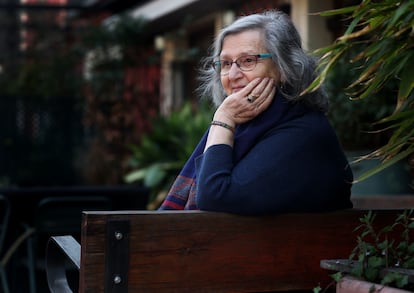
“Exile is that complex interplay between a person who is completely outside their environment, someone who has been uprooted from their home, and those who receive them,” says Comotto, who arrived in Madrid at the age of eight. The 58-year-old illustrator recalls how difficult those first days were, the gradual arrival of waves of other Latin Americans fleeing repression (like the Chileans or Nicaraguans), and the solidarity that allowed his parents to stay afloat.
He also recalls the avalanche of events that have shaped Spain, such as the Atocha massacre in 1977, the first victims of the heroin epidemic that ravaged a generation in the 1980s, and the attempted coup of February 23, 1981. “It was harder than people remember,” he says. “But Spain welcomed us in the face of the tragedy unfolding in South America.” In return, the legacy of artists, lawyers, writers, musicians, psychologists, intellectuals, athletes, architects, dentists, businesspeople, teachers, established professionals, young people who forged their own paths, and children who grew up to become parents and grandparents endures.
“One story is all stories,” Obligado writes in her latest book. From the moment of the exodus, those stories diverge. “If you see exile as a punishment, you’re lost. If you see it as a new challenge and something permanent, you have hope,” says Rotenberg, who cherishes the years he spent in Spain. Comotto, on the other hand, refuses to romanticize the past—“it was a shitshow”—although years after returning to Argentina, he crossed the Atlantic again and found reasons to keep going and a new life in Barcelona, where he has lived for 27 years.
After several trips back and forth, Caparrós returned to Spain in 2013 after spending 25 years in Argentina, driven by reasons completely unrelated to exile, such as the need for renewal and a certain degree of chance. “I wanted a change of scenery and to see the world, to leave my village,” explains the writer, who does not identify as an exile. “It’s not a label I felt was mine,” he has written.
Obligado returned to Argentina for a time, drawn by nostalgia, but eventually became convinced that the country she had left no longer existed. “You can decide to live in Argentina, but that’s not going back,” explains the author, who gradually made the decision to stay in Spain, where she works and has started her family.
There were also some who crossed the ocean several times to find answers. “I’m from Madrid, and I recognize myself in the neighborhoods where I’ve lived practically my entire life,” Botto explains. “And I’m a child of exile; I identify as the son of a disappeared person.” Over the years, the actor met his grandparents, his aunts, and his cousins. He joined the organization HIJOS (Children for Identity and Justice against Forgetting and Silence), contacted forensic anthropologists, and reviewed his father’s file at the Undersecretariat of Human Rights to reconstruct his story. In 2004, thanks to the testimony of two witnesses, he learned that Diego Fernando Botto’s final destination was the ESMA naval academy, the largest clandestine detention and torture center of the dictatorship.
A decade later, and after 35 years of seeking justice, Botto and his mother testified as witnesses in one of the many legal cases concerning the crimes committed at ESMA. “In that trial, the State acknowledged that what it did was wrong and that it must never happen again,” she says. “It was a healing experience for me.”
“The losers don’t usually have the opportunity to judge the victors, and yet that did happen in Argentina’s democracy,” says Botto, comparing the transition in his home country with that of Spain. For decades, a consensus was built, not without opposition and resistance, regarding the horrors that were experienced, such as the so-called death flights and the mass theft of babies, and the disastrous legacy of policies that quintupled poverty and caused inequality to skyrocket. The Argentine justice system has convicted more than 1,200 perpetrators of crimes against humanity.
President Milei, however, has questioned the existence of a systematic plan to repress and kill the population, and maintains that there was “a war” between the military regime and its dissidents. “History has once again become a contested terrain,” Caparrós states, although he questions whether the far-right politician has a genuine interest in that period of history. While revisionist groups are a minority, the journalist has recently become convinced that it remains necessary to remember the impact of the violence, especially so that younger generations, those who did not live through that time, can learn their history.
“Human rights are never won forever, and we must remain vigilant, because right now denialism governs Argentina,” Botto asserts. “Memory is not a rearview mirror; it is a mirror of the present, to understand who you are today and what we must do to ensure this never happens again.”
Sign up for our weekly newsletter to get more English-language news coverage from EL PAÍS USA Edition
Tu suscripción se está usando en otro dispositivo
¿Quieres añadir otro usuario a tu suscripción?
Si continúas leyendo en este dispositivo, no se podrá leer en el otro.
FlechaTu suscripción se está usando en otro dispositivo y solo puedes acceder a EL PAÍS desde un dispositivo a la vez.
Si quieres compartir tu cuenta, cambia tu suscripción a la modalidad Premium, así podrás añadir otro usuario. Cada uno accederá con su propia cuenta de email, lo que os permitirá personalizar vuestra experiencia en EL PAÍS.
¿Tienes una suscripción de empresa? Accede aquí para contratar más cuentas.
En el caso de no saber quién está usando tu cuenta, te recomendamos cambiar tu contraseña aquí.
Si decides continuar compartiendo tu cuenta, este mensaje se mostrará en tu dispositivo y en el de la otra persona que está usando tu cuenta de forma indefinida, afectando a tu experiencia de lectura. Puedes consultar aquí los términos y condiciones de la suscripción digital.