Federal judges threaten fines against the Trump administration for lost belongings of ICE detainees
Two courts review claims for identification and personal items not returned after arrests made during Operation Metro Surge in Minnesota


The Trump administration faces fines for the actions of Immigration and Customs Enforcement (ICE). Two federal judges in Minnesota are considering possible sanctions against the federal government after immigration authorities failed to return personal belongings to immigrants detained by ICE and subsequently released by court order. The hearings come after claims by lawyers that the government failed to comply with court orders related to the return of documents, money, and other essential items.
Minnesota U.S. Attorney Daniel Rosen appeared this week before U.S. Judges John Tunheim and Jeffrey Bryan to answer for the loss of belongings of more than two dozen immigrants who were in ICE custody. The hearings are part of a series of lawsuits related to arrests made during the immigration operation known as Operation Metro Surge in Minnesota.
Tunheim held a hearing on Thursday in Minneapolis to assess whether the Department of Homeland Security (DHS) should be given a deadline to return lost items or compensate those affected financially. The judge indicated that he plans to issue a court order setting a deadline for resolving pending cases and warned that if the government fails to comply, daily civil fines could be imposed.
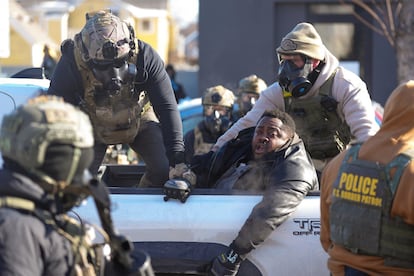
Meanwhile, Bryan is separately considering whether Rosen can be held personally in contempt for allegedly failing to comply with court orders related to the return of property in at least 28 cases. Rosen defended the government’s actions and denied that there had been any deliberate disobedience of court orders. He explained that the problems were caused by administrative errors amid a large volume of releases ordered by judges. “Nobody has been willfully disobedient. There have been mistakes that have been made, but that is a far, far cry from contempt of court,” he said.
The prosecutor argued that ICE had to make difficult decisions to meet court deadlines while processing numerous release orders simultaneously. In some cases, he explained, detainees were transferred to detention centers in Texas, which complicated the logistics of returning their belongings when they were released.
According to Rosen, in certain situations, authorities chose to release immigrants within the court-set deadline even if their belongings were not available at that time. He added that he expects the problems to diminish now that the immigration operation is winding down and there are enough beds in detention centers in Minnesota to avoid transfers to other states.

However, lawyers for the immigrants argue that the loss of belongings has had significant consequences for their clients, many of whom depend on documents and work tools to maintain their employment and daily lives.
One of the cases discussed at the hearing involves a construction worker who was detained on January 5 and subsequently transferred to El Paso, Texas, where he remained in custody for more than a month before being released on February 18. According to his lawyer, Joshua Rissman, when he was released, the man did not receive several of his belongings, including his work permit, his social security card, about $100 in cash, and a nail gun he used in his job as a roofer. “It’s like they made a plan to unconstitutionally arrest a lot of people, but they didn’t make a plan to have to deal with their constitutional rights,” Rissman said.
The lawyer explained in a statement that ICE later reported that the social security card had been located, but the money, work tool, and work permit remain missing. Rosen indicated that the government denies that the detainee had the money and nail gun with him at the time of his arrest, although he assured that DHS is willing to compensate him financially if the items are not found.

Another case examined by the court involves a Guatemalan man whose identification documents disappeared while he was in detention. According to Rosen, ICE has been unable to locate his Guatemalan consular identification or his driver’s licenses from Guatemala and Minnesota. The man’s lawyer explained that replacing these documents could be extremely complicated, as some can only be processed in Guatemala or at specific consular offices in the United States. The loss of these documents has directly affected his ability to travel and attend to family needs.
Other cases mentioned in the hearings include asylum seekers who reported the loss of documents or belongings while in ICE custody. Some attorneys stated that the threat of legal sanctions was necessary for the government to finally respond to requests related to the missing items.
Judge Tunheim indicated that his next court order will set a deadline for resolving the pending claims, either through the return of the objects or financial compensation. Depending on the court’s final decision, the federal government could face daily fines if it fails to comply with the court orders.
Sign up for our weekly newsletter to get more English-language news coverage from EL PAÍS USA Edition
Tu suscripción se está usando en otro dispositivo
¿Quieres añadir otro usuario a tu suscripción?
Si continúas leyendo en este dispositivo, no se podrá leer en el otro.
FlechaTu suscripción se está usando en otro dispositivo y solo puedes acceder a EL PAÍS desde un dispositivo a la vez.
Si quieres compartir tu cuenta, cambia tu suscripción a la modalidad Premium, así podrás añadir otro usuario. Cada uno accederá con su propia cuenta de email, lo que os permitirá personalizar vuestra experiencia en EL PAÍS.
¿Tienes una suscripción de empresa? Accede aquí para contratar más cuentas.
En el caso de no saber quién está usando tu cuenta, te recomendamos cambiar tu contraseña aquí.
Si decides continuar compartiendo tu cuenta, este mensaje se mostrará en tu dispositivo y en el de la otra persona que está usando tu cuenta de forma indefinida, afectando a tu experiencia de lectura. Puedes consultar aquí los términos y condiciones de la suscripción digital.