Those who do not give up: the lawyers, mothers and activists still fighting for political prisoners in Venezuela
Resistance to Chavismo’s years-long repression has changed the lives of a entire network of defenders who now demand that the government’s amnesty apply to those still behind bars

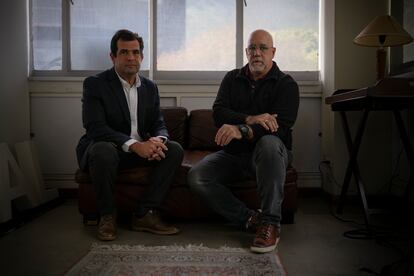
“Who ‘owns’ this prisoner?” This is the question that the lawyers Alfredo Romero and Gonzalo Himiob, who lead the non-profit group Foro Penal, have begun their work with in recent years. Their organization has defended more than 14,000 people, including political prisoners and relatives of those killed in the first protests against Chavismo, those of April 11, 2002. Their office holds part of the memory of two decades of political violence and authoritarian drift, which the interim president, Delcy Rodríguez, is now trying to leave behind, pressured by the U.S. Military intervention of January 3, in which her former boss, Nicolás Maduro, was removed from power.
A contingent of human rights defenders like them—some lawyers, others not—has been on the front lines of the Venezuelan conflict in recent years. They support victims, defend them, accompany them—even during sleepless nights on mattresses—verify releases, celebrate them, and also denounce them. In 2026, they haven’t stopped working or checking their phones. The government’s announcement of releases in early January has so far resulted in the liberation of 673 people, according to the tally presented this Thursday by Foro Penal. But 508 people remain detained: 54 women, 179 members of the military, and 44 foreigners or citizens with dual nationality. Parliament claims that 6,071 people have been granted full freedom under the amnesty law, but no one has presented lists to verify this.
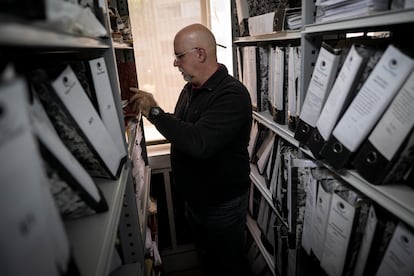
The files of political prisoners handled by Foro Penal occupy two of the three enormous filing cabinets that are moved with a lever in their office. When Romero and Himiob talk about their work, they trace a map that runs from the intricacies of the Venezuelan justice system in the early years of Chavismo to the dead end it has become today. “It’s a Kafkaesque labyrinth of repression,” Romero describes. “People are subjected to a process and they don’t know when it will end or what it’s even about.”
The lawyer recalls that when he defended some of the relatives of those killed during the April 11, 2002 coup—a case that recently reached the Inter-American Court of Human Rights—there was still some respect for due process, including the right to a defense. It was then that he met Himiob. “Then the criminal justice system began to be restricted, until we reached the case of Judge María Lourdes Afiuni—whom Hugo Chávez ordered arrested for applying the law and releasing one of his political enemies. Since then, no judge has made a decision without first consulting the executive branch.”
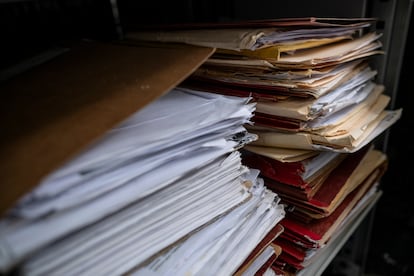
In 2014, Maduro’s first year in power, the wave of arrests began. There were only 11 political prisoners then. A decade later, the number had risen to over 2,000, while the deterioration of the judicial system included the denial of private legal representation, the disappearance of detainees, and the concealment of case files.
Among desks and thick books on administrative law, a corner of the Foro Penal office has been taken over by teddy bears. This small play area speaks to the transformation these lawyers’ work has undergone. The office doorbell rings constantly, and the wives, mothers, daughters, and sisters of political prisoners—who, in their pursuit of justice, also carry their children with them—have become their main interlocutors.
Foro Penal has grown into a network of 400 volunteer lawyers across the country and 5,000 active advocates who track information in courts and prisons. This has allowed them to keep a detailed record of 19,000 people detained for political reasons over nearly two decades.
When private defense attorneys were no longer allowed to litigate, the NGO documented the keys to navigating a flawed judicial system in a strategic litigation manual. “Whether a person is released doesn’t depend solely on you doing your job well as a lawyer,” Himiob explains. “Media coverage, peaceful protests, political factors, and international actions also play a role.”
“Since 2024, we haven’t been allowed access to the courts or to litigate,” Romero adds. “So we decided to provide assistance to the families so they could act before different authorities: what to say, what not to say, and what documents they should bring.”
Above all, it is crucial to know which political actor “owns” the prisoner: that is, whether it was the president, a minister, a governor, or a mayor who ordered the arrest. For them, this logic demonstrates the complete loss of judicial independence. Something that, they assert, the amnesty law has not yet changed.
Protest and vigil
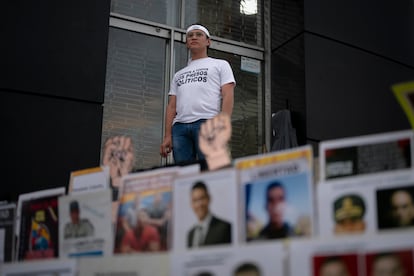
Diego Casanova was imprisoned when he had barely started university. He was one of the student leaders who in 2014 set up protest camps against the Maduro government, which were dismantled one early morning by the then minister Miguel Rodríguez Torres, a former political prisoner and now living in exile in Spain.
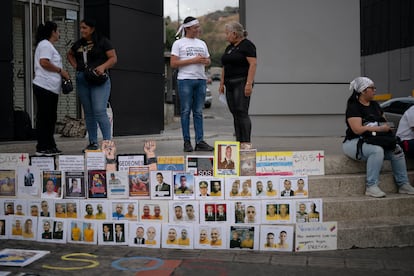
A decade later, with a megaphone and a bandana on his forehead, he has become one of the most visible—and perhaps most beloved—faces among the hundreds of relatives of political prisoners. From El Helicoide to El Rodeo, from Yare to Tocorón or Tocuyito, he has slept more than once in front of these prisons to accompany the families who have been holding vigils since January to demand the release of their loved ones.
From a mattress on the street in front of the PNB Zone 7, where he spent the night, he answers the questions for this interview. “I became fully involved in this when they arrested my brother after the 2024 elections.” He wasn’t protesting. He was on his way to work when he passed through a checkpoint manned by colectivos [far-left armed paramilitary groups] and ended up in a cell.
“When I arrived at the courts, I remember they were full of people. That’s when I understood that my brother was part of the mass repression of those days.”
At just 30 years old, he is one of the coordinators of the Committee of Relatives and Friends for the Freedom of Political Prisoners of Venezuela (Clippve), created shortly before the 2024 elections to make visible the situation of hundreds of detainees who were practically forgotten names, when there were still no more than 400 registered political prisoners.
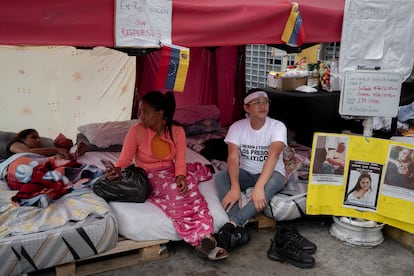
“We didn’t know what was coming on July 28th,” he says. They had to organize marches to the courts and hold vigils at the prisons to keep their cause on the political agenda. These were the only protests taking place while the repression intensified.
“For the first time, I heard stories from so many people in so many places across the country who had had a family member taken away. That made me understand that what was happening was serious, with people who didn’t even have anything to do with politics,” he says.
“And what could one do about that?” He wondered. “The only thing I know how to do is this: speak out, fight, struggle, help, make a banner, record a video and post it to denounce what is happening.”
His brother was in a prison where they gave him rotten food. Every complaint Casanova made confronted him with a dilemma shared by other members of the committee. “I would denounce the prison conditions and then remember that my brother was still in prison and that this could affect him.”
With each release came mixed feelings: joy for those who were freed and sorrow for those who remained inside. His brother’s detention ended seven months later, but Casanova’s activism did not stop.
His life changed so much that he began spending his birthdays with the families of political prisoners. “I think a great victory of our work is that we managed to bring this out of oblivion and make it a matter of national and international interest,” he says. “I have to keep going.”
Sign up for our weekly newsletter to get more English-language news coverage from EL PAÍS USA Edition
Tu suscripción se está usando en otro dispositivo
¿Quieres añadir otro usuario a tu suscripción?
Si continúas leyendo en este dispositivo, no se podrá leer en el otro.
FlechaTu suscripción se está usando en otro dispositivo y solo puedes acceder a EL PAÍS desde un dispositivo a la vez.
Si quieres compartir tu cuenta, cambia tu suscripción a la modalidad Premium, así podrás añadir otro usuario. Cada uno accederá con su propia cuenta de email, lo que os permitirá personalizar vuestra experiencia en EL PAÍS.
¿Tienes una suscripción de empresa? Accede aquí para contratar más cuentas.
En el caso de no saber quién está usando tu cuenta, te recomendamos cambiar tu contraseña aquí.
Si decides continuar compartiendo tu cuenta, este mensaje se mostrará en tu dispositivo y en el de la otra persona que está usando tu cuenta de forma indefinida, afectando a tu experiencia de lectura. Puedes consultar aquí los términos y condiciones de la suscripción digital.