Miami is more anxious than ever for the fall of Castroism: ‘Let whatever has to happen, happen, otherwise we will never be free’
Cubans in the capital of the island’s exile community in the United States watch, with a mix of optimism and frustration, as their country moves closer than ever to the change that has eluded them for decades
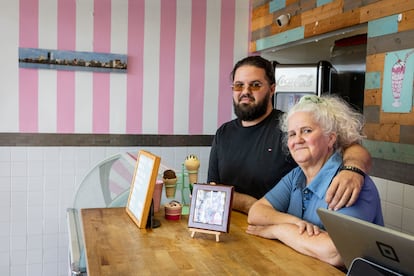

The burns on Ingrid Arenas’s hands don’t reflect all the pizzas she’s actually baked to make a living. In February 19, she arrived at Tío Colo, her pizzeria on Coral Way in Miami, and started early, preparing orders of Cuban pizzas and ice cream sundaes. In Hialeah, her son and daughter-in-law run a similar establishment, serving dozens of customers, and even her five young grandchildren help prepare or deliver food. Business is booming; she seems to have everything she needs.
“I’ve been happy here,” says Ingrid, 62, reflecting on the more than two decades she’s lived in the United States. However, something weighs heavily on her heart: “Cuba is the greatest suffering I have,” she confesses. And it will only disappear, she says, the day she can open a Tío Colo pizzeria on the island — that is, when Cuba becomes a country its exiles can return to.
The ice cream cones she sold from a bicycle in 1990s Cuba are the same ones she makes today. That’s why Ingrid insists that Tío Colo was founded in Cuba and took root much later in Miami. Now, as people talk of imminent change on the island, she imagines having a pizzeria in Havana as easily as in the heart of the Escambray Mountains. “My duty is to rebuild the country,” she says. “We’ve started from scratch many times; we know what that’s like. Yes, Cuba is in pieces, but it’s being rebuilt.”
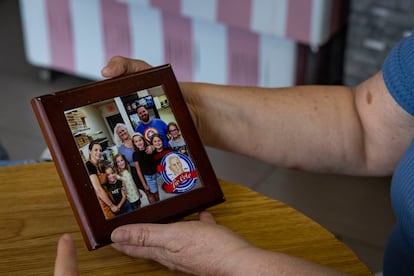
A glimmer of hope has begun to re-emerge among a disillusioned exile community that, at times, had lost hope for Cuba. José Victorero, the head of maintenance at the legendary Versailles restaurant, who arrived in Miami at the age of five and is now 62, thought he would die “before the end of communism.” But he can’t deny that something seems different now. He recently attended a meeting with the local police and learned that they have already begun installing cameras around Versailles, for the moment when Cubans gather there to celebrate the fall of Castroism. Several major media outlets, he says, have also begun reserving broadcast space to go live with the exile community’s reaction.
For decades, Cuban Americans reserved their votes for whoever promised a hard‑line stance against the Havana regime, but in recent years they seemed to have lost hope of reclaiming the island. The results of recent polls indicate that, in the 2024 elections, the Cuban community’s voting intentions reflected concerns that were more economic than political.

Even so, there were some who did not rule out the possibility that the new secretary of state, Marco Rubio, might draw on his identity as the son of Cuban migrants to turn his attention toward the island. After the Trump administration’s first year in which it n did little more than maintain the same hostile policy toward Havana, 2026 brought a different atmosphere for Cubans. After the capture of Venezuela’s Nicolás Maduro, the most common question was: is Cuba next?
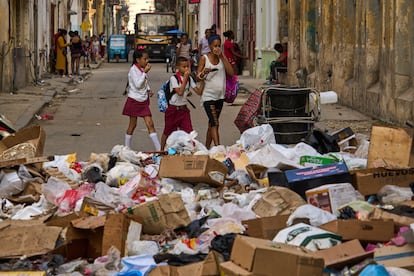
Trump declared a national emergency over Cuba, restricted fuel shipments from Venezuela, and threatened to raise tariffs on goods from any country that supplies Cuba with oil. The consequences have been severe: hotels on the island are laying off tourists and workers; airlines such as LATAM, Air Canada, WestJet, and Transat suspended flights; the Spanish chain Meliá announced the closure of three of its hotels; transportation is nearly nonexistent, and life in general is at a standstill.
The country resembles a body with organ failure. In the midst of this situation, the Havana government has played one of its last cards: it has handed over to the private sector the responsibility of purchasing fuel abroad — something it had previously refused to do. This has particularly angered the exile community, given that many Cuban‑American businesspeople are offering to take part in these transactions.
“These same businesspeople have been making deals with the military leadership for years to be able to do business in Cuba, even though the condition is accepting a system that denies its people political, economic, and other rights,” says activist Salomé García Bacallao.
Although Washington’s specific plans for Havana are currently unknown, it has become clear that they are seeking change through economic opening — a policy that seems at odds with what many of the 2.5 million Cuban Americans and their representatives in Congress have been demanding for years.
Feelings in Miami are divided. For some, Rubio has now shown himself to be the politician few thought he would become. “He was Clark Kent and now he’s Superman,” says José Manuel Hernández, Ingrid’s 37-year-old son. “He’s shown courage, even charisma. I think if he runs in 2028, he might win. Without him, there would be no interest from the American government in Cuba.”
Others, however, have begun labeling the administration as “dialoguera” — the same term once used for U.S. President Barack Obama — after learning that Rubio may be holding conversations with Raúl Guillermo Rodríguez Castro, Raúl Castro’s grandson, known as “El Cangrejo” (The Crab). They have also questioned the U.S. Government’s intention to prioritize economic change over political liberation in Cuba.
Marco Rubio’s economic intentions
Sunilda Roque, 62, who works as a caregiver for the elderly, recently went to the Shrine of Our Lady of Charity with a bouquet of sunflowers and lit candles for the Virgin. “I came here to pray for Cuba, for my Cuban people, who are going through so much,” she says. She has lived alone in Miami for 13 years, far from her family on the island, who call her and tell her how many hours of power outages they endured each day, or how they managed to get food. “I’ve never seen things like this, not even during the Special Period of the 1990s,” she says.
Even so, Sunilda is one of the Cuban Americans who says: “Let whatever has to happen, happen; otherwise we will never be free. Sacrifice is necessary.” She fears, of course, what might happen to her family, but the years they’ve spent living in misery, with the little she can send them, weigh more heavily on her.
No one in Miami is indifferent to what’s happening in Cuba today. Some are counting down the days until the country collapses; others can’t believe it could happen yet. Some oppose intervention on the island, while others insist that “communism must be eradicated.”
Washington’s intentions, however, seem clear. In a recent interview with Bloomberg, Rubio claimed that “Cuba’s fundamental problem is that it has no economy.” “It is important for the people of Cuba to have more freedom, not just political freedom but economic freedom,” he said, hinting at what both he and Trump have said before: that they do not intend to intervene militarily on the island, but rather “reach an agreement.”
Economist Ricardo Torres, a former researcher at the Center for Cuban Economic Studies and a professor at the American University in Washington, argues that, given the island’s current situation, “it’s natural to think that economic and political change go hand in hand.” While it’s still difficult to predict what kind of economic opening the U.S. Government might implement, the economist points to priorities such as eliminating restrictions on the private sector on the island or enabling access to foreign capital — reforms promoted during Obama’s diplomatic thaw and heavily criticized by the more conservative sectors of the exile community.
“Then and now, any transformation aimed at achieving prosperity and development involves significantly expanding the private sector, perhaps under clearer rules, but there’s no way to avoid that component in a new Cuban economy,” says the expert. “The most important thing is that economic freedom or independence changes the relationship between the state and its citizens.”
“Miami’s passions cannot dictate policy toward Cuba”
At 3 p.m. On a recent Wednesday, Maribel left work and drove southwest to one of the offices of Cubamax — the travel and shipping agency to the island that has been in the crosshairs of several South Florida politicians. According to critics, businesses like this only help line the Cuban government’s pockets.
People are coming and going from the small shop. Some are carrying bags with baby bottles, medicine, and food. Maribel even sent a package to her daughter and three grandchildren. She can’t wait for the day when change in Cuba will mean she no longer has to spend her salary supporting her family. Some have chosen to stop sending phone top‑ups or food to the island, but as long as the situation remains dire, she says she will always help her loved ones.
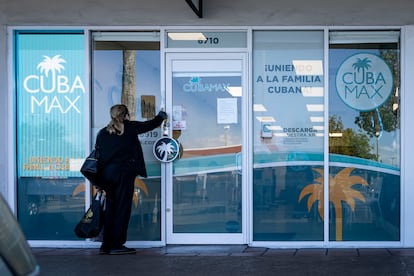
Cubamax, Katapulk Marketplace, and Maravana Cargo are all shipping agencies to Cuba that several Florida politicians have sought to shut down. Recently, Dariel Fernández, the Miami-Dade County tax collector, along with Cuban-American members of Congress, urged the Trump administration to suspend the licenses that allow the export of certain products to Cuba.
“When we started reviewing all these licenses, we saw unbelievable things; some of these companies have licenses to ship luxury cars, Ferraris, Lamborghinis, and even jacuzzis. Who in Cuba has electricity to run a jacuzzi, who has water, and who has the money to buy one when a doctor in Cuba earns $20 a month?” Fernández asks. “We’re not against trade in Cuba, but only when there is freedom first. Until that happens, we can’t continue allowing U.S. Companies to benefit the dictatorship.”
For his part, Ricardo Herrero, executive director of the Cuba Study Group, believes that, although Florida politicians have traditionally applied maximum pressure to the island, now “there is an administration committed to regime change in Cuba, but one that must confront the realities of the region and the interests and national security of the United States.” “It is not in their interest to precipitate a humanitarian collapse in Cuba, nor to send troops to stabilize the island. Miami’s passions cannot dictate U.S. Policy toward Cuba, and that is something Marco Rubio recognizes in his position. This is an opportunity to negotiate a relationship that can be truly sustainable,” he says.
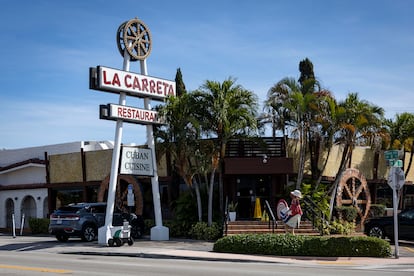
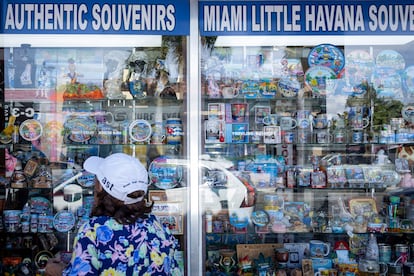
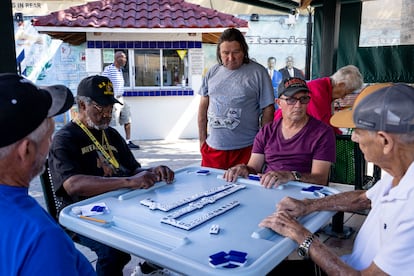
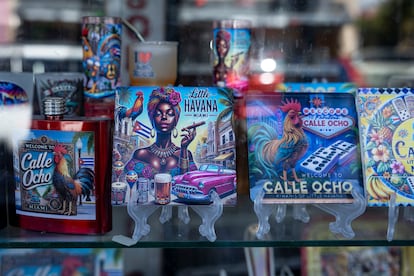
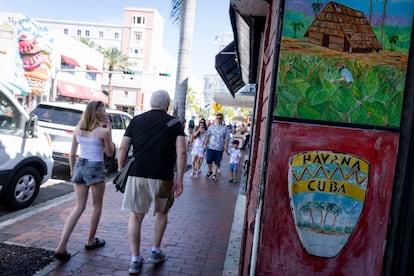
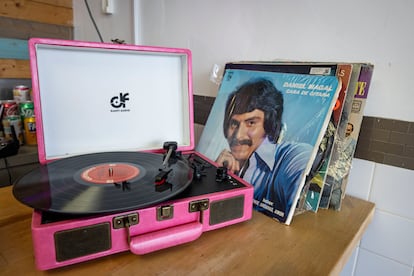
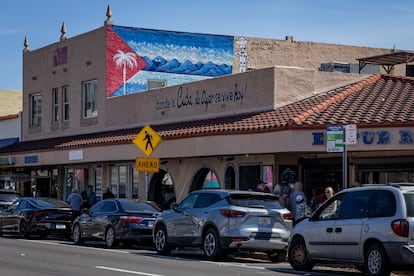
At first glance, Miami seems like the same old place: avocado and plum vendors at traffic lights, nightclubs blasting Cuban music, barbershops where men share their life stories, and people hoping to win with scratch-off tickets. Added to this is a collective certainty that hangs over the city: whatever happens in Cuba will, in one way or another, happen to them on this side as well.
Sign up for our weekly newsletter to get more English-language news coverage from EL PAÍS USA Edition
Tu suscripción se está usando en otro dispositivo
¿Quieres añadir otro usuario a tu suscripción?
Si continúas leyendo en este dispositivo, no se podrá leer en el otro.
FlechaTu suscripción se está usando en otro dispositivo y solo puedes acceder a EL PAÍS desde un dispositivo a la vez.
Si quieres compartir tu cuenta, cambia tu suscripción a la modalidad Premium, así podrás añadir otro usuario. Cada uno accederá con su propia cuenta de email, lo que os permitirá personalizar vuestra experiencia en EL PAÍS.
¿Tienes una suscripción de empresa? Accede aquí para contratar más cuentas.
En el caso de no saber quién está usando tu cuenta, te recomendamos cambiar tu contraseña aquí.
Si decides continuar compartiendo tu cuenta, este mensaje se mostrará en tu dispositivo y en el de la otra persona que está usando tu cuenta de forma indefinida, afectando a tu experiencia de lectura. Puedes consultar aquí los términos y condiciones de la suscripción digital.